
April 24, 2025
The Best SEA Strategies for 2026: A Complete Guide
Tactics, formats, automation — apply the best SEA strategies for 2026. Access the expert guide now.
April 24, 2025
Tactics, formats, automation — apply the best SEA strategies for 2026. Access the expert guide now.
You have a product or service online and you want it to reach the right people — fast. That means investing in a real SEA strategy. In today’s hyper-competitive digital environment, you can’t afford to skip paid search optimization. The brands that win are the ones that set clear objectives, pick the right platforms, and continuously fine-tune their campaigns based on data.
In this guide, we cover the foundations of SEA strategy, the 8 most actionable tactics for 2026, and the optimization levers that actually move the needle.
Why, and how?
The first step in a strong SEA strategy is setting clear objectives and allocating the right budget. Without clear goals, you risk spending your budget inefficiently or missing what your business actually needs. Clear SEA objectives align your campaigns with your business priorities (sales, acquisition, brand awareness), let you measure performance with KPIs like ROAS or CAC, and help you act fast on what's working and what needs fixing.
Turning priorities into something actionable and measurable takes a few steps:
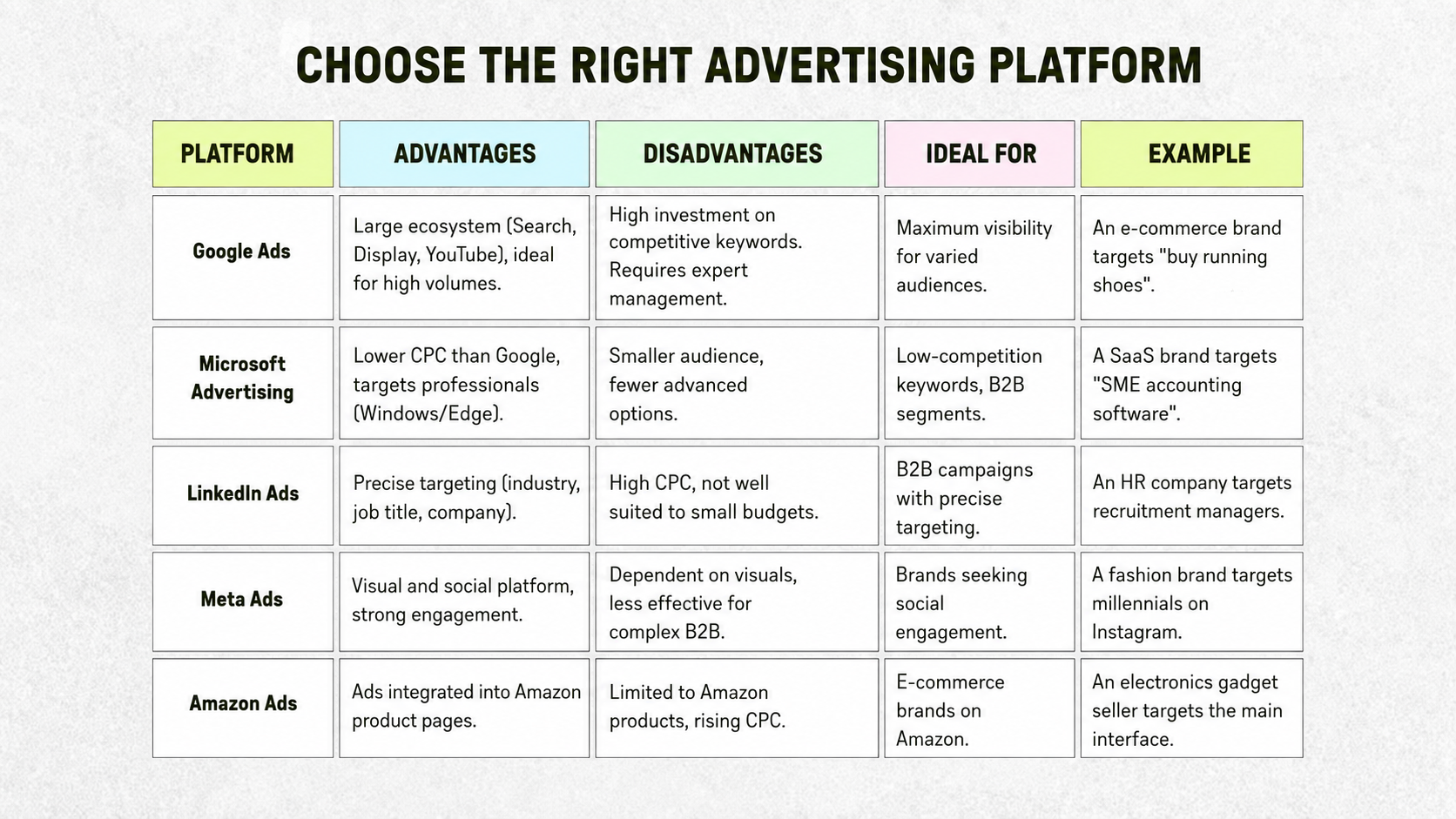
The right platform depends on your goals, your audience, and your budget. Each platform has its own strengths.
How do you choose?
Your keyword choices in SEA determine where your ads show up and directly shape their performance. Pick strategic terms aligned with your goals, and you target a qualified audience while getting more out of your budget and your organic visibility.
Here's how to find the right keywords:
Focus on long-tail keywords
Long-tail keywords, three words or more, are more specific, less competitive, and bring in qualified traffic that's ready to convert. Example:
Target these terms to boost conversions and SEO while cutting your ad costs.
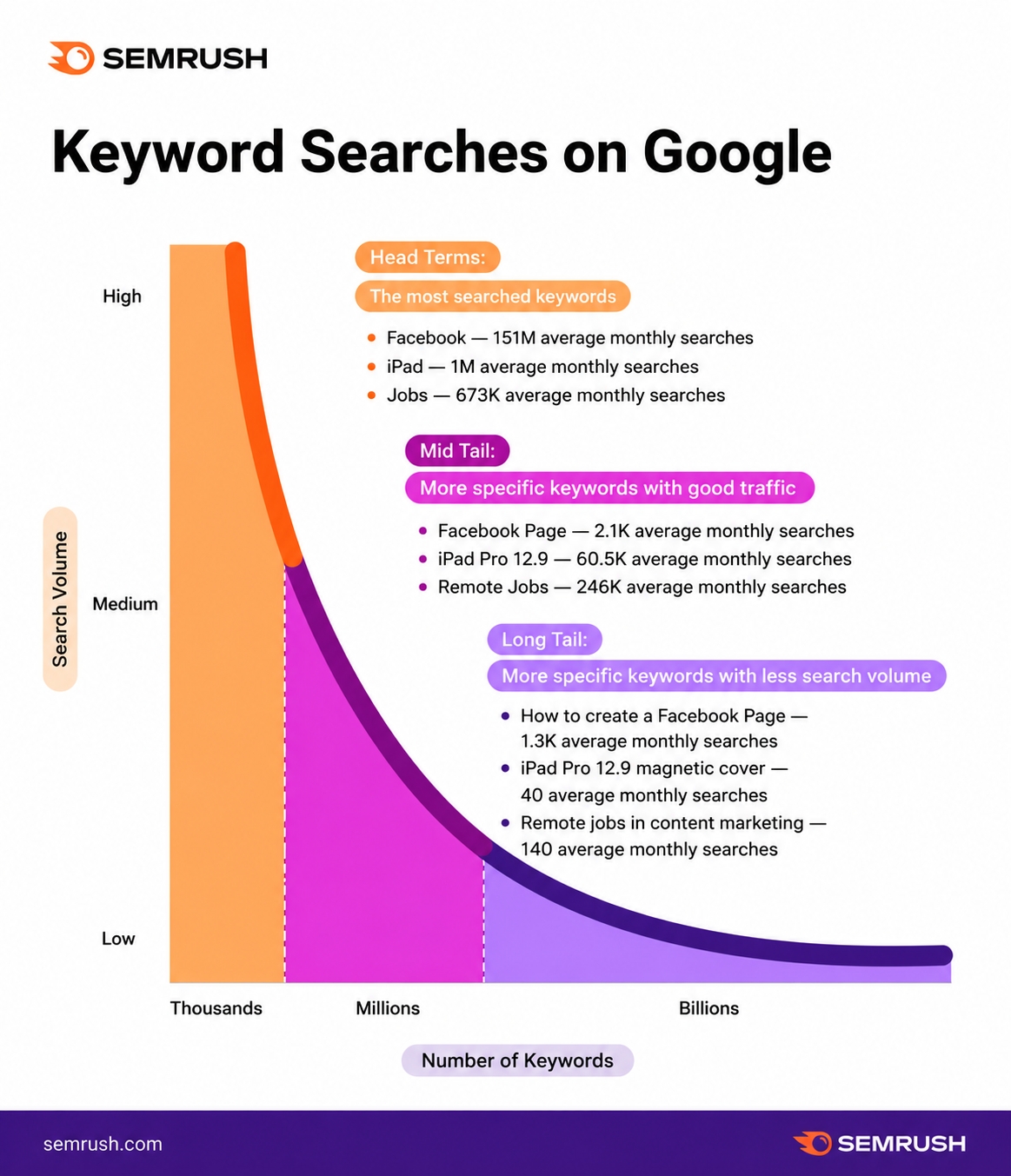
Source: https://fr.semrush.com/blog/comment-choisir-mots-cles-longue-traine/
Why BOFU keywords matter
Bottom of Funnel (BOFU) keywords target users close to conversion. They reflect an immediate intent to buy or act. These keywords bring in high-value traffic and are ideal for maximizing conversions, like "Buy SMB management software" or "Free trial software X."
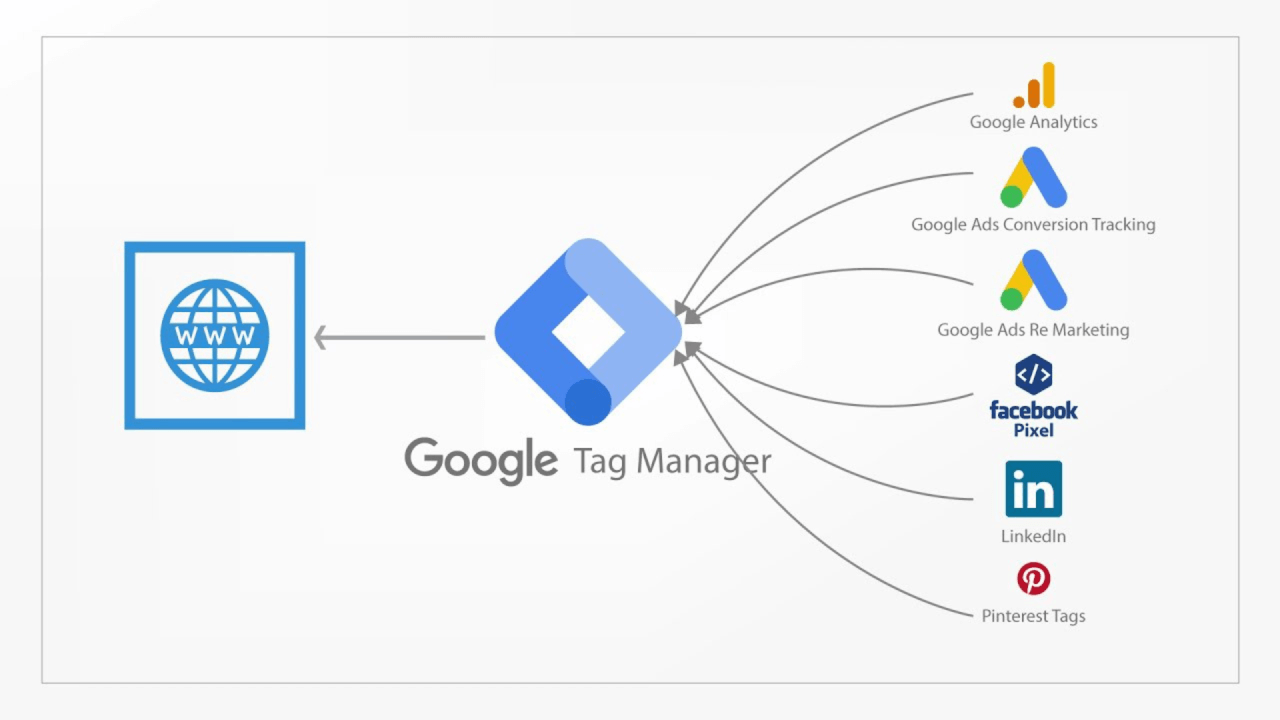
Conversion tracking shows you exactly which actions (clicks, purchases, form fills) your ads are driving, so you can measure performance and get more out of your ad spend:
How do you set up effective tracking?
Concrete examples of tracked conversions:
A well-organized structure is essential to getting the most out of your SEA campaigns (and it helps your SEO too). It lets you manage budget better, sharpen your bidding, and target audiences with precision. Here's how to structure your account around your goals.
1. Choose the right campaign type
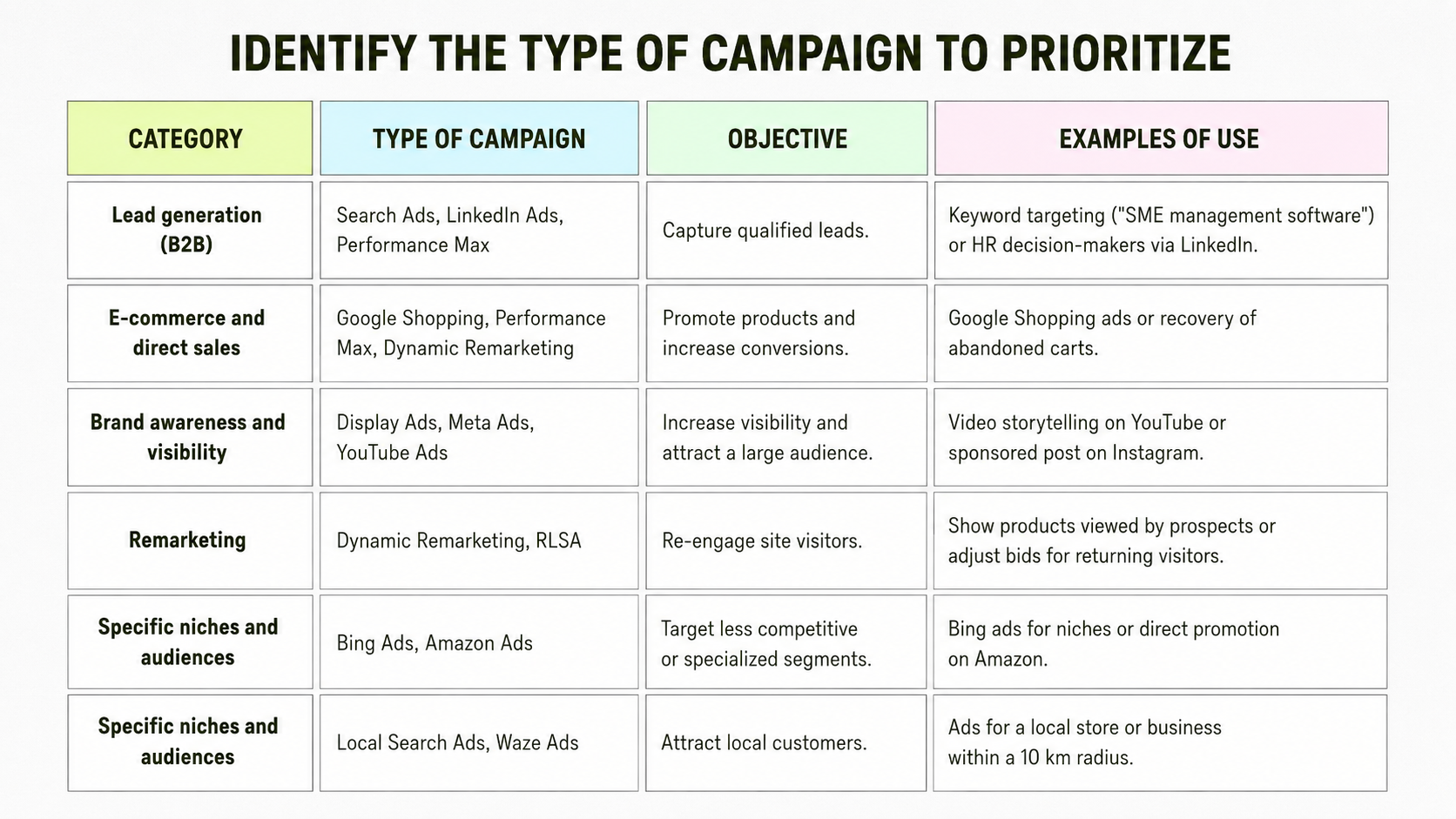
Your goal determines which campaign type to prioritize.
2. Structure your campaigns and ad groups
3. Select the right ad formats
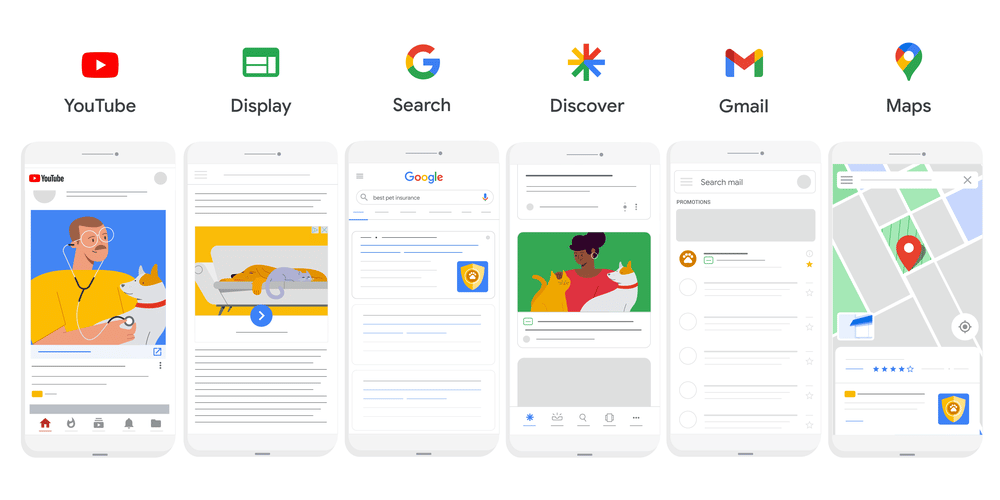
How do you put this into practice?
An effective landing page turns clicks into conversions. To get there, it needs to be fast, relevant, and consistent with your ads.
1. Speed: a fast page keeps visitors around
53% of users leave a page if it takes more than 3 seconds to load. To fix that:
2. Content relevance: match what visitors expect
Your page needs to deliver on what the ad promised:
If your ad promises a "14-day free trial", make sure that offer is visible at the top of the page.
3. Clear CTAs: guide the user toward action
A visible, compelling CTA points the user straight at the conversion goal:
A "Request a quote" button visible the moment visitors land increases the odds of a click.
4. Ad-to-landing-page alignment: consistency is critical
A gap between the ad message and the landing page frustrates visitors and hurts conversions:
An ad targeting "Best running shoes for beginners" should link to a section showcasing those exact products, not a generic page.
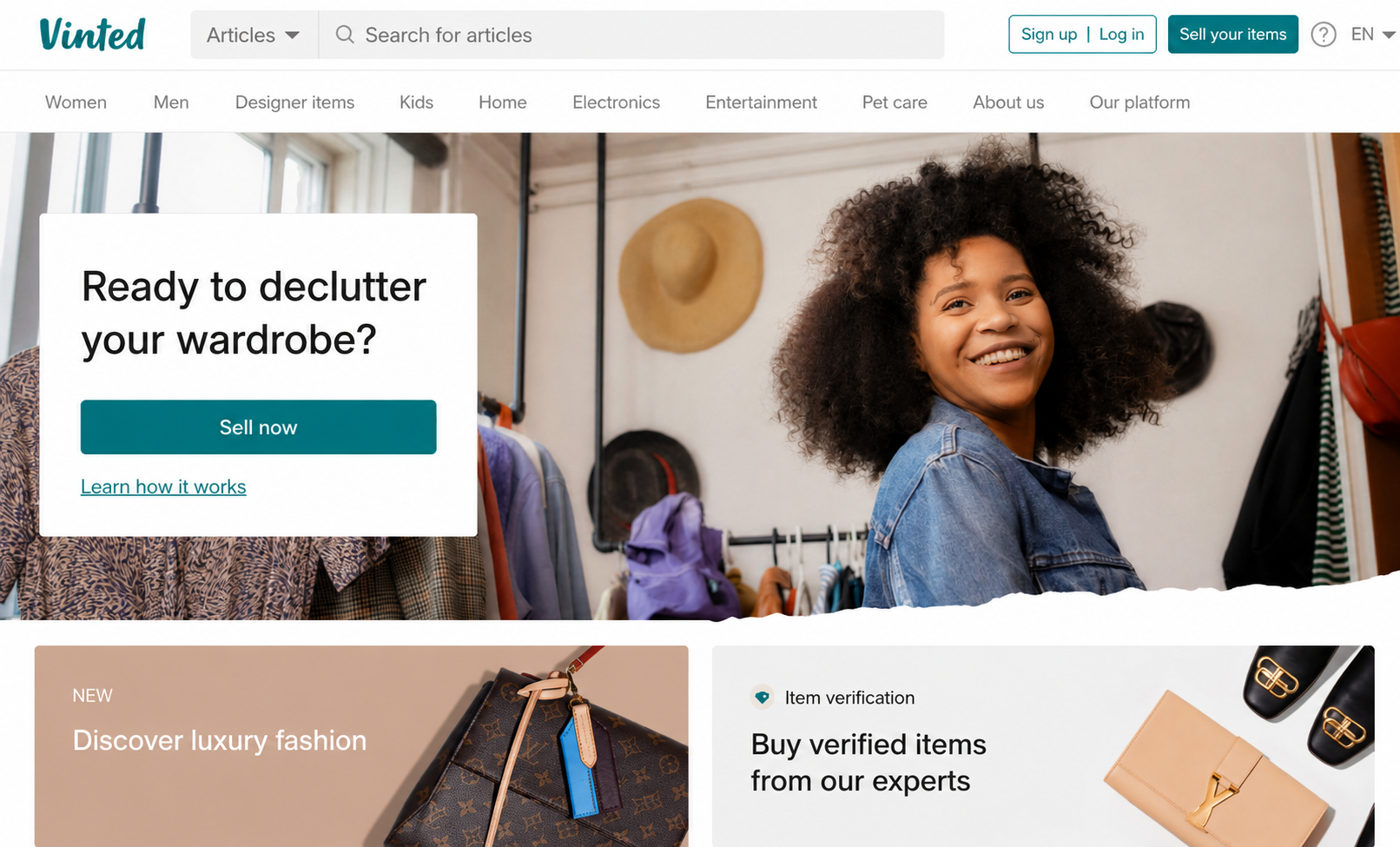
An example of a landing page done right:
[rta-block=folder-cta][rta-title=h3]Want to explore your SEA potential?[rta-title=h3][rta-btn=regular href="/prendre-rendez-vous-typeform" target=_blank]Get a free audit[rta-btn=regular][rta-block=folder-cta]
Boost your SEA campaigns with results you can actually measure. This table gives you methods matched to your goals: generating leads, driving sales, or re-engaging prospects. Practical examples and actionable tips to sharpen your ad performance at a glance.
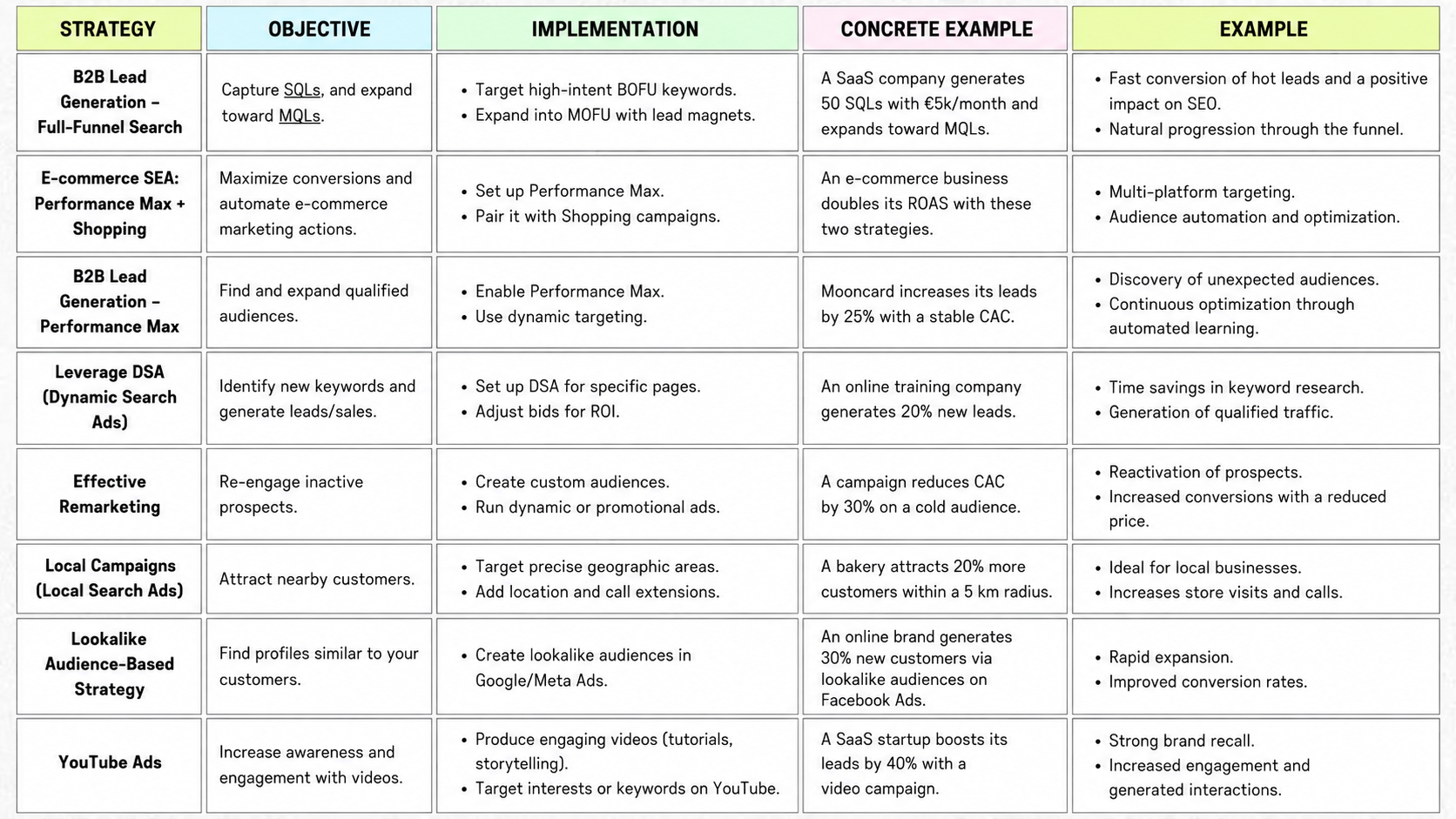
Now that you've got a clear view of what's possible, it's time for the next step: optimization. Even the best strategy needs constant tuning to keep performing. Let's go! 🚀
Fine-tuning your SEA campaigns means making sure every euro you spend feeds directly into your business goals. Apply these principles and you'll sharpen your strategy, use your budget better, and get more out of every campaign.
Excluding irrelevant keywords is critical to avoid wasting budget on unqualified searches. Identify and block these terms, and you improve ad relevance while cutting down on wasted clicks.
For example, a campaign for a paid software product excludes the word "free" to avoid attracting prospects who aren't interested in paying.
A/B testing sits at the core of any SEA optimization. Test different elements of your campaigns, and you find out what actually works for your audience.
An A/B test on text ad headlines shows that a headline including a special offer ("14-day free trial") lifts CTR by 15%.
Performance analysis is what lets you make informed decisions and adjust campaigns in real time.
By analyzing the data, one organization found its conversions peaked between 6pm and 9pm. It raised bids during that window to squeeze out more results.
Your SEA goals should always track your business priorities, whether that's generating leads, driving sales, or improving profitability.
A B2B company wants to maximize qualified leads (SQLs). It optimizes campaigns to hold CAC at €100 while increasing conversion volume.
A successful SEA campaign rests on solid foundations: clearly defined objectives, an optimized account structure, and constant performance-based adjustment. Apply or combine the 8 strategies and optimization keys in this article, and you can turn ad spend into concrete results, whether that's qualified leads, more sales, or a stronger return on investment.
Lorem ipsum
.jpeg)
Writer at Bulldozer, he covers web scraping, UGC and no-code, mixing data, storytelling and SEO.
Can't find what you're looking for ? Contact us here
jordan@bulldozer-collective.comGet access to playbooks and feedback from those who are shaping the next wave of marketing and AI.




 ChatGPT
  Perplexity
  Claude