
Imagine having a storefront that thousands of people walk past every day without ever noticing your brand. That's the reality for many businesses in the digital world: your website, no matter how visually appealing, can go unnoticed if its structure and organic search optimization aren't up to par. This is where the technical SEO audit comes in — a professional tool designed to analyze your site in depth, uncover hidden issues, and improve visibility. This content audit generates concrete recommendations on keywords, tags, netlinking, and crawlability to boost your rankings.
At a time when 53% of web traffic comes from organic search, understanding the nuances of SEO analysis isn't just an option — it's a necessity. Let's explore together how this approach can become the cornerstone of your digital strategy and help you optimize your site to reach new prospects.
An SEO audit, or organic search audit, is a comprehensive process of evaluating the visibility and performance of a website in search engines.
According to Semrush, it involves identifying errors that may prevent your site from ranking well and discovering opportunities to help you gain visibility.
A well-executed SEO audit delivers tangible benefits, providing numerous advantages for your business.
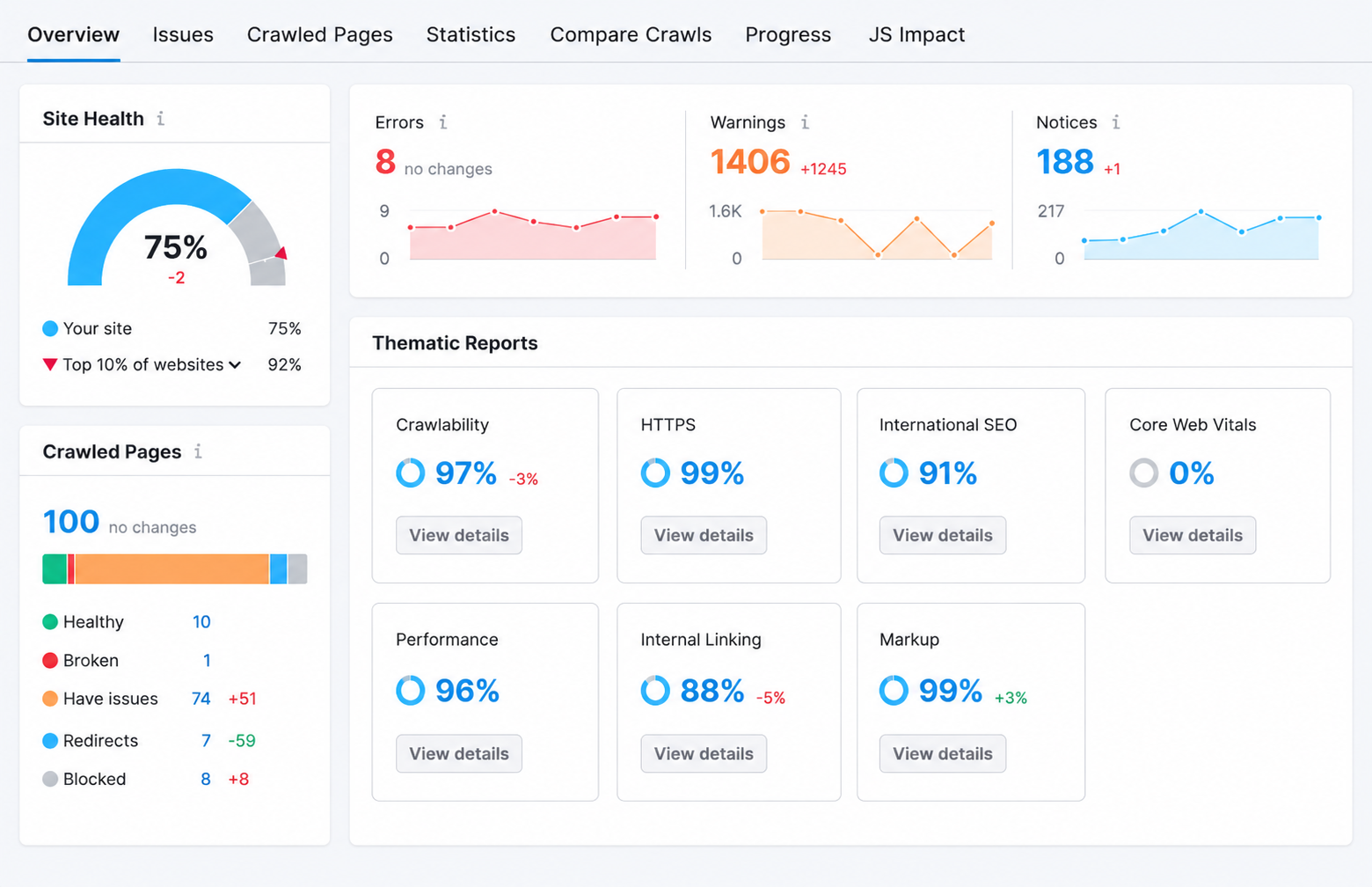
The technical aspect is the foundation of strong search rankings. Several technical elements are essential to check during an audit, including:
Content is king in SEO. An in-depth audit examines the quality and relevance of your content. It's crucial to pay close attention to the following elements:
Your site's popularity, measured in part by the quality and quantity of your backlinks, is a crucial SEO factor. The audit should therefore include an analysis of your external links to verify the quality and relevance of your backlinks. A single high-quality link can have more impact than dozens of low-quality links.
Also incorporate into your audit an evaluation of your netlinking strategy, with the goal of achieving natural and consistent backlink growth. Finally, assess the quality of referring domains — prioritize links from authoritative sites in your industry.
To conduct a successful SEO audit, using the right tools is essential. The most recommended are:
Here is a structured step-by-step approach to conducting a comprehensive SEO audit:
Once the audit is complete, it's crucial to correctly interpret the results and put an effective action plan in place. To do so, prioritize issues based on their potential impact and ease of implementation, then start by fixing technical errors that may hinder indexation.
Next, optimize existing content by improving titles, meta descriptions, and keyword usage, then improve internal linking for better link equity distribution.
Finally, document all actions taken and their results for effective tracking and to draw constructive lessons from the full SEO audit process. For example, a typical post-audit action plan would look like this:
E-commerce sites have specific needs when it comes to SEO audits. Here are the key areas to pay particular attention to:
[rta-block=folder-cta][rta-title=h3]Want to learn more about your SEO potential?[rta-title=h3][rta-btn=regular href="/prendre-rendez-vous-typeform" target=_blank]Get a free audit[rta-btn=regular][rta-block=folder-cta]
To better understand the concrete impact of an SEO audit, let's examine some real-world success stories, analyze their results, and draw the lessons we can learn from them.
As shown in this case study we conducted at Bulldozer Collective, Orus, an insurance provider for small businesses and freelancers, benefited from SEO optimization that led to significant organic growth. The main actions implemented were:
The results were impressive: monthly organic traffic growth of over 60%, production of more than 10 pieces of content per week thanks to task standardization, and over 400 keywords ranked in the top 10 search results.
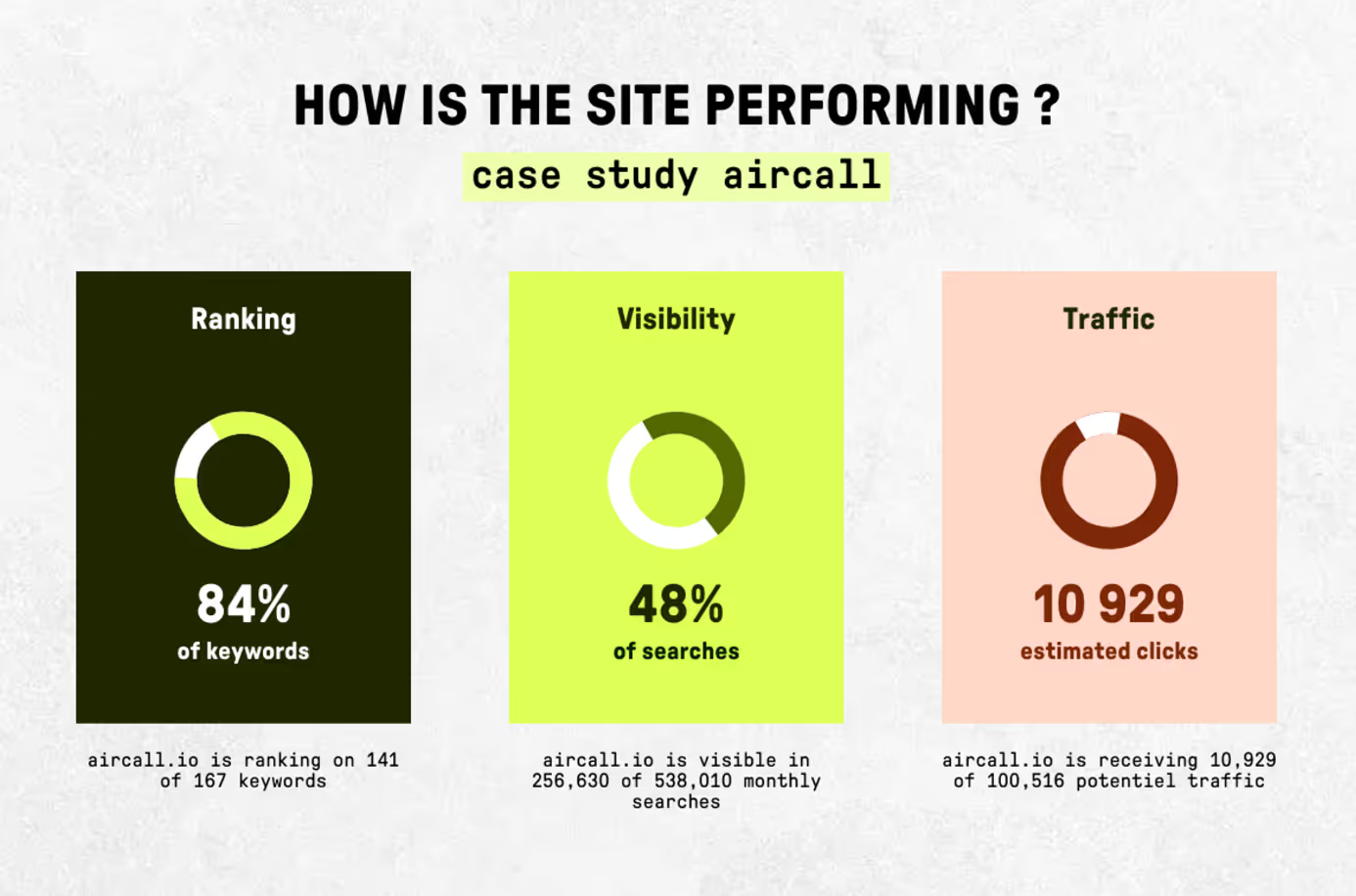
Aircall, a startup revolutionizing business telephony, benefited from a broader approach, as detailed in our client case study on the Bulldozer site. This approach combined SEO, growth marketing, paid marketing, and the use of data and AI. The key actions included:
The results enabled Aircall to gain rapid and relevant insights to activate the right marketing levers, improve internal processes through in-depth data analysis, establish a clear roadmap for prioritizing marketing actions, and gain greater autonomy in managing marketing priorities.

These success stories teach us several essential lessons. First, the importance of adopting a holistic approach — as the Aircall case demonstrates, the best results often come from a strategy that combines SEO with other marketing tactics and in-depth data analysis.
Next, the value of a structured content strategy: the Orus case highlights the importance of a well-defined editorial calendar and standardized content production.
It is essential to note that technical optimization remains crucial. In both cases, optimizing site architecture and technical aspects played a key role. Finally, the importance of tracking and reporting cannot be overlooked: implementing dashboards and monitoring tools enabled continuous performance improvement.
It's also worth noting the common mistakes to avoid based on these case studies, including:
By drawing lessons from these real successes and avoiding these common mistakes, you can maximize the effectiveness of your SEO audit and significantly improve your website's performance.
The results achieved by Bulldozer Collective for its clients clearly demonstrate the power of a well-executed SEO audit and a coherent SEO strategy, especially when integrated into a broader marketing approach supported by in-depth data analysis.
SEO auditing is therefore not a one-off action, but a continuous improvement process. Conducting regular audits will allow you to track your progress and quickly identify opportunities for improvement.
Moreover, by strategically planning your audits, you will be able to stay current with search engine developments and remain competitive. Finally, you can grow your organic traffic and continuously improve your online visibility.
By integrating SEO auditing into your digital marketing strategy, you ensure that your website remains performant, visible, and competitive in the ever-evolving landscape of organic search. Don't wait to conduct your first (or next) SEO audit — visit our experts at Bulldozer!
Lorem ipsum

Content Marketing Manager at Bulldozer, she writes about content strategy, editorial systems and distribution.
Can't find what you're looking for ? Contact us here
jordan@bulldozer-collective.comGet access to playbooks and feedback from those who are shaping the next wave of marketing and AI.