Publié par
Photo d'un membre de l'équipecurve whitecurve white
Charlotte Nowak
Content Manager
Blog
/
CRM
/
CRM Strategy: A Guide to High-Performance Customer Management

CRM Strategy: A Guide to High-Performance Customer Management

An effective CRM strategy (Customer Relationship Management) is essential for any company looking to stand out. But what exactly is a CRM strategy, and how can it transform your customer relationships

In this article, we'll explore how to build a CRM strategy tailored to your business, regardless of size or industry. You'll find practical advice for improving customer relationships, streamlining your processes and accelerating your growth.

Ressource en lien
Dernière mise à jour :
05
/
06
/
2026

The Fundamentals of a CRM Strategy

The fundamentals of a CRM strategy

What is a CRM? 

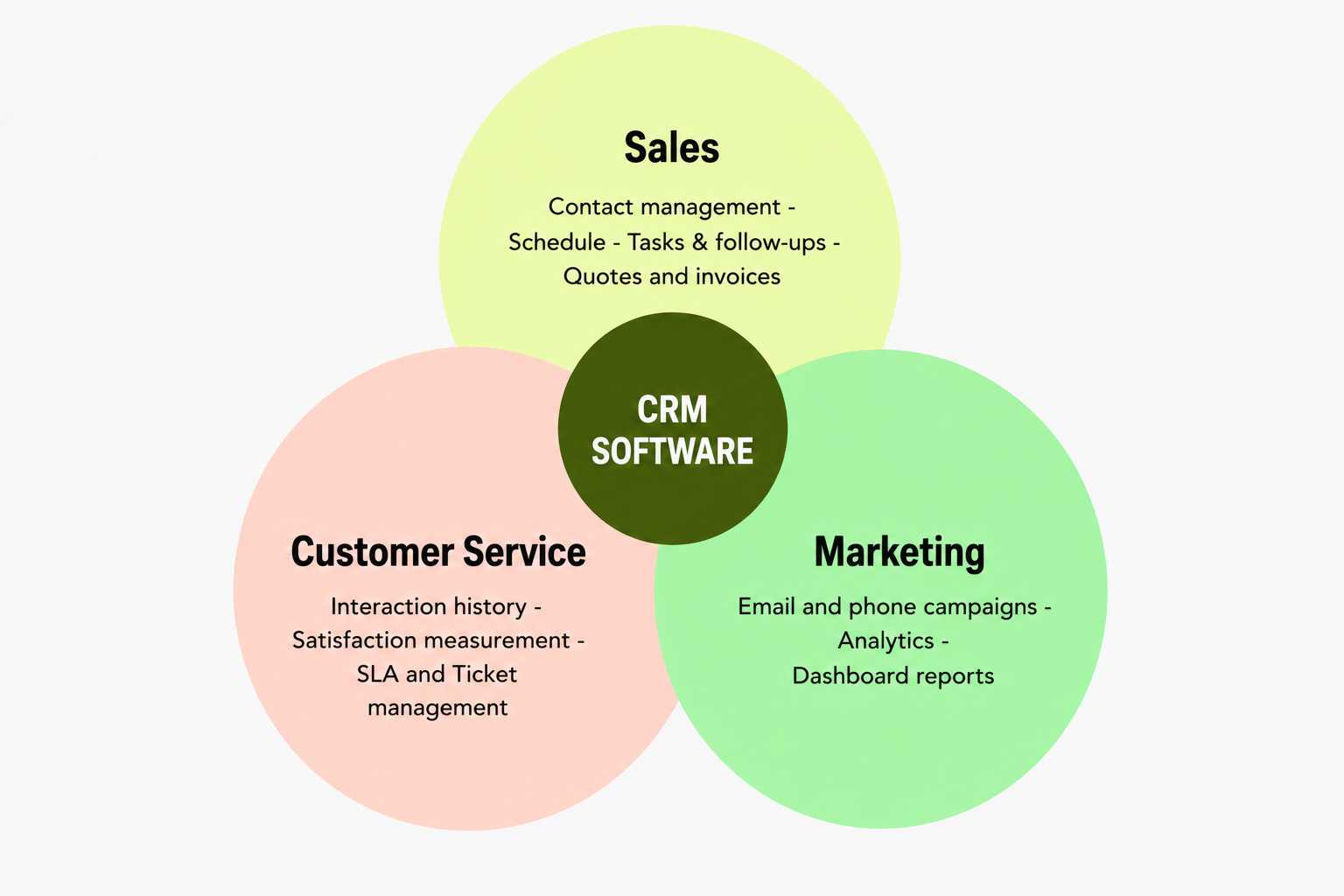
CRM, or Customer Relationship Management, is a strategy aimed at optimizing interactions between a company and its current or potential customers.

The power of CRM lies in its ability to centralize customer data, providing a 360-degree view of every interaction. This centralization improves service quality and helps identify sales opportunities and retention levers.

Objectives of a CRM strategy

CRM strategy objectives vary by company, but the most common goals include:

  • Increasing customer satisfaction and retention
  • Improving the effectiveness of sales and marketing teams
  • Growing revenue through a deeper understanding of customer needs
  • Optimizing internal processes related to customer management

Ultimately, a CRM strategy is primarily designed to grow revenue by strengthening customer loyalty and satisfaction. Defining these objectives clearly is the foundation of a solid, measurable CRM strategy.

The Key Elements of a CRM Strategy

Customer segmentation and targeting

Customer segmentation is a cornerstone of an effective CRM strategy. It involves dividing your customer base into distinct groups sharing similar characteristics. This approach enables you to:

  • Better understand the specific needs of each segment
  • Adapt your offers and communications more relevantly
  • Optimize the allocation of your marketing resources

Personalizing interactions

A CRM strategy must embed personalization mechanisms at every customer touchpoint. This can include:

  • Personalized emails based on purchase behavior
  • Product recommendations tailored to individual preferences
  • Tailored customer service informed by interaction history

Process automation

Automation plays a critical role in optimizing CRM processes. It helps:

  • reduce repetitive, time-consuming tasks;
  • ensure consistent follow-up of customer interactions;
  • trigger targeted actions based on customer behavior.

For example, Airbnb automated its customer acquisition through automated emails and retargeting.

Optimizing Your CRM Strategy

Choosing the right CRM software

Choosing the right CRM software matters. Here are the key criteria to consider:

  • Alignment with your objectives — whether sales management (Salesforce and Pipedrive are recommended), marketing (HubSpot and Marketo), or customer service (Zendesk and Freshdesk). 
  • Ease of use. Pipedrive is recognized for its intuitive platform.
  • Compatibility with your existing tools, as offered by HubSpot.
  • Analytics capabilities, such as customizable dashboards. 
  • Growth potential, like Zoho CRM which offers plans that scale with your business.
  • GDPR compliance, like Microsoft Dynamics 365 which is known for its high security standards.
  • Support and onboarding, as offered by Freshworks CRM.

Before making your final choice, don't hesitate to test multiple solutions. Many CRMs offer free trial versions.

Training your team

Team training is essential to get the most from your CRM strategy. Make sure to clearly explain the objectives of the CRM strategy, provide training on using the CRM software, and drive adoption by demonstrating concrete benefits for each user.

Measuring your CRM strategy

To evaluate the effectiveness of your CRM strategy, define and track KPIs such as:

  • The customer retention rate, which measures the percentage of customers who remain loyal over a given period. A high retention rate signals that customers are satisfied with your products or services.
  • The prospect-to-customer conversion rate, which measures how effectively your business turns prospects into paying customers.
  • Customer Lifetime Value (CLV), an estimate of the total revenue a customer will generate for your business over the course of their relationship with you.
  • The average customer issue resolution time. Shorter resolution times improve customer satisfaction and signal operational efficiency in customer service. 

Your CRM strategy should be in constant evolution. Use the insights from your analytics to refine your customer segmentation, improve your customer interaction processes, and adapt your offers to changing market needs.
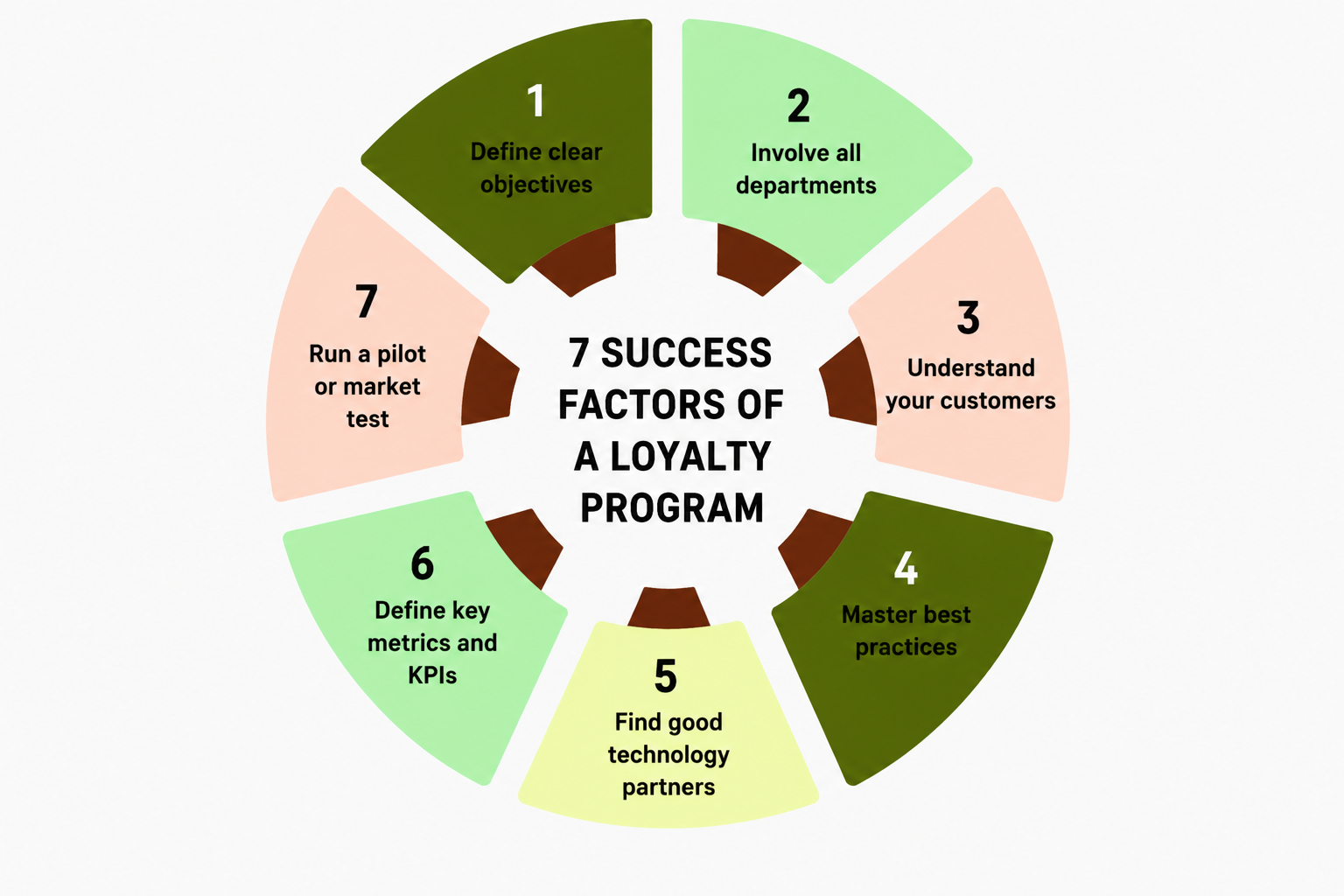
7 success factors of a loyalty program

Want to learn more about your CRM potential? 

Demander un audit gratuit
Carte ou profil utilisateur central mis en évidence, entouré d’autres profils en arrière-plan, suggérant une sélection ou une mise en avant d’un utilisateur.
bulldozer

Examples of Successful CRM Strategies

Customer engagement at Sephora

Sephora developed a CRM strategy centered on building an engaged community through its online forum Beauty Talk. This approach lets them:

  • collect data on customer preferences and behaviors;
  • offer personalized product recommendations;
  • create a tailored loyalty program, Beauty Insider, that rewards customer engagement.

The result: a significant increase in customer retention rate and average basket value.

Apple's interconnected ecosystem

Apple's CRM strategy is built on creating an ecosystem of interconnected products. This approach includes:

  • seamless integration across Apple devices and services;
  • personalized customer service via Apple Stores and online support;
  • use of customer data to continuously improve products and services.

Apple now enjoys a very high customer retention rate and strong referral rates. An effective CRM strategy is a real asset for any company looking to improve its customer relationships and drive growth. Ready to optimize your customer relationship management and maximize the impact of your CRM strategy? 

Our team is here to support you every step of the way. With our expertise and data-driven approach, we can help you design and optimize your CRM strategy. Contact us today!

FAQ

Une stratégie CRM est un plan d'action visant à optimiser la gestion des relations client en plaçant le client au centre de votre approche commerciale. Elle permet d'améliorer l'expérience client sur tous les canaux de communication, d'augmenter les ventes grâce à une meilleure connaissance client, et de fidéliser votre clientèle. La mise en œuvre d'une stratégie CRM efficace est essentielle pour gérer le parcours client de manière omnicanal et proposer une personnalisation adaptée aux attentes de chaque persona.

Pour élaborer une stratégie CRM performante, plusieurs étapes sont essentielles : définir des objectifs clairs alignés avec votre stratégie commerciale, analyser votre base de données clients pour identifier les principaux profils, segmenter votre clientèle selon des critères spécifiques, choisir une solution CRM adaptée à vos enjeux, former votre équipe aux nouveaux processus de vente, et mesurer régulièrement les résultats à travers des indicateurs de performance. La première étape consiste à obtenir une vision globale de votre cycle de vie client et à définir les points de contact essentiels.

Il existe de nombreuses solutions CRM adaptées aux PME selon leurs besoins spécifiques. Salesforce offre une plateforme complète pour la gestion des relations commerciales, HubSpot propose des outils intégrés de marketing relationnel et d'inbound marketing, Pipedrive se distingue par sa simplicité d'utilisation pour gérer le tunnel de vente, et Simple CRM convient aux petites structures souhaitant automatiser leurs actions marketing. Le choix de votre outil CRM dépend de votre projet CRM, de votre budget et de votre stratégie de gestion globale.

Le succès d'une stratégie CRM se mesure à travers plusieurs indicateurs clés : le taux de rétention client pour évaluer la fidélisation, le taux de conversion des leads à chaque étape du parcours, la valeur vie client (CLV) pour analyser la rentabilité, la satisfaction client via le feedback et les enquêtes, l'efficacité du service après-vente, et l'amélioration de l'expérience client omnicanal. Ces métriques permettent d'identifier les points d'amélioration et d'ajuster votre approche pour atteindre de meilleurs résultats.

La mise en place d'une stratégie CRM omnicanal nécessite d'identifier tous les canaux où vos clients interagissent avec votre marque : site web, magasin physique, réseaux sociaux, email, téléphone. L'objectif est d'offrir une expérience cohérente et personnalisée sur l'ensemble du parcours client. Pour y parvenir, utilisez un logiciel de gestion capable d'intégrer tous les points de contact, automatisez vos actions marketing selon le comportement client, et assurez-vous que votre équipe commerciale dispose des bonnes informations en temps réel. Des entreprises comme Leroy Merlin ou Sephora excellent dans cette approche en créant une communauté engagée sur tous leurs canaux.

Les erreurs principales à éviter incluent : ne pas définir clairement les objectifs et les enjeux de votre projet CRM, choisir une technologie inadaptée aux besoins de vos équipes, négliger la formation des membres de l'équipe commerciale, ne pas personnaliser l'approche selon les différents profils de consommateurs, omettre l'analyse des données pour améliorer continuellement le processus, et sous-estimer l'importance des médias sociaux dans le marketing relationnel moderne. Il est essentiel d'éviter une vision trop centrée sur l'outil plutôt que sur la stratégie globale et de retenir que l'intelligence artificielle et le marketing automation sont des moyens, non des fins en soi.

Pour aller plus loin

outils no code

12 No-Code Tools to Build and Automate Online Without Writing a Line of Code

Growth
CRO
CRM
Killian Drecq

CRM Audit: Maximize Your Customer Performance with Experts

CRM
Killian Drecq

Dark Social: How to Leverage It for Your Marketing Strategy

CRM
Brand Strategy
Charlotte Nowak

Let's talk.

Full-funnel
500+ clients
300+ membres
Prendre un rdv stratégique