
August 10, 2024
Dark Social: How to Leverage It for Your Marketing Strategy
What dark social is, why it blindspots your attribution, and how to turn untracked sharing into a strategic advantage for your marketing.
August 10, 2024
What dark social is, why it blindspots your attribution, and how to turn untracked sharing into a strategic advantage for your marketing.

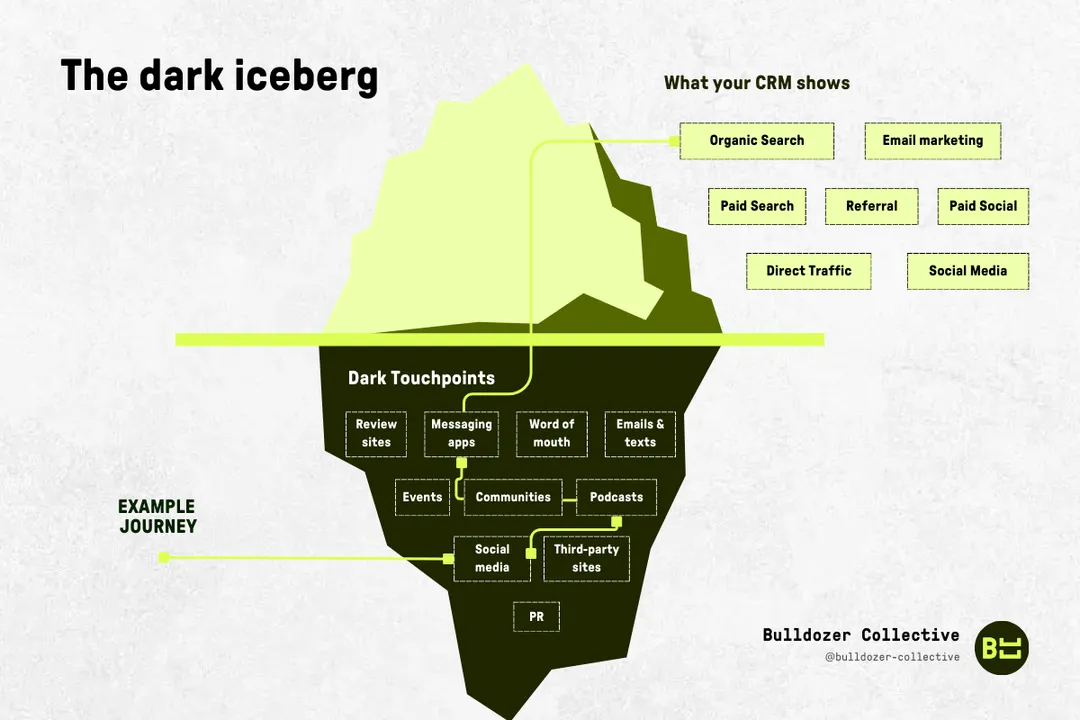
In the digital age, marketing professionals must understand the new dynamics of how content circulates online. Dark social — those invisible sharing channels that attribution tools can't track — represents a major blind spot for most marketing teams. And yet, it's where some of the most valuable conversations happen.
In this article: what dark social really is, why it matters for your strategy, and how to exploit it rather than ignore it.
Dark social, sometimes called dark social media or hidden social sharing, describes social interactions that happen outside traditional, trackable channels. According to HubSpot, this mostly means content shared through private messaging apps, email, or text.
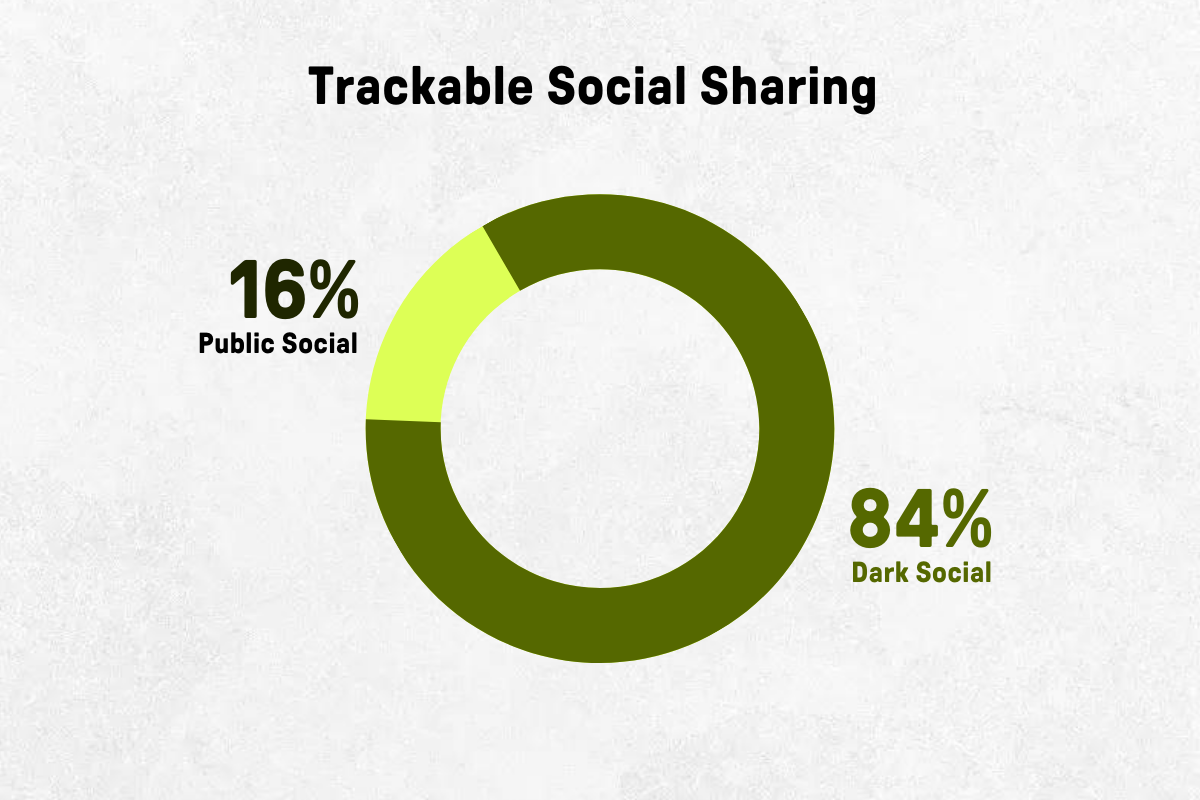
The term was coined by Alexis C. Madrigal, an American journalist who noticed that a huge share of web traffic comes from sources analytics tools can't identify. In fact, according to Digimind, up to 84% of all web and social content sharing happens through private channels, invisible to marketers.
Example: Say you find an interesting article about digital marketing trends. Instead of posting it to your LinkedIn profile, you send the link directly to a colleague on WhatsApp. That share drives traffic to the site, but analytics tools won't attribute it to any specific source. That's a textbook example of dark social traffic.

The importance of dark social for marketers is hard to overstate. Here's why:
Dark social makes it hard to accurately measure the reach and impact of your marketing campaigns. As Agorapulse points out, up to 80% of web traffic can be considered "dark," slipping past traditional analytics tools.
That means you could be badly underestimating the effectiveness of your marketing spend and effort.
Understanding dark social helps you sharpen your content strategy. Dark social shares tend to be more personal and targeted, which can tell you a lot about what actually resonates with your audience.
By analyzing these shares, you can adapt your content to make it more likely to get passed around in these private channels.
Dark social interactions tend to be more authentic and engaging. Digimind reports that 97% of people say user-generated content (UGC) strongly influences their purchase decisions.
On top of that, a RadiumOne study found that clicks on links shared through dark social are 8.5 times more likely to convert than clicks on publicly shared links.
Dark social is inherently hard to trace, but there are techniques and tools that can help you monitor and measure it:
HubSpot recommends using tools like Bitly or Ow.ly to create custom tracking links that show you where your traffic is really coming from. Here's how:
Adding UTM codes (Urchin Tracking Module) to your URLs helps you trace the origin of your traffic, even when it comes from dark social sources. To set them up:
Watch for unexplained spikes in direct traffic: they can be a sign of dark social sharing. Also look at the behavior patterns of visitors who arrive via "direct" traffic to spot possible dark social sources.
[rta-block=folder-cta][rta-title=h3]Want to explore your CRM potential?[rta-title=h3][rta-btn=regular href="/prendre-rendez-vous-typeform" target=_blank]Get a free audit[rta-btn=regular][rta-block=folder-cta]
Here are a few strategies worth considering to make the most of dark social:
Focus on creating quality content that people naturally want to pass along to people they know. Think informative infographics, practical guides, or in-depth articles on hot topics in your field.
Blog du Modérateur suggests investing in private channels like broadcast channels on WhatsApp, Instagram, Facebook, and Telegram to grow your community.
For example, you could create an exclusive WhatsApp group for your most loyal customers, where you share premium content and special offers.
Encourage your customers to create and share content tied to your brand, which can drive dark social sharing. You could run social media contests where participants share their experience with your product.
Cosmetics brand Glossier built dark social into its strategy by building an engaged community on platforms like Slack.
Members of that community swap beauty tips, discuss products, and naturally turn into brand ambassadors, fueling powerful digital word of mouth.
Understanding and mastering dark social lets businesses profit from it and reach their conversion goals faster.
The challenges of dark social:
The opportunities of dark social:
Dark social comes with real challenges, but it also gives you a chance to rethink your marketing approach. Focus on creating high-quality content and making private sharing easier, and you can turn these challenges into a competitive edge.
For instance, the lack of visibility can be offset with sharper social listening and more advanced analytics tools.
Building dark social into your marketing strategy doesn't just improve how you measure performance, it also creates deeper, more authentic connections with your audience. As Breakcold points out, dark social is a high-potential space for brands, and marketers should start capitalizing on it now.
Stop waiting to build dark social into your marketing strategy! Start by analyzing your "direct" traffic with experts. The Bulldozer Collective team helps you set up the right tracking tools and create content that drives private sharing. Your brand could be the next dark social success story. Get in touch to learn more!
Lorem ipsum

Content Marketing Manager at Bulldozer, she writes about content strategy, editorial systems and distribution.
Can't find what you're looking for ? Contact us here
jordan@bulldozer-collective.comGet access to playbooks and feedback from those who are shaping the next wave of marketing and AI.