
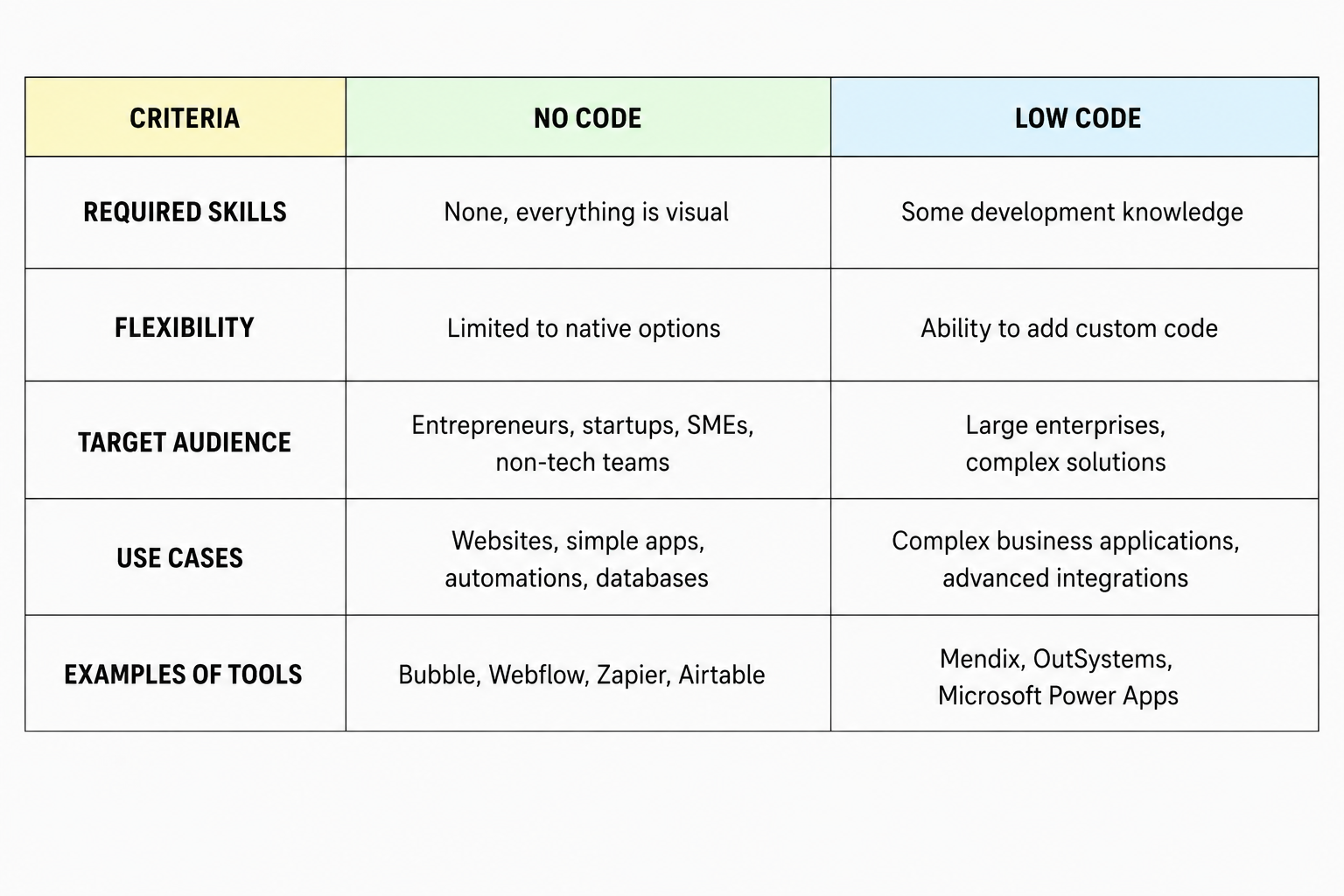
No-code is no longer just for non-technical teams. Today, it's a strategic choice — build faster, test ideas without IT dependency, and automate processes that used to require weeks of development. Whether you want to launch an app, automate a workflow, or build a database, there's a no-code tool for the job.
Here are the 12 tools that matter — organized by category — with honest assessments of what each one is actually good for.
No-code app builders let you build mobile and web apps without any programming skills. They provide visual interfaces and pre-built components that speed up app development.
Bubble is a powerful no-code platform for building complex web applications without writing code. It offers a visual drag-and-drop interface and a wide range of features for building fully-functional applications.
Key features:
Pricing: Bubble offers a free plan with limited features. Paid plans start at $29/month.
Best for: MVPs, marketplaces, and SaaS products.
Webflow is a no-code platform built for creating visually polished websites and apps. It stands out for its design flexibility and content management capabilities.
Key features:
Pricing: Webflow offers a limited free plan. Paid plans start at $14/month.
Best for: Professional websites and landing pages.
Glide makes it easy to build mobile apps from data already sitting in Google Sheets or Excel. Its simplicity makes it a popular pick for non-developers.
Key features:
Pricing: Glide offers a free plan. Paid plans start at $25/month.
Best for: Quickly turning existing data into simple mobile apps.
Adalo lets you build native mobile apps for iOS and Android. It stands out for handling databases and more advanced functionality directly inside the app.
Key features:
Pricing: Adalo offers a limited free plan. Paid plans start at $36/month.
Best for: Building native mobile apps without writing code.
Thunkable is a no-code platform focused on building mobile apps for iOS and Android. It offers an intuitive visual interface plus advanced features like API integration.
Key features:
Pricing: Thunkable offers a free plan. Paid plans start at $13/month.
Best for: Beginners building their first mobile apps.
[rta-block=folder-cta][rta-title=h3]Want to explore your automation potential?[rta-title=h3][rta-btn=regular href="/prendre-rendez-vous-typeform" target=_blank]Get a free audit[rta-btn=regular][rta-block=folder-cta]
No-code automation tools connect your apps and take repetitive tasks off your plate, no code required. They play a central role in running business processes more efficiently.
Zapier is the market leader in no-code automation, connecting thousands of apps and running complex workflows behind the scenes.
Key features:
Pricing: Zapier offers a limited free plan. Paid plans start at $19.99/month.
Best for: Companies looking to automate their business processes.
Make, formerly known as Integromat, is a powerful automation platform with a visual interface for building complex workflows.
Key features:
Pricing: Make offers a free plan. Paid plans start at $9/month.
Best for: Advanced users who need deeper automation capabilities.
N8N is an open-source automation platform that gives you real flexibility, including the option to self-host.
Key features:
Pricing: N8N is free to self-host. Cloud plans start at $20/month.
Best for: Technical teams that want more control and flexibility.
No-code data tools let you organize, analyze, and collaborate on your data without deep technical skills.
Airtable combines the power of a database with the simplicity of a spreadsheet, giving you one flexible tool to manage any kind of data.
Key features:
Pricing: Airtable offers a free plan. Paid plans start at $10/month.
Best for: Project management, inventory tracking, and team collaboration.
Notion is an all-in-one workspace that combines notes, databases, wikis, and project management in a single interface.
Key features:
Pricing: Notion offers a free plan. Paid plans start at $8/month.
Best for: Knowledge management, documentation, and team collaboration.
Coda is an innovative tool that merges a document with a database, letting you build powerful applications without writing code.
Key features:
Pricing: Coda offers a free plan. Paid plans start at $10/month.
Best for: Internal apps and complex tracking tools.
Choosing the right no-code tool comes down to a handful of key factors:
Our recommendation: start by testing the free plans of the tools that match your main use case. Most give you enough functionality to confirm whether a tool fits your needs before you commit to a paid plan.
No-code has opened up digital development to everyone. These 12 tools cover the essentials: app creation, data management, automation. The right choice depends on your use case, not on each platform's marketing.
Lorem ipsum
.jpeg)
Writer at Bulldozer, he covers web scraping, UGC and no-code, mixing data, storytelling and SEO.
Can't find what you're looking for ? Contact us here
jordan@bulldozer-collective.comGet access to playbooks and feedback from those who are shaping the next wave of marketing and AI.