
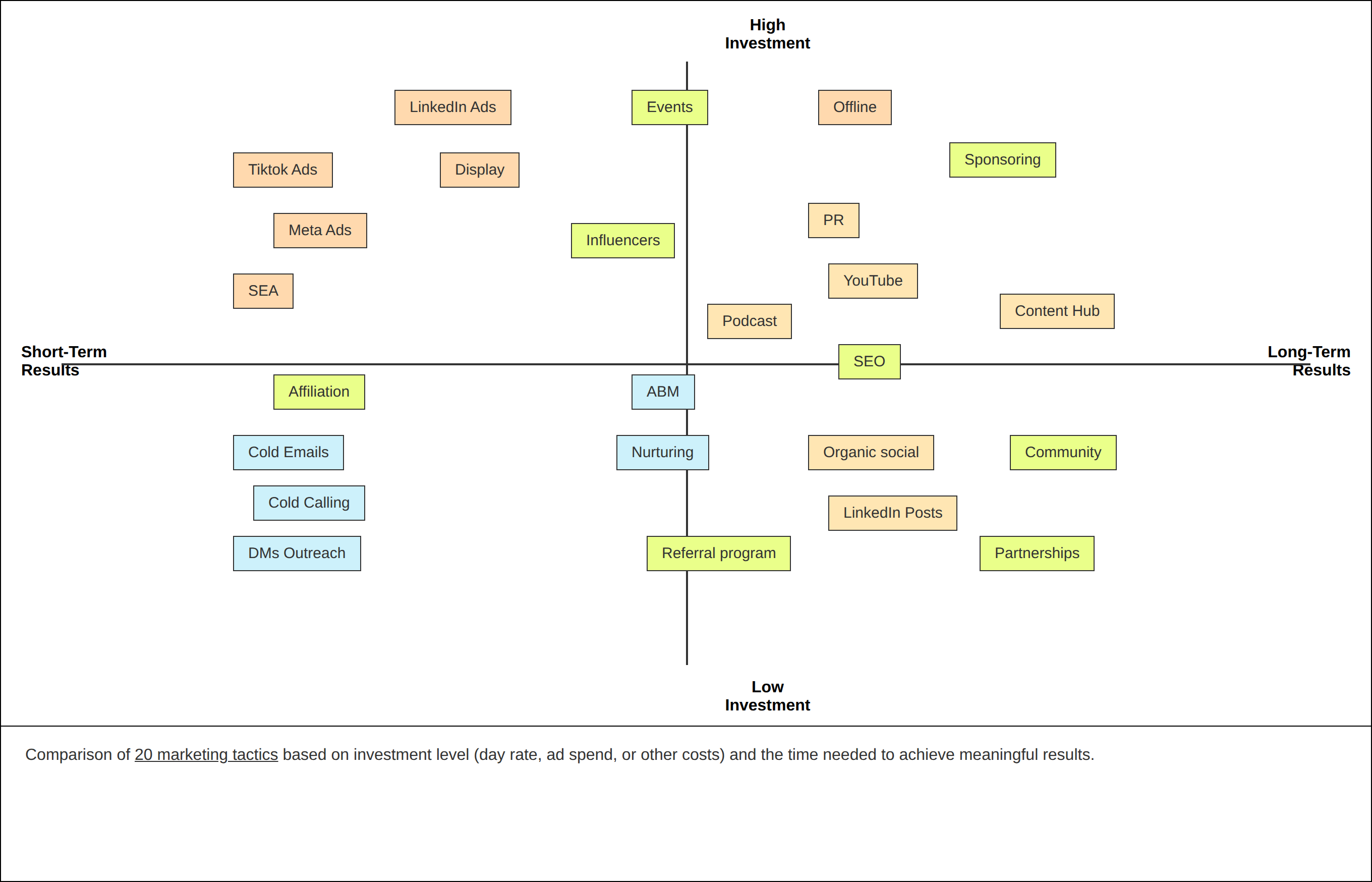
Digital marketing is reshaping how B2B businesses compete in 2026 — but few organisations are actually getting it right.
Whether you're a CMO, a freelancer, or a marketing director at a growing company, one thing is clear: executing digital marketing well requires the right strategy and a solid grasp of the fundamentals. In this guide, we break down exactly how to build a high-performing marketing plan that turns visitors into clients.
You'll find the best strategies for improving your conversion rate, building your audience across each platform, and sustaining durable growth. The approach brings together every digital element: website, mobile, inbound marketing, and automation — to create a personalised, consistent client experience. With the practical frameworks and insights here, you'll be able to assess and sharpen your performance across every channel.
Digital marketing is the set of techniques used to promote a business, product, or service across digital channels. This approach integrates every essential element: website, search engines (SEO and SEA), social media, email marketing, content marketing, and advanced tools like CRM-connected marketing automation.
Done well, it lets you identify your target audience precisely, optimise every touchpoint, and manage your full channel mix to maximise ROI.
Unlike traditional methods (flyers, trade shows, print ads), digital marketing offers significant advantages: precise audience targeting, real-time performance measurement, personalisation at scale, and continuous optimisation.
The level of precision and interactivity available fundamentally changes your client relationships and your commercial approach.
Concrete example: where a trade show costs €15,000, a LinkedIn Ads campaign targeting procurement directors can generate the same qualified leads for a tenth of the price — with full performance reporting and budget control.
Digital marketing addresses several strategic objectives through rigorous market analysis and a structured content strategy:
Awareness: build your brand online, get found on Google, establish a credible presence through content and professional design.
Acquisition: attract qualified prospects through content marketing, SEO, paid ads (PPC), and targeted social media campaigns.
Retention: keep your clients engaged through personalised newsletters, automated sequences, dynamic content, and regular platform interactions.
Because your modern B2B buyer is connected, self-directed, and does thorough research before making contact.
Before your sales team ever hears from a prospect, that person will have:
✅ Searched Google and reviewed your competitors
✅ Evaluated your website and how you present yourself
✅ Checked your LinkedIn profile and recent posts
✅ Read your blog and assessed your expertise — or your competitors'
This new B2B buying reality demands a professional digital presence and a coherent omnichannel strategy.
Example: a construction management software company that builds a blog around articles like "How to choose a site tracking tool" can attract qualified decision-makers, establish credibility, and get ahead of competitors long before a formal RFP process.
This content-led approach generates qualified leads while building brand authority — at a fraction of the cost of paid acquisition.
A digital marketing strategy that works isn't a collection of tools or LinkedIn posts. It's a coherent system aligned to your business objectives. Here are the 4 pillars you can't afford to skip:
Search engine optimisation (SEO) gets your pages into Google's top results. It's a high-ROI lever for the long term, especially in B2B where research precedes purchase.
👉 And content marketing fuels that SEO: articles, case studies, guides, white papers — everything that informs and reassures your prospect.
Example: a B2B HR agency publishing articles like "How to write a compelling job description" or "HRIS software comparison" generates leads without spending on ads.
A strong B2B digital strategy also relies on automation: the discipline of sending the right message, to the right person, at the right time.
Automation tools (HubSpot, ActiveCampaign, Brevo) paired with a solid CRM let you:
Example: a software company automatically sends adapted messages based on company type or size, guiding each prospect through the right path.
Search Engine Advertising (SEA) and social ads drive qualified traffic and leads quickly — particularly useful when your SEO is still building momentum.
You can promote:
Example: an industrial company running LinkedIn Ads targeting technical directors at companies with 100+ employees.
In B2B, social media isn't just brand decoration: it lets you build credibility, visibility, and direct connection with your target.
LinkedIn, along with X and YouTube, are key for:
Example: a consulting firm that publishes weekly sector insights and generates inbound leads through the comment threads.
Digital marketing keeps moving, and 2026 is no different. Staying competitive requires continuously adapting to new behaviours and technologies.
Here are the B2B digital marketing trends worth watching closely this year:
AI is no longer optional. In 2026, it enables teams to:
One example: a cybersecurity company using AI to write technical SEO articles and automatically feed newsletter content based on interest signals detected on-site.
Today's prospects move constantly between channels: website, email, LinkedIn, calls, physical events. Your job: deliver a consistent experience, everywhere.
That means:
Example: a company connecting its CRM to email campaigns, chatbot, and LinkedIn Ads to adapt messaging at each stage of the buying journey.
Your audience is being pulled in every direction. In 2026, the winners are those who capture attention within seconds — with the right content, at the right moment.
That requires:
For example: an SMB publishing a "Insight of the day" post on LinkedIn every morning at 8:30am — exactly when their target audience is scrolling.
[rta-block=folder-cta][rta-title=h3]Want to find out where your growth potential really sits?[rta-title=h3][rta-btn=regular href="/prendre-rendez-vous-typeform" target=_blank]Get a free audit[rta-btn=regular][rta-block=folder-cta]
In digital marketing, you can have the right tools, the right budget, and still generate no results. Why? Because a few recurring mistakes quietly kill performance. Here are the most common ones — and how to fix them.
Too many companies "do digital" without a clear direction: a LinkedIn post here, a Google ad there — no overall coherence, no long-term vision.
➡️ What to do instead: define measurable objectives (KPIs), a clear positioning, and an editorial line aligned to your target audience.
<aside>💡
A recruitment agency that clarifies its target (fast-growing tech SMBs) and aligns its content to the concrete HR challenges of that persona: it triples its quote requests within 4 months.
</aside>
Doing what everyone else is doing isn't enough anymore. In 2026, audiences expect differentiated perspectives — not generic, polished content.
➡️ What to do instead: lean into your USP and your storytelling. Even in B2B, narrative and genuine perspective make a difference.
<aside>💡
An IT services firm that tells the story of its journey from a garage in Grenoble to its first funding round. Result: 4x engagement on LinkedIn and +30% traffic to the site.
</aside>
You can publish 10 pieces of content a week. If you don't know which ones perform, you're flying blind.
➡️ What to do instead: track the right indicators (traffic, conversion rate, cost per lead, etc.) and adjust regularly.
<aside>💡
An industrial SMB that discovers through Google Analytics that 70% of its traffic comes from mobile — and optimises for mobile-first → +40% conversions.
</aside>
You understand the fundamentals, you've identified the levers — now it's time to act. An effective digital marketing strategy isn't built on bursts of activity, but on a structured approach calibrated to your business.
You can't know whether your strategy is working without precise performance indicators tied to your business objectives:
Example: a digital agency tracking lead-to-client rate on its LinkedIn Ads campaigns — and segmenting audiences to double that rate.
You don't need a tool for every trend. Build your marketing stack based on your budget, team size, and activity volume.
Tools worth considering in 2026:
Example: a growing startup centralising CRM, automation, and blog in HubSpot to better track prospect progress.
You don't need an army, but you will need:
Example: an industrial SMB that keeps strategy and content in-house, but outsources Google Ads to a specialist freelance for sharper performance.
In 2026, digital marketing means more than being visible online: it means knowing how to attract, convert, and retain — with a clear strategy, well executed.
You don't need to do everything. A simple, coherent, well-targeted plan beats complexity every time — especially in B2B.
Lorem ipsum
.jpeg)
Writer at Bulldozer, he covers web scraping, UGC and no-code, mixing data, storytelling and SEO.
Can't find what you're looking for ? Contact us here
jordan@bulldozer-collective.comGet access to playbooks and feedback from those who are shaping the next wave of marketing and AI.