
April 24, 2025
How Web Scraping Can Supercharge Your Marketing Strategy (8 Examples)
What web scraping is, how it works, which tools to use, 8 real-world marketing examples, and the legal and technical constraints you need to know.
April 24, 2025
What web scraping is, how it works, which tools to use, 8 real-world marketing examples, and the legal and technical constraints you need to know.
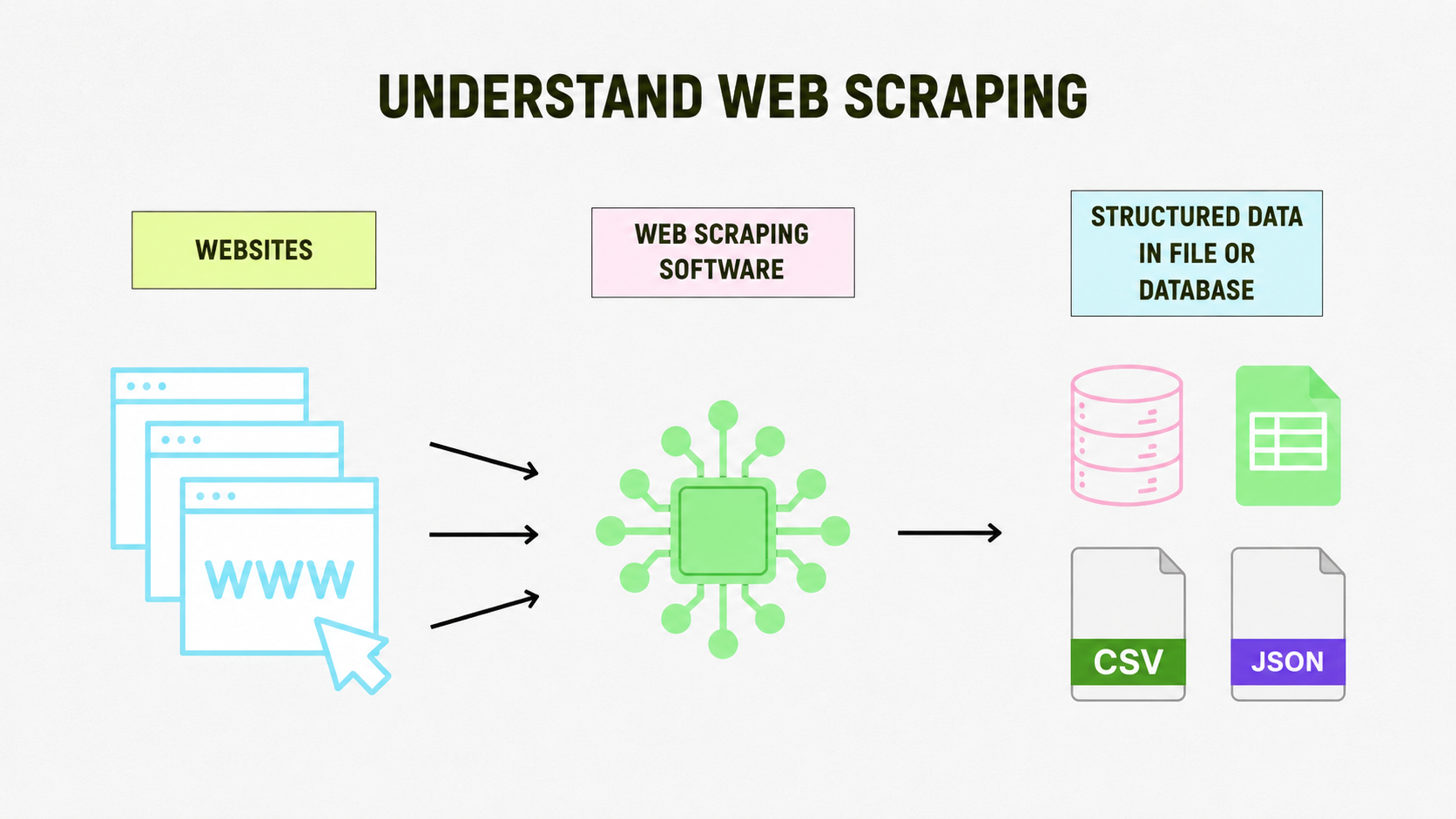
The web is a goldmine for marketers: trends, contacts, customer reviews, competitor strategies, pricing data — it's all out there. Web scraping lets you collect this data at scale, automatically and systematically. But how does it actually work? Which tools should you use? And what can you legally scrape?
In this guide, we cover the full picture: how scraping works technically, 8 concrete use cases for marketing and prospecting, and the constraints you need to navigate.
Web scraping works like sending a virtual assistant out across the internet to grab exactly the information you need. Instead of spending hours copying and pasting content by hand, a script reads a web page and automatically pulls out the data you care about: text, images, prices, customer reviews, emails, and more.
Websites are built with HTML code, the structure that organizes everything you see on screen. Web scraping means exploring that structure to identify and pull out specific elements: an article headline, a data table, a price list, or links to images.
Source: https://kinsta.com/fr/base-de-connaissances/web-scraping/
Several technologies handle scraping well:
Which tool you pick depends on the type of data you're after and how well protected the target site is. Some sites block bots outright or use captchas to stop automated extraction. Handled well, though, web scraping becomes a strong way to automate data collection and sharpen your marketing strategy.
Web scraping relies on several techniques to extract and structure data from a website. Depending on the site, its HTML structure, and the protections in place, some methods work better than others. Whether you're gathering information about a company, analyzing customer reviews, or pulling prices from a marketplace, there's a method suited to the job, built to automate extraction and get around technical roadblocks.
Here are the main approaches for scraping effectively without getting blocked.
Web pages are built in HTML, a structure containing every element you see on screen (headlines, text, images, links...). HTML parsing means analyzing that structure to locate and extract specific information.
Some sites make scraping harder by requiring human interactions like clicks, scrolling, or a mandatory login. In these cases, simple HTML parsing isn't enough: you need a tool that simulates an actual user.
Before scraping a site, check whether it offers an API. An API gives you official, usually more reliable access to data, with no risk of getting blocked.
Many sites use captchas or limit the number of requests per IP to keep bots away from their data. A few strategies get around these obstacles:
Example: scraping Google search results without getting blocked after a handful of requests.
Tools: 2Captcha, Anti-Captcha, Luminati (proxies).
Combine these methods and you can automate data collection efficiently and quietly. The right approach depends on the target site and the technical constraints you're working around.
Web scraping changes the math on prospecting. Instead of spending hours hunting down prospects one by one, it automatically surfaces valuable information about companies that are growing, local businesses, or influential creators. The result: less wasted time, more qualified contacts.
Here are four simple, effective ways to use scraping to find the right customers and boost your prospecting.
Companies that are hiring are usually growing, which means new needs for software, services, or equipment. Scraping job platforms like LinkedIn, Welcome to the Jungle, and Indeed lets you identify high-potential prospects and pitch them the right solution.
LinkedIn is a goldmine for finding professional contacts and building out a B2B prospecting list. Scraping lets you collect profiles by precise criteria: job title, industry, company size. Some tools even extract professional email addresses when they're publicly available.
If you're targeting local customers, Google Maps is a great source for business information: name, address, phone number, reviews, hours. Pull this data and it becomes easy to reach the right contact directly and tailor your pitch to their business and location.
Influencers play a key role in marketing strategy, but reaching out to them one by one wastes enormous amounts of time. Web scraping automates collecting their professional email addresses (listed in bios or descriptions), performance stats, and even links to their other channels.
[rta-block=folder-cta][rta-title=h3]Want to explore your tracking potential?[rta-title=h3][rta-btn=regular href="/prendre-rendez-vous-typeform" target=_blank]Get a free audit[rta-btn=regular][rta-block=folder-cta]
Web scraping isn't just useful for prospecting. It's also a serious weapon for keeping an eye on competitors and catching trends before everyone else. Comparing prices, breaking down competitor strategy, understanding what customers actually want: with the right setup, you can automate all of it and get a real head start.
Here are four ways to use scraping to sharpen your competitive intelligence and stay a step ahead.
In online retail, prices shift constantly, and staying competitive can turn into a full-time headache. Web scraping lets you pull competitor pricing and adjust your strategy in real time.
Social media is a goldmine for watching competitor strategy and understanding what resonates with their audience. Automate the collection of posts and engagement (likes, shares, comments), and spotting the content that performs becomes easy.
Customer reviews are a rich source of insight into what people love, and what they can't stand. Scrape reviews from platforms like Trustpilot, Amazon, or Google Reviews, and you can identify the strengths and weaknesses of your own products, and your competitors' too.
Specialized blogs and forums are often the first to discuss new trends, long before they take off on social media. Scrape these platforms and you can catch topics as they emerge and adjust your strategy accordingly.
Web scraping is highly effective, but it isn't a free-for-all. Between the rules you need to follow, the protections sites put up, and the technical headaches involved, it pays to know where the limits are before you run into trouble. Here are the main obstacles to keep in mind.
Just because information sits online doesn't mean you're free to collect it. In Europe, GDPR governs anything touching personal data, and in the US, laws like the DMCA protect online content. Some sites ban scraping outright in their terms of use, and ignoring that can bring real penalties.
Good practice: always check whether data can legally be used, and avoid scraping sensitive information like personal emails without authorization.
Many sites set their own rules through a robots.txt file, which spells out what can (and can't) be scraped. Others enforce request limits to keep their servers from getting overwhelmed by overly aggressive bots.
Good practice: always check the robots.txt before scraping a site, and space out your requests so you don't get blocked too quickly.
Even when a site doesn't block bots outright, plenty of things can complicate data collection:
How to handle it: use proxies to avoid getting flagged, track site updates, and organize your data properly with a SQL database or a cloud solution.
Scraping a site too aggressively can get you blocked immediately, and it can also slow the site down for other users. Some sites respond with drastic measures like IP bans or tighter security.
Good practice: don't fire off too many requests at once, and use an API when one's available. It's usually cleaner, faster, and keeps you off the radar.
Web scraping is a strong way to automate prospecting, track competitors, and catch trends fast. With these 8 concrete examples, you now have a solid picture of what it can do for your marketing.
That said, scraping carelessly causes problems. Stick to the rules, don't overload sites, and favor an API when one exists.
To get started, test tools like Phantombuster, Scrapy, or ParseHub on small projects before scaling up. Used well, scraping can genuinely accelerate your marketing strategy.
Lorem ipsum
.jpeg)
Writer at Bulldozer, he covers web scraping, UGC and no-code, mixing data, storytelling and SEO.
Can't find what you're looking for ? Contact us here
jordan@bulldozer-collective.comGet access to playbooks and feedback from those who are shaping the next wave of marketing and AI.