

z

Semantic SEO Audit: How to Optimize Your Content for Search

Learn how to conduct a semantic audit to optimize your content strategy and improve your SEO rankings.

Table of contents

Do you know whether your site's content is truly SEO-optimized? You can find out by running a semantic audit. This analysis helps boost your online visibility and provides recommendations to make your content meet the expectations of your audience and search engines

Learn more about the semantic SEO audit — a powerful tool to sharpen your content strategy and improve your positioning in search results!

What Is a Semantic Audit?

A semantic audit, also known as an editorial audit or SEO semantic analysis, is an in-depth evaluation of your website's content. This analysis aims to identify the keywords that need to be addressed to improve SEO performance. 

The primary objective is to ensure that your content is relevant to your audience and optimized for search engines.

A semantic audit also allows you to:

  • identify relevant keywords and phrases for your industry;
  • analyze the relevance of your current content against those keywords;
  • detect improvement opportunities and content creation gaps;
  • optimize the semantic structure of your site to improve its search ranking.

A semantic audit is the foundation of an effective SEO content strategy. It helps you understand how search engines perceive your site and identify areas for improvement to gain better visibility.

The Difference Between a Semantic Audit and a Technical SEO Audit

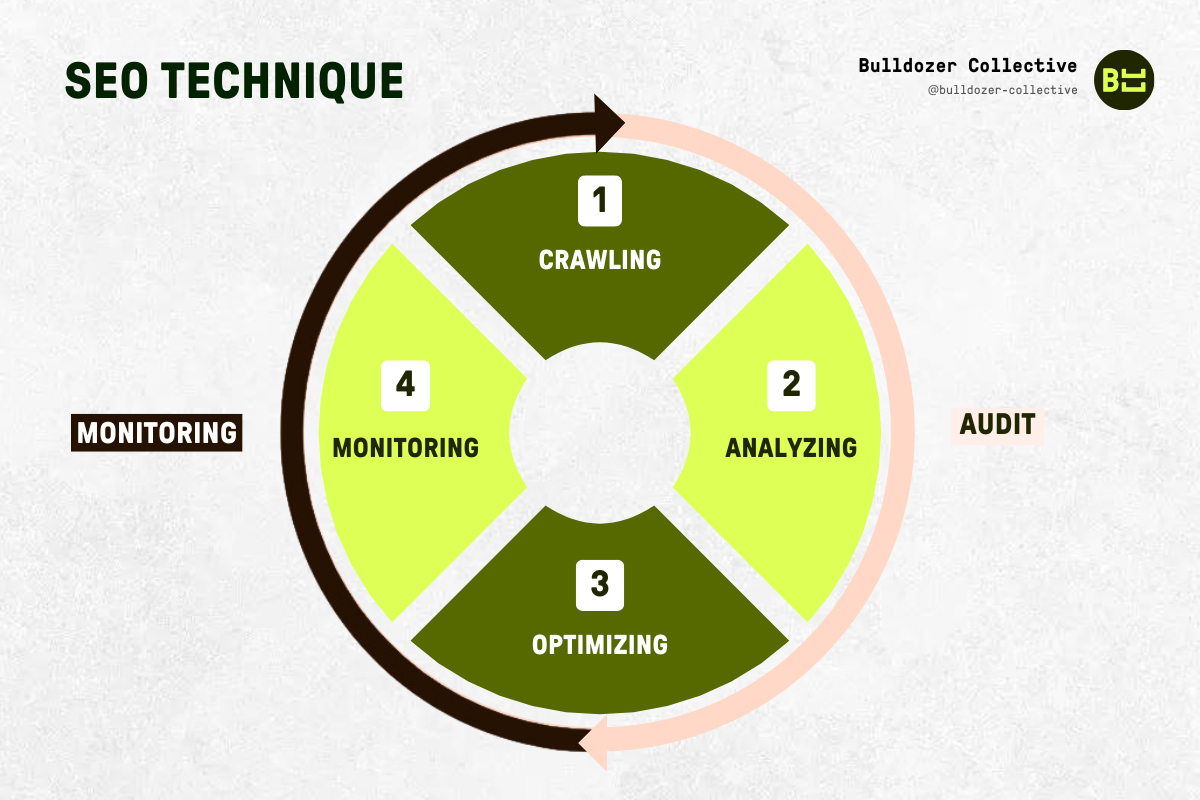
A technical SEO audit focuses on the technical aspects of your site (load speed, URL structure, meta tags, etc.), while a semantic audit focuses on content and its relevance. 
__wf_reserved_inherit
https://www.hextrakt.com/technical-seo-for-beginners/

A semantic SEO audit is complementary to the technical audit.

The Key Steps of a Semantic Audit

Keyword and Topic Analysis

The first step of a semantic audit is to identify target keywords and analyze the thematic clusters relevant to your business. 

The goal is to uncover the optimization levers to apply to your site to make it more visible on Google. Explore your topic space and map out your full lexical field, including:

  • your domain and offerings;
  • expressions of user intent;
  • your product or service catalog;
  • indirect expressions reflecting your audience's needs.

For example, if you run a camping gear website, your keywords might include terms like "4-season tent", "ultralight sleeping bag", or "compact camping stove." 

Indirect expressions might be "how to pack a backpack for a trek" or "best wild camping spots."

Evaluating Existing Content

Once keywords and topics are identified, it's time to assess the quality and relevance of your content. To do this, make sure to:

  • analyze editorial quality;
  • check the length and originality of your content;
  • evaluate the alignment between your content and users' search intent.

This is the step where you ensure your content addresses users' search intent.

Internal Linking Analysis

Internal linking is an SEO technique that improves site navigation, increases the semantic relevance of pages, and strengthens your site's authority in search engines. 

To evaluate your current linking structure, make sure to:
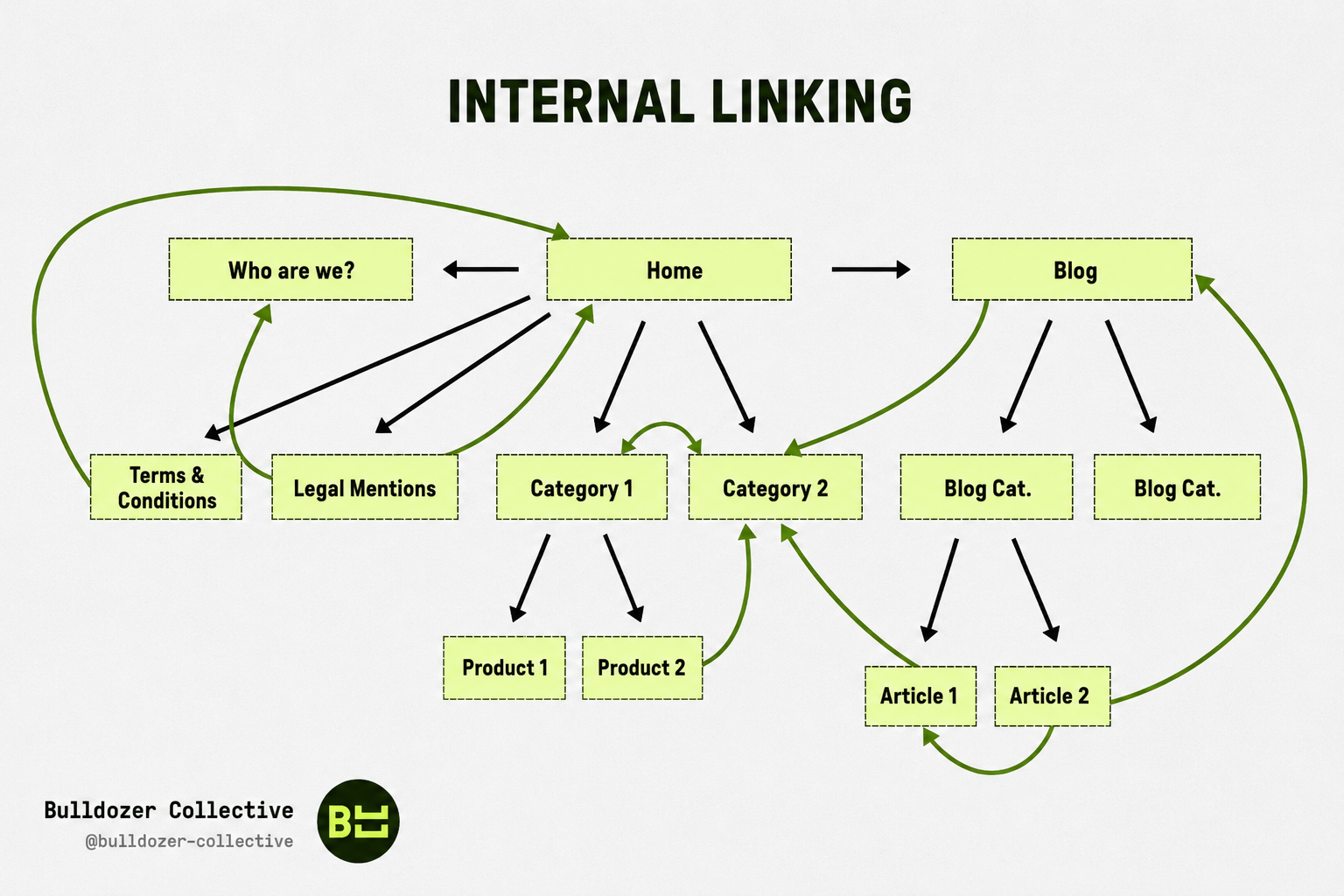
  1. Check the relevance and quality of internal links. Ensure they are logical and useful for the user.

  2. Optimize anchor text (the clickable text of a link) to reinforce semantics. Internal link anchors should be descriptive and contain relevant keywords that signal to search engines what the linked page is about.

  3. Identify opportunities to create new internal links. This can include linking to relevant blog articles from product pages, connecting guides to tutorials, or linking to FAQ pages from articles. 
__wf_reserved_inherit

A strong internal linking structure improves navigation for both users and search engine bots. For example, if you have an article on "the best tents for family camping," you could create internal links to specific product pages or to other articles such as "how to choose the right sleeping bag" or "essential camping gear checklist."

Which Tools Should You Use for a Semantic Audit?

To conduct an effective semantic audit, it's recommended to use a combination of free and paid tools

Best Free Tools for a Semantic Audit

  • Google Search Console lets you analyze the queries driving traffic to your site. You can also see which keywords generate impressions and clicks.
  • Google Analytics helps you study user behavior on your pages. You can identify the most performing pages and those that need improvement.
  • Answer The Public is useful for discovering frequently asked questions around your topics. It can help you create content that addresses your audience's queries.

Best Paid Professional Tools for a Semantic Audit

  • SEMrush is a keyword and competitive analysis tool that helps you identify opportunities for your own site.
  • Ahrefs is a tool for analyzing your link profile and keyword opportunities. It also offers site audit and content analysis features.
  • SEOQuantum specializes in in-depth semantic analysis and provides detailed optimization recommendations.

[rta-block=folder-cta][rta-title=h3]Want to learn more about your SEO potential?[rta-title=h3][rta-btn=regular]Get a Free Audit[rta-btn=regular][rta-block=folder-cta]

The Final Step: Interpreting Results

Interpreting results will allow you to:

  • identify pages that perform well and those that need improvement;
  • spot gaps in your topical coverage;
  • detect content creation opportunities to fill those gaps.

For example, you might discover that your page on "4-season tents" performs well, but that you have no content on "ultralight hiking tents" — a popular topic with your audience.

Improvement Recommendations

Based on your analysis results, you can build an action plan that includes:

  • creating new content targeted at relevant keywords;
  • revising and enriching existing content;
  • optimizing the semantic structure of your site;
  • improving the use of semantic HTML tags.

Real-World Case Studies

Many companies have seen their online visibility improve significantly after conducting a semantic audit and implementing the recommendations.

Windows Report was experiencing stagnating growth and used a content model to reorganize its content and implement a linked strategy for its online magazine. This overhaul led to a 61% increase in traffic in 8 months, bringing their monthly organic traffic to over one million visits.

Ivory & Deene focused on in-depth keyword research and resolving technical issues. A strategic link-building campaign was also implemented, enabling significant revenue growth.

By applying a semantic audit to optimize your site's content, you can trigger significant and sustainable growth in your online visibility. While this audit doesn't replace traditional methods such as technical SEO, it complements and reinforces these strategies, offering a more holistic approach that can improve your search engine rankings.

Ready to fully leverage the potential of a semantic audit for your business? Our SEO specialists are available to guide you. Contact us now for a personalized consultation!

To go further in your SEO strategy, feel free to explore our other resources on content optimization and SEO best practices.

Lorem ipsum

Charlotte Nowak
Charlotte Nowak
Content Marketing Manager
September 22, 2024

Lorem ipsum dolor sit amet, consectetur adipiscing elit. Duis quis iaculis est. Nulla ac ligula feugiat, cursus turpis volutpat, ultricies eros.

Read more from this author

See more

To go further

SEO Audit: Improve Your Website Visibility in 2026
August 31, 2024
SEO
Charlotte Nowak
SEO Audit: Improve Your Website Visibility in 2026
The Death of the 3 SEO Pillars
May 2, 2024
SEO
Pierre-André Patry
The Death of the 3 SEO Pillars
Technical SEO Audit: A Complete Guide to Optimizing Your Site in 2026
October 15, 2024
SEO
Charlotte Nowak
Technical SEO Audit: A Complete Guide to Optimizing Your Site in 2026

Frequently asked questions

Can't find what you're looking for ? Contact us here

jordan@bulldozer-collective.com
What is a semantic audit?
A semantic audit is an in-depth analysis of the relevance and quality of a website's content, aimed at improving its search ranking.
Why is it important to carry out a semantic audit?
It is important to carry out a semantic audit in order to identify opportunities for improvement, optimize content, and stand out from the competition.
What tools are needed for a semantic audit?
Tools such as SEOQuantum, SEMrush, and Ahrefs are commonly used to analyze semantic data, alongside free tools like Google Search Console and Analytics.
How can a semantic audit improve SEO?
A semantic audit can improve SEO by optimizing content, strengthening internal linking, and identifying the keywords and themes that are relevant to your audience and your industry.
How often is it recommended to carry out a semantic audit?
It is recommended to carry out a semantic audit at least once a year, or more frequently if your sector is evolving rapidly.
How do you integrate the results of a semantic audit into my content strategy?
The results of a semantic audit can be integrated by creating a content plan based on the identified keyword opportunities, optimizing existing content, improving internal linking, and developing new content to fill the thematic gaps identified.
Newsletter

Join those who are redefining AI-driven growth.

Get access to playbooks and feedback from those who are shaping the next wave of marketing and AI.


Thank you! Your submission has been received!
Oops! Something went wrong while submitting the form.
Leo Lacoste
Léo Lacoste
Sales Manager

Heading

Lorem ipsum dolor sit amet, consectetur adipiscing elit. Suspendisse varius enim in eros elementum tristique. Duis cursus, mi quis viverra ornare, eros dolor interdum nulla, ut commodo diam libero vitae erat. Aenean faucibus nibh et justo cursus id rutrum lorem imperdiet. Nunc ut sem vitae risus tristique posuere.