
August 18, 2024
Complete Guide to Your Brand Content Strategy
Learn how to create a high-performing brand content strategy to strengthen your brand identity and engage your audience.
August 18, 2024
Learn how to create a high-performing brand content strategy to strengthen your brand identity and engage your audience.
Looking to stand out in a saturated market and build a lasting connection with your customers?
The first step toward this goal is developing a deep understanding of your target audience's desires and needs. By investing in high-quality, personalized, and relevant content, and adopting innovative delivery methods like augmented reality or livestreams, you can capture your audience's attention in a meaningful way.
Ready to transform your content strategy and establish yourself as a thought leader in your field? Discover how a well-thought-out brand content strategy can revolutionize your brand communication and transform your relationship with your audience.
Brand content, or branded content, refers to all the strategic content produced by a brand. Its purpose is to tell a story or share expertise with consumers, going beyond standard commercial messaging.
As Thomas Jamet, CEO of IPG Mediabrands France, explains, brand content is the art of communicating about your values rather than your products. It's creating content that consumers choose to watch rather than endure.
Today, consumers are overwhelmed by advertising messages. Brand content helps you stand out, and allows you to:
Brand content enables the construction of a strong and memorable brand image.
Before diving into content creation, you need to define the objectives of your brand content strategy. These objectives might include:
Your objectives must be SMART (Specific, Measurable, Achievable, Realistic, and Time-bound).
An effective brand content strategy is built on a deep understanding of your audience. Define your marketing personas by considering criteria such as:
Select the most relevant channels based on your objectives and your audience's consumption habits. The main channels for brand content include:
Each channel has its own strengths and attracts different segments of your audience, so choosing the right mix can increase the effectiveness of your content strategy.
[rta-block=folder-cta][rta-title=h3]Want to learn more about your content potential?[rta-title=h3][rta-btn=regular href="/prendre-rendez-vous-typeform" target=_blank]Get a free audit[rta-btn=regular][rta-block=folder-cta]
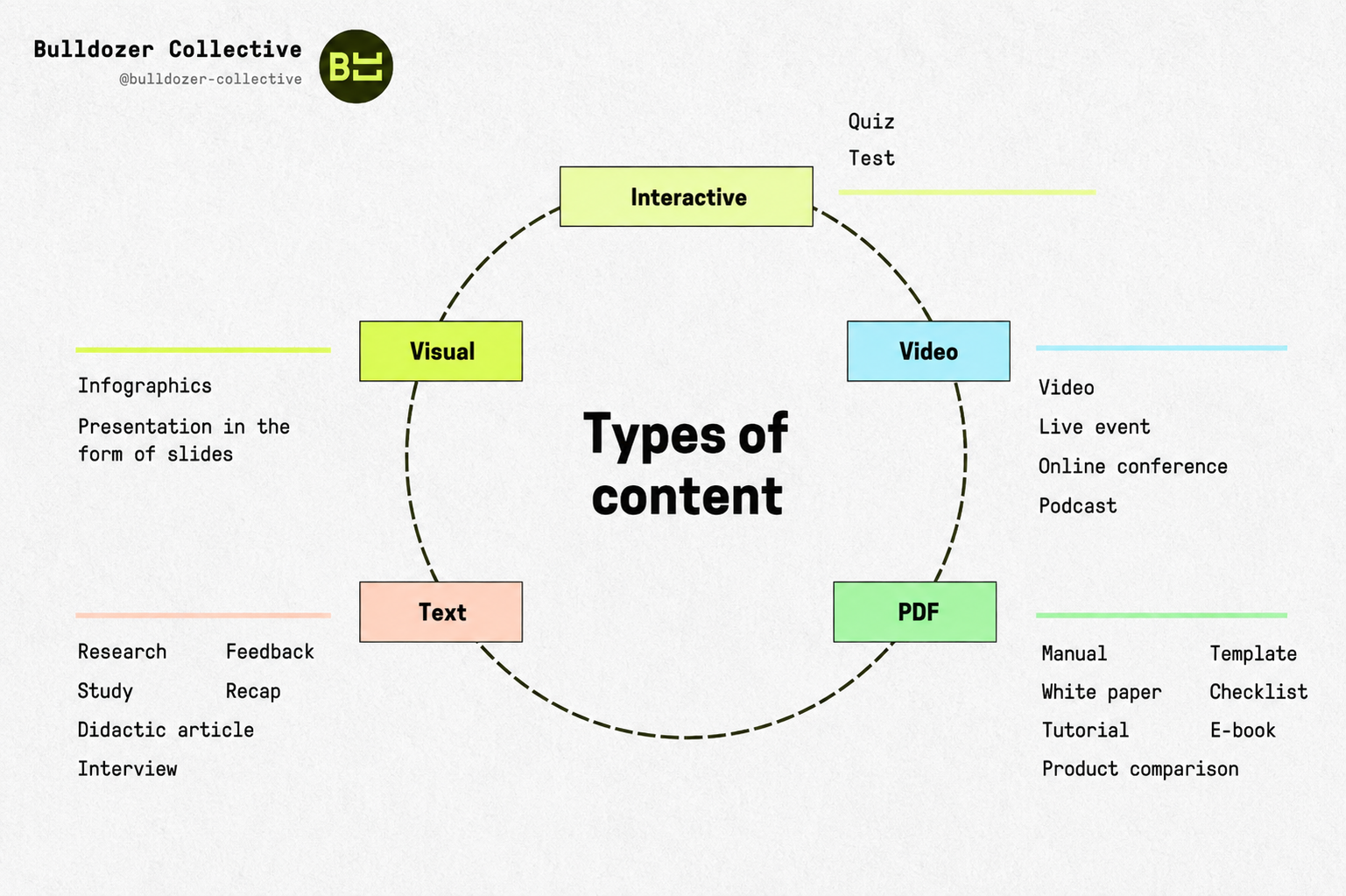
Brand content can take many forms. The most popular are:
Storytelling is at the heart of effective brand content. It's about telling a story that embodies your brand's values.
Think about creating characters your audience can identify with. Use a clear narrative structure and appeal to emotions to create a strong connection. You can use visual elements to support the storytelling.
A great example of storytelling is the Intermarché "L'amour, l'amour" campaign. It tells a romance story and reaffirms the brand's closeness with its customers. The result? Increased brand awareness and emotional engagement from consumers.
Red Bull has partnered with extreme sports and adventures, creating captivating videos that embody the spirit of the brand without directly showing the product. The brand currently has more than 15 million subscribers on YouTube and achieved a 7% increase in its global market share between 2019 and 2020.
Dove's "Show Us" campaign invited women to share their vision of beauty, reinforcing the brand's values of inclusivity and diversity. The campaign generated more than 5 billion media impressions and led to a 2% increase in Dove's global sales in 2019.
Nike excels in the art of storytelling. The brand creates content that showcases a world athletes identify with, while only revealing its products at the very end of its ads. This approach allows Nike to create an emotional connection with its audience.
The "Dream Crazy" campaign featuring Colin Kaepernick generated more than $43 million in media value and led to a 31% increase in online sales.
These examples highlight key points to keep in mind when building your strategy:
Think about defining relevant KPIs. Monitor indicators such as:
Regular analysis of your results will help you understand what is working and what can be improved. Examine:
Use web analytics and social media tools (such as LinkedIn) to gain insights into your content performance.
Based on your analyses, make continuous adjustments to your brand content strategy.
Adapt your content types to better resonate with your audience and refine your tone and style to reflect your brand. Don't hesitate to experiment with new formats or distribution channels, and optimize the frequency and timing of your publications to maximize their impact.
Listen to your audience's feedback and integrate this input into your strategy to stay responsive to market changes and your audience's needs.
An effective brand content strategy can not only strengthen your brand image, but also engage your audience and clearly set you apart from the competition. Are you ready to transform your brand communication and stand out?
Start building your brand content strategy today and watch your brand take on a new dimension in the eyes of your consumers. If you'd like to further optimize your strategy and maximize the impact of your content, our team is here to support you. Contact us to discover how we can help you strengthen your market positioning!
Lorem ipsum

Content Marketing Manager at Bulldozer, she writes about content strategy, editorial systems and distribution.
Can't find what you're looking for ? Contact us here
jordan@bulldozer-collective.comGet access to playbooks and feedback from those who are shaping the next wave of marketing and AI.