
SEA Analysis: The Complete Method to Audit and Outperform the Competition
How to audit your paid search campaigns, benchmark against competitors, and identify the levers that will improve performance. Full method inside.
How to audit your paid search campaigns, benchmark against competitors, and identify the levers that will improve performance. Full method inside.

Running paid search without precise analysis is flying blind. Every click costs money, and without a rigorous audit framework, you're optimizing on gut rather than data. This article gives you the complete method: how to structure a SEA analysis, what to benchmark against competitors, and the exact levers to pull to improve performance.
SEA analysis is a strategic process that breaks down every part of your paid search efforts to extract insights you can actually act on.
SEA analysis differs from other marketing analyses in a few clear ways. Here's a quick recap of the different marketing strategies commonly used:
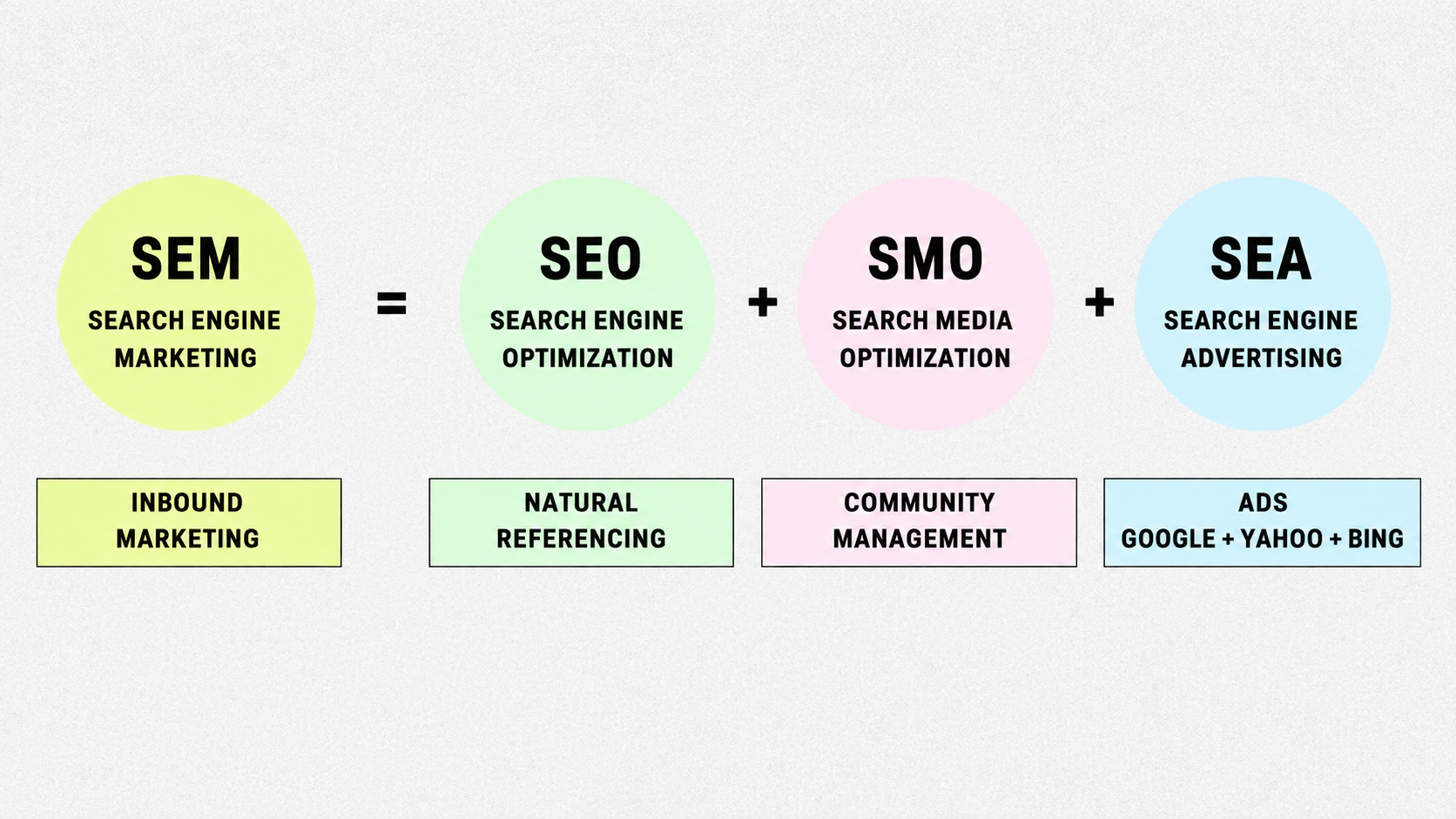
SEA analysis stands out because it delivers real-time data and lets you make immediate adjustments to improve ROI.
You might be asking yourself if SEA analysis is worth the time and resources it takes. It is, and here's why:
The benefits of regular analysis:
SEA analysis goes beyond the numbers. It's a real strategic asset.
Fine-tune your campaigns through careful analysis, and you don't just improve short-term performance, you sharpen your understanding of the market and your audience.
In short, you build a marketing strategy that holds up over time.
Here's a step-by-step guide to running an SEA analysis that actually moves the needle:
Start by asking yourselves what you actually want to achieve with your SEA campaigns. You can use the SMART method to set clear, measurable goals. Here are the KPIs you can't afford to skip:
Pro tip : Align your SEA KPIs with your overall business goals for maximum consistency.
This is where the real work happens. Use powerful tools like Google Ads, Google Analytics, and SEMrush to pull the data that matters.
Don't overlook your attribution model. In an SEA strategy, it's essential for understanding which ad touchpoint contributed most to a conversion, so you can direct ad spend where it counts.
Concrete example : Say you find that 60% of your conversions come from multiple interactions with your ads. That's a signal to rethink your remarketing strategy.
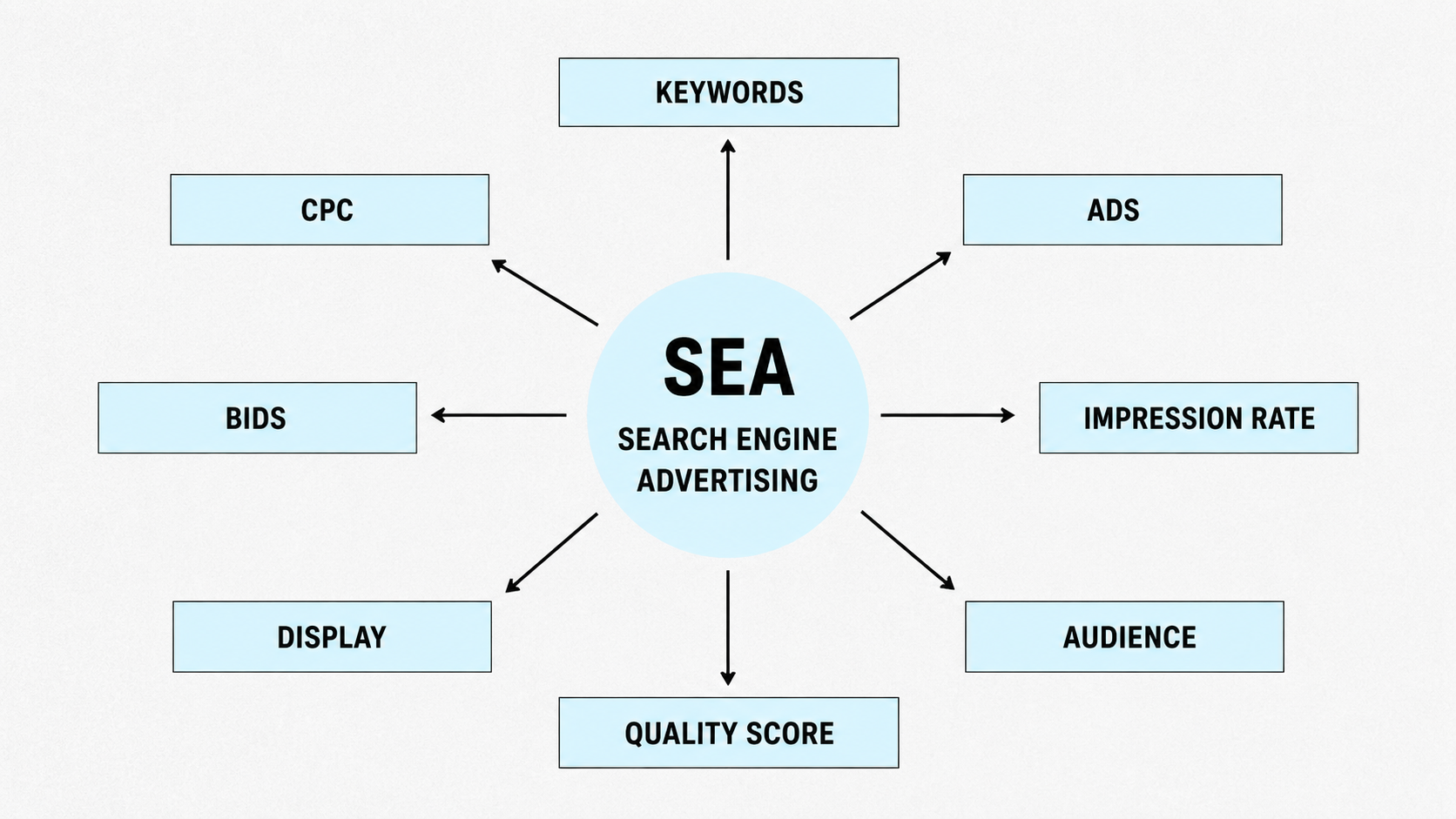
This is where you break down the performance of every element in your campaigns. Use SEMrush not just to analyze your own campaigns, but also to scope out (legally!) your competitors' strategies.
Behind every click is a real person with specific needs and intent. Audience segmentation lets you tailor your campaigns for maximum impact. Break down performance by demographic, geographic, and behavioral criteria.
Time to act. Based on your analysis and the key metrics you've collected, make strategic adjustments to your campaigns:
[rta-block=folder-cta][rta-title=h3]Want to explore your paid potential?[rta-title=h3][rta-btn=regular]Get a Free Audit[rta-btn=regular][rta-block=folder-cta]
A good craftsman needs the right tools. Here's the toolkit for SEA analysis:
Here are a few habits worth building for effective SEA analysis:
A few mistakes to avoid if you're new to SEA:
A sports apparel e-commerce company ran a deep analysis of its SEA campaigns. The analysis revealed how their target audience actually behaved and let them adapt their strategy. Here's what they did as a result:
Result : After 3 months, the company saw its overall conversion rate climb 25%, its cost per acquisition drop 15%, and its ROI improve 35%.
SEA analysis is more than one step in your digital marketing strategy. It's an ongoing process that can genuinely transform your ad campaigns and lift your ROI.
Follow the steps in this guide, use the right tools, and avoid the common mistakes, and you'll be able to:
Keep in mind that SEA analysis never really finishes. The digital landscape keeps changing, and your approach has to change with it. Stay curious, keep testing, and don't hesitate to try new strategies based on what your analysis tells you.

Lorem ipsum dolor sit amet, consectetur adipiscing elit. Duis quis iaculis est. Nulla ac ligula feugiat, cursus turpis volutpat, ultricies eros.
Can't find what you're looking for ? Contact us here
jordan@bulldozer-collective.comGet access to playbooks and feedback from those who are shaping the next wave of marketing and AI.


Lorem ipsum dolor sit amet, consectetur adipiscing elit. Suspendisse varius enim in eros elementum tristique. Duis cursus, mi quis viverra ornare, eros dolor interdum nulla, ut commodo diam libero vitae erat. Aenean faucibus nibh et justo cursus id rutrum lorem imperdiet. Nunc ut sem vitae risus tristique posuere.