

z

Product Led Growth (PLG): Full Definition, Real Examples, and Implementation Guide

Explore Product Led Growth (PLG): definition, success stories, and an implementation guide to make your product the primary engine of your growth.

Table of contents

The Product Led Growth (PLG) is a go-to-market strategy where the product itself is the primary driver of acquisition, conversion, and customer retention. Adopted by Slack, Notion, and Dropbox, PLG replaces the traditional sales force with the product experience. Documented result: a CAC divided by 3 to 5 and user-driven self-sustaining growth.

In the dynamic, competitive SaaS landscape, a new approach is revolutionizing how companies acquire, engage, and retain customers.

This strategy, known as Product Led Growth (PLG) or product-driven growth, puts the product at the heart of the customer experience and the growth process.

Let's explore how this innovative approach can transform your SaaS business and accelerate your growth.

What Is Product Led Growth Exactly?

What Is Product Led Growth? (Definition and Origins)

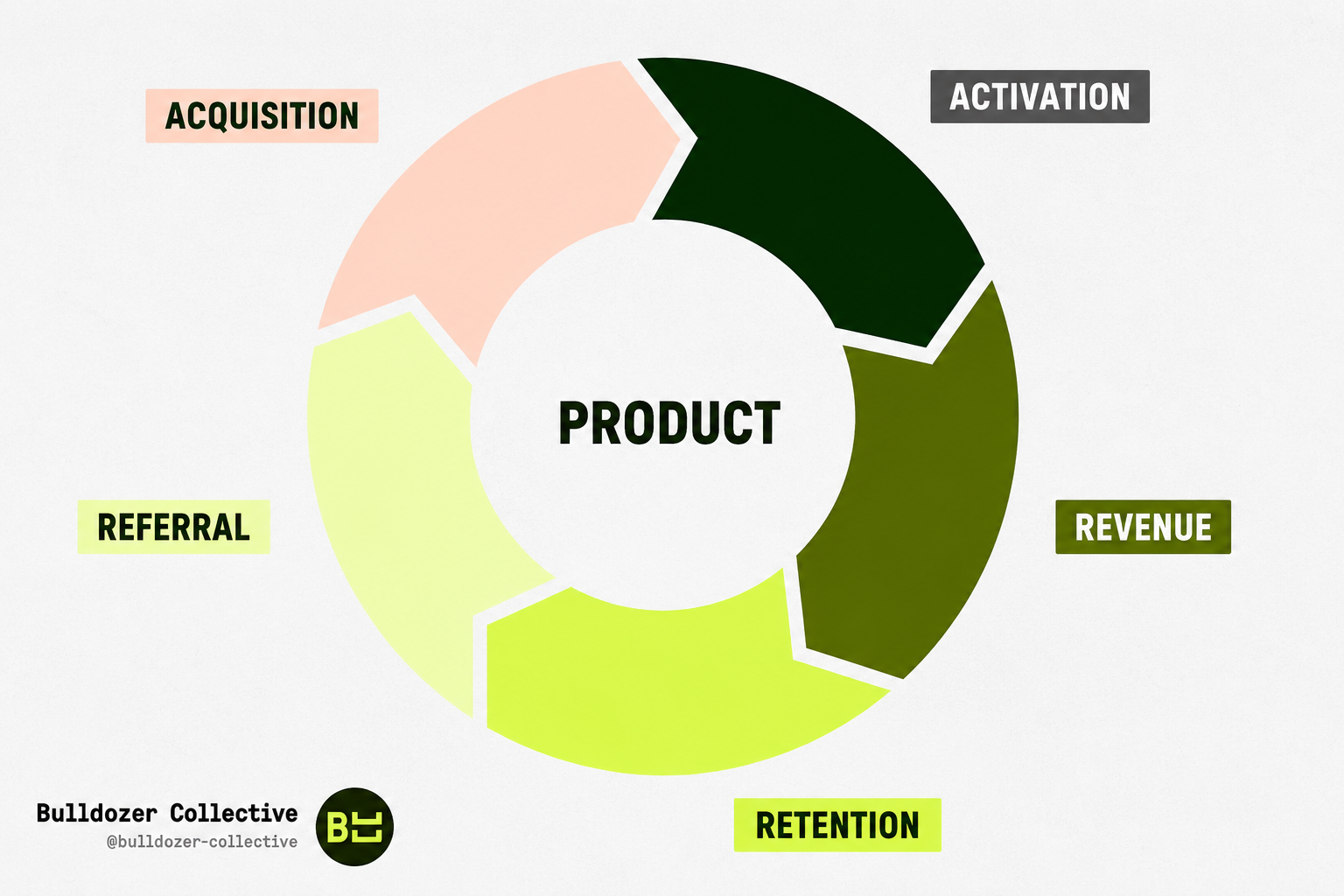
Product Led Growth is a business strategy that uses the product as the primary driver of customer acquisition, activation, and retention.

Unlike traditional sales- or marketing-centric approaches, PLG emphasizes creating an exceptional product experience that encourages users to adopt the product organically.
__wf_reserved_inherit

According to ProductLed.com, the core principles of PLG are:

  1. Allowing users to experience the product before purchasing.
  2. Creating an intuitive, high-value user experience.
  3. Using product usage data to guide business decisions.
  4. Fostering viral growth through user satisfaction.

Product Led Growth in the SaaS Industry

The rise of PLG is closely tied to the evolution of the SaaS market and shifts in buyer behavior. Pendo.io highlights that a growing number of buyers, including in B2B, prefer to self-educate and try a product themselves rather than going through a traditional sales process.

This trend has led many SaaS companies to adopt freemium or free trial models, allowing users to discover the product's value before committing.

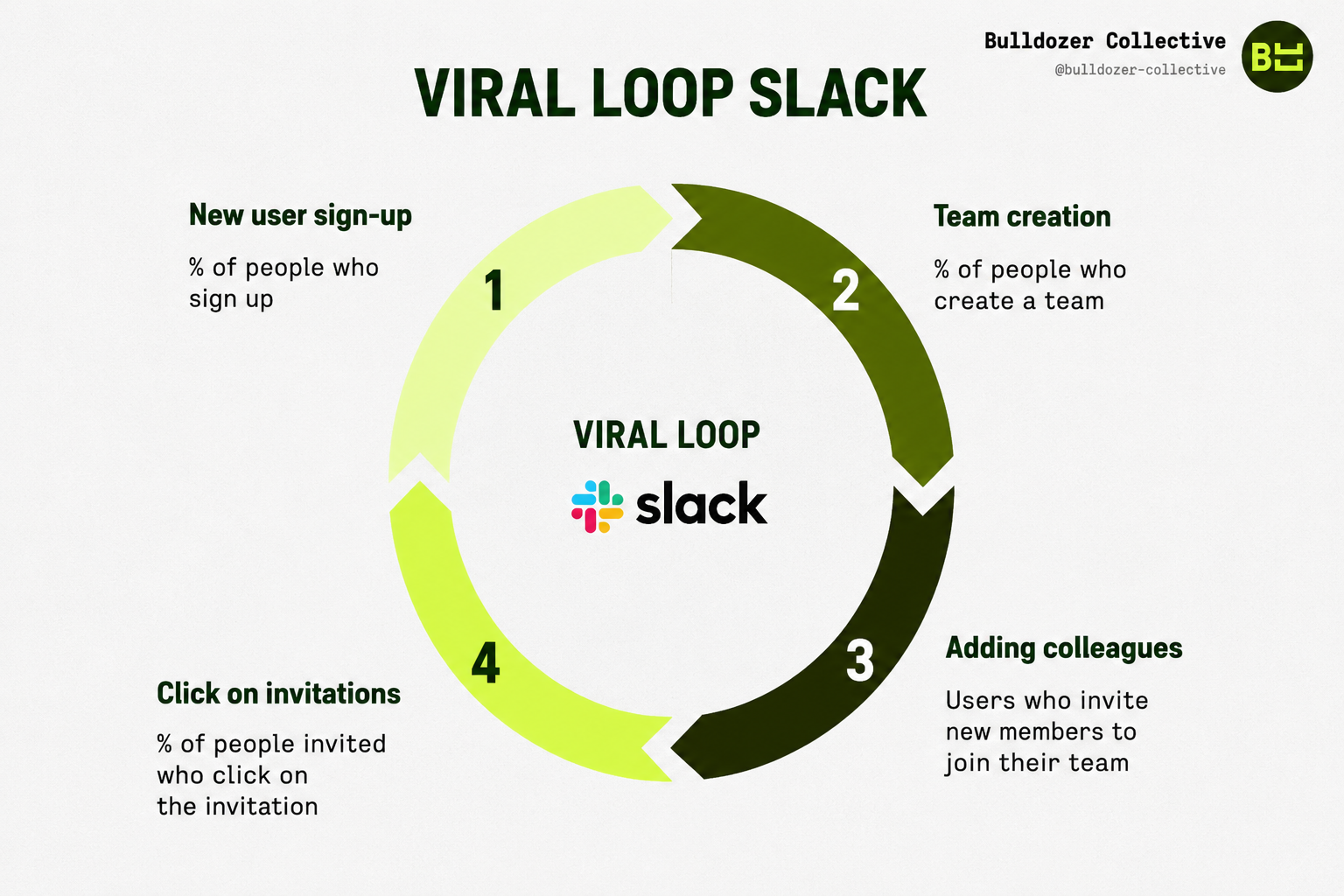
Success stories like Slack, Dropbox and Zoom have demonstrated the effectiveness of this approach, inspiring many other companies to follow suit.
__wf_reserved_inherit

According to a study by OpenView Partners, companies adopting a PLG strategy saw a median growth of 55% in 2021, versus 29% for non-PLG companies.

[rta-block=folder-cta][rta-title=h3]Want to learn more about your growth potential?[rta-title=h3][rta-btn=regular]Get a Free Audit[rta-btn=regular][rta-block=folder-cta]

PLG: The Framework You Need to Know

Building an Effective Framework

An effective PLG framework rests on several key elements:

  • Rapid activation: Help users reach their first moment of value as quickly as possible
  • Progressive adoption: Guide users toward deeper product usage over time
  • Expansion: Encourage increased product use and adoption of premium features
  • Referral: Make it easy for satisfied users to share and recommend the product

ProductLed.org offers the concept of the "Product-Led Growth Flywheel" — a framework illustrating how these elements interconnect to create a virtuous growth loop.

Dropbox excels at this framework. The file hosting platform leverages multiple PLG levers:

  • rapid activation (simple installation);
  • progressive adoption encouraged by built-in tutorials;
  • expansion driven by additional storage offers;
  •  referral stimulated by an attractive referral program.

The Importance of User Experience (UX)

In a PLG strategy, user experience is paramount. A well-designed UX should:

  1. Be intuitive and easy to get started with.
  2. Deliver immediate and ongoing value.
  3. Adapt to each user's specific needs.
  4. Encourage exploration and adoption of new features.

By investing in high-performance UX, companies can reduce friction and drive customer loyalty.

Alignment Between Product and Marketing Teams

PLG success relies on close collaboration between product and marketing teams. The product team must design features that facilitate user acquisition and engagement. The marketing team must use product usage data to target and personalize communications.

Together, these teams create a cohesive user journey, from product discovery to advanced usage.

PLG: Which Metrics Should You Track?

Acquisition and Activation

Acquisition and activation metrics are essential for measuring the effectiveness of your PLG strategy:

  • Acquisition rate: Number of new registered users.
  • Activation rate: Percentage of users reaching their first moment of value.
  • Time to activation: Average time to reach the first moment of value.

For example, Calendly, a scheduling tool, measures its activation rate by the number of users who create and share their first scheduling link within 24 hours of signing up.

Retention and Expansion

These metrics measure your product's ability to retain and grow your user base:

  • Retention rate: Percentage of users who continue using the product over a given period.
  • Expansion rate: Revenue growth from existing customers.
  • Net churn rate: Net revenue loss after accounting for expansions and new acquisitions.

Revenue and Referrals

These metrics assess the financial performance and virality of your product:

  • Average Revenue Per User (ARPU): Average amount generated by each user
  • Customer Lifetime Value (CLV): Total revenue expected from a customer over their relationship with the company
  • Net Promoter Score (NPS): Measure of customer satisfaction and likelihood to recommend
  • Virality rate: Number of new users generated by each existing user

Tools for Tracking Your Metrics

To effectively track these metrics, it's crucial to use appropriate analytics tools. Platforms like Pendo, Amplitude, or Mixpanel can help you collect, analyze, and visualize this important data.

These tools not only measure performance, but also identify improvement opportunities and support data-driven decisions.

Integrating PLG into Your Strategy: Where to Start? 

Getting Started with a Product-Led Approach

To integrate PLG into your strategy, start by:

  1. Identifying the key moments of value in your product.
  2. Designing an onboarding journey that quickly guides users to those moments of value.
  3. Implementing a free trial or freemium model adapted to your product.
  4. Developing feedback mechanisms to collect user input.
  5. Using analytics tools to track key PLG metrics.

Sustaining Your PLG Approach: Best Practices

Transitioning to a PLG approach can present certain challenges:

  • Internal resistance: Educate your teams on the benefits of PLG and involve them in the transition process. Resistance to change is a recurring dynamic in transformation projects.
  • Balancing growth and monetization: Find the right balance between delivering free value and generating revenue.
  • Product complexity: Simplify the user experience and focus on essential features.
  • Resource management: Invest in automation and analytics tools to efficiently manage a growing user base.

For companies accustomed to a traditional sales model, the transition to PLG can be particularly challenging. The solution is to adopt a hybrid approach initially — use PLG to generate qualified leads that the sales team can then convert.

Continuous Analysis and Adaptation: Keys to Success

PLG is not a static strategy. To succeed, it's crucial to:

  • Continuously monitor key metrics and user behaviors.
  • Regularly experiment with different onboarding, pricing, and feature approaches.
  • Adapt your strategy based on user feedback and market evolution.
  • Foster a culture of continuous improvement within your organization.

Product Led Growth represents a paradigm shift in how SaaS companies approach growth. By placing the product at the heart of customer acquisition, activation, and retention, PLG offers exponential growth potential while reducing acquisition costs.

Succeeding with a PLG strategy requires more than just a change of business model. It demands a complete rethinking of how the company designs, develops, and commercializes its product.

Product Led Growth is becoming an essential strategy for companies looking to thrive in an increasingly competitive environment. By adopting the principles of PLG, you can transform your product into a true growth engine, capable of acquiring and retaining customers at scale.

Ready to explore how Product Led Growth could transform your company? The Bulldozer Collective team supports SaaS publishers in their growth strategy. Contact us for free to learn more.

Lorem ipsum

Charlotte Nowak
Charlotte Nowak
Content Marketing Manager
August 31, 2024

Lorem ipsum dolor sit amet, consectetur adipiscing elit. Duis quis iaculis est. Nulla ac ligula feugiat, cursus turpis volutpat, ultricies eros.

Read more from this author

See more

To go further

Top 10 Growth Marketing Agencies: The No-BS Guide to B2B Growth
August 13, 2025
Growth
Charlotte Nowak
Top 10 Growth Marketing Agencies: The No-BS Guide to B2B Growth
The 8 New Rules of Market Research in 2026
June 17, 2024
Growth
Killian Drecq
The 8 New Rules of Market Research in 2026
Understanding Growth Hacking with 7 Concrete Examples (Techniques and Funnels)
July 11, 2025
Growth
Killian Drecq
Understanding Growth Hacking with 7 Concrete Examples (Techniques and Funnels)

Frequently asked questions

Can't find what you're looking for ? Contact us here

jordan@bulldozer-collective.com
What is Product Led Growth?
Product Led Growth is a strategy in which the product itself is the main driver of customer acquisition and retention. It emphasizes creating an exceptional product experience that encourages users to adopt, use, and recommend the product organically.
What are the benefits of Product Led Growth?
The main benefits include improved product adoption, lower customer acquisition costs, increased customer satisfaction, and faster, more sustainable growth.
How do you measure the success of a Product Led Growth strategy?
Success can be measured through metrics such as activation rate, conversion rate, customer retention, average revenue per user (ARPU), customer lifetime value (CLV), and Net Promoter Score (NPS).
What is the difference between PLG and SLG?
In an SLG model, a sales team handles the entire sales cycle. In a PLG model, the product does that work: the user discovers the product on their own (freemium or trial), adopts it, and the commercial conversion happens downstream — triggered by a product signal (PQL). PLG mechanically reduces CAC and accelerates sales velocity, but it requires a product with immediate perceived value.
What are the most well-known examples of Product Led Growth?
Slack (viral freemium by team), Dropbox (product-native referral: +3900% in 15 months), Figma (real-time collaboration as acquisition), Notion (page sharing as a viral loop), HubSpot (free CRM as an entry point). All share a TtV of under 5 minutes.
Newsletter

Join those who are redefining AI-driven growth.

Get access to playbooks and feedback from those who are shaping the next wave of marketing and AI.


Thank you! Your submission has been received!
Oops! Something went wrong while submitting the form.
Leo Lacoste
Léo Lacoste
Sales Manager

Heading

Lorem ipsum dolor sit amet, consectetur adipiscing elit. Suspendisse varius enim in eros elementum tristique. Duis cursus, mi quis viverra ornare, eros dolor interdum nulla, ut commodo diam libero vitae erat. Aenean faucibus nibh et justo cursus id rutrum lorem imperdiet. Nunc ut sem vitae risus tristique posuere.