

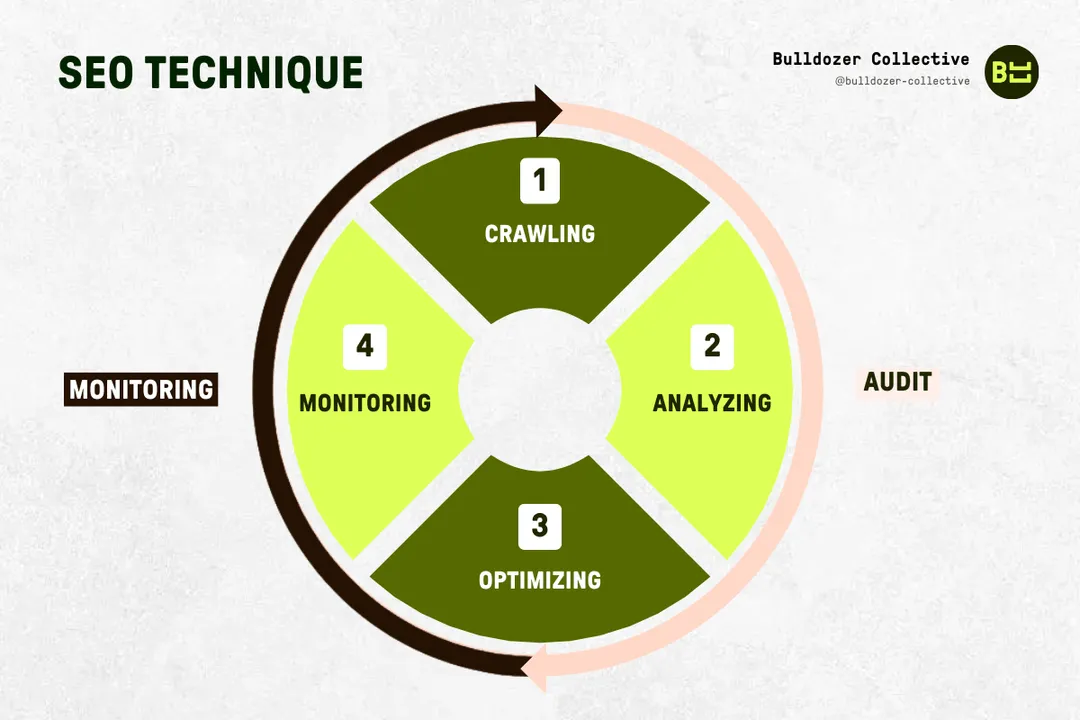
Do you know whether your site's content is truly SEO-optimized? You can find out by running a semantic audit. This analysis helps boost your online visibility and provides recommendations to make your content meet the expectations of your audience and search engines.
Learn more about the semantic SEO audit — a powerful tool to sharpen your content strategy and improve your positioning in search results!
A semantic audit, also known as an editorial audit or SEO semantic analysis, is an in-depth evaluation of your website's content. This analysis aims to identify the keywords that need to be addressed to improve SEO performance.
The primary objective is to ensure that your content is relevant to your audience and optimized for search engines.
A semantic audit also allows you to:
A semantic audit is the foundation of an effective SEO content strategy. It helps you understand how search engines perceive your site and identify areas for improvement to gain better visibility.
A technical SEO audit focuses on the technical aspects of your site (load speed, URL structure, meta tags, etc.), while a semantic audit focuses on content and its relevance.
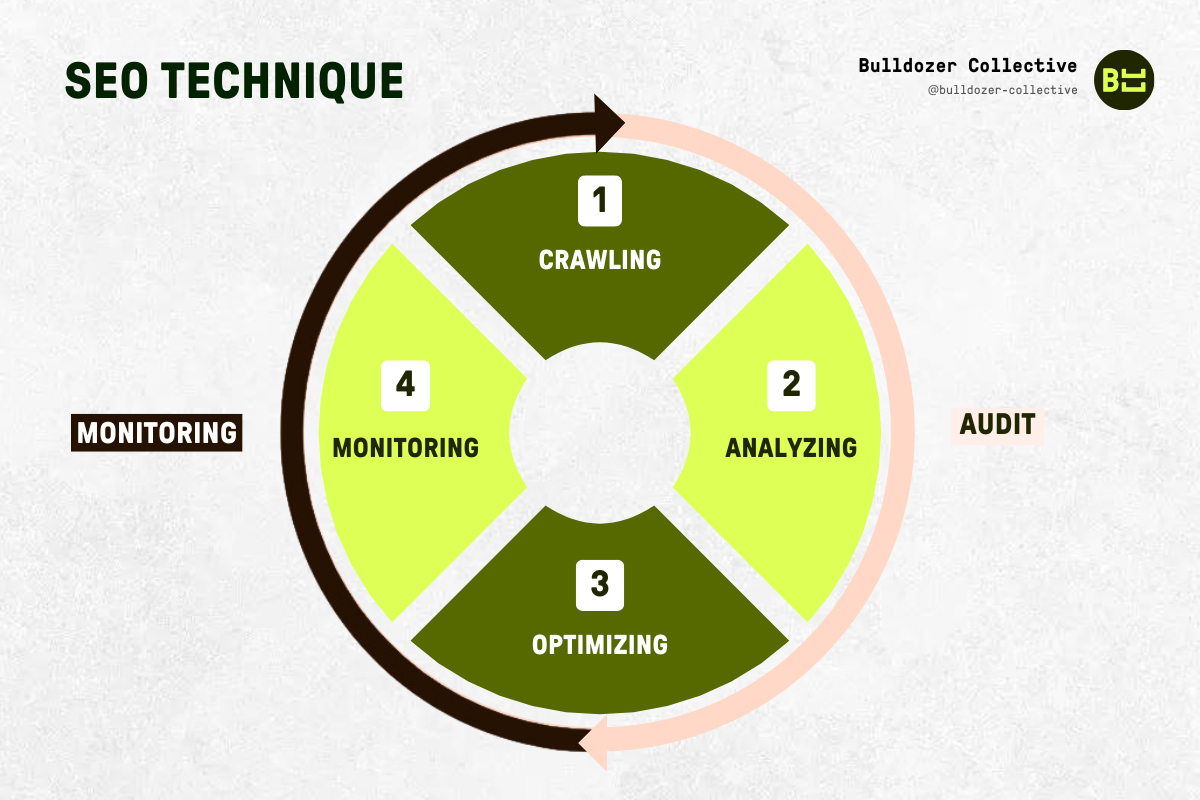
A semantic SEO audit is complementary to the technical audit.
The first step of a semantic audit is to identify target keywords and analyze the thematic clusters relevant to your business.
The goal is to uncover the optimization levers to apply to your site to make it more visible on Google. Explore your topic space and map out your full lexical field, including:
For example, if you run a camping gear website, your keywords might include terms like "4-season tent", "ultralight sleeping bag", or "compact camping stove."
Indirect expressions might be "how to pack a backpack for a trek" or "best wild camping spots."
Once keywords and topics are identified, it's time to assess the quality and relevance of your content. To do this, make sure to:
This is the step where you ensure your content addresses users' search intent.
Internal linking is an SEO technique that improves site navigation, increases the semantic relevance of pages, and strengthens your site's authority in search engines.
To evaluate your current linking structure, make sure to:
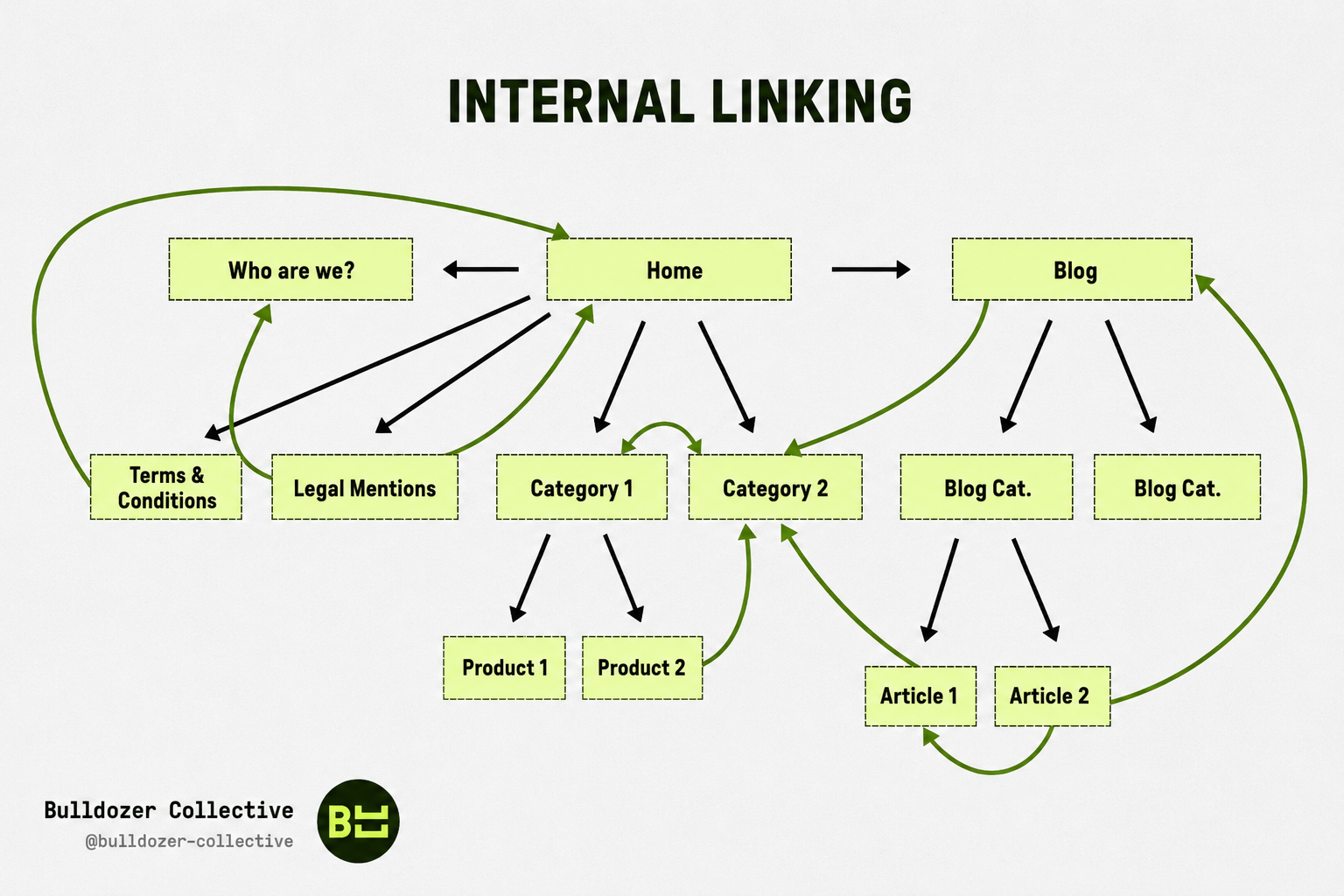
A strong internal linking structure improves navigation for both users and search engine bots. For example, if you have an article on "the best tents for family camping," you could create internal links to specific product pages or to other articles such as "how to choose the right sleeping bag" or "essential camping gear checklist."
To conduct an effective semantic audit, it's recommended to use a combination of free and paid tools.
[rta-block=folder-cta][rta-title=h3]Want to learn more about your SEO potential?[rta-title=h3][rta-btn=regular href="/prendre-rendez-vous-typeform" target=_blank]Get a free audit[rta-btn=regular][rta-block=folder-cta]
Interpreting results will allow you to:
For example, you might discover that your page on "4-season tents" performs well, but that you have no content on "ultralight hiking tents" — a popular topic with your audience.
Based on your analysis results, you can build an action plan that includes:
Many companies have seen their online visibility improve significantly after conducting a semantic audit and implementing the recommendations.
Windows Report was experiencing stagnating growth and used a content model to reorganize its content and implement a linked strategy for its online magazine. This overhaul led to a 61% increase in traffic in 8 months, bringing their monthly organic traffic to over one million visits.
Ivory & Deene focused on in-depth keyword research and resolving technical issues. A strategic link-building campaign was also implemented, enabling significant revenue growth.
By applying a semantic audit to optimize your site's content, you can trigger significant and sustainable growth in your online visibility. While this audit doesn't replace traditional methods such as technical SEO, it complements and reinforces these strategies, offering a more holistic approach that can improve your search engine rankings.
Ready to fully leverage the potential of a semantic audit for your business? Our SEO specialists are available to guide you. Contact us now for a personalized consultation!
To go further in your SEO strategy, feel free to explore our other resources on content optimization and SEO best practices.
Lorem ipsum

Content Marketing Manager at Bulldozer, she writes about content strategy, editorial systems and distribution.
Can't find what you're looking for ? Contact us here
jordan@bulldozer-collective.comGet access to playbooks and feedback from those who are shaping the next wave of marketing and AI.