Publié par
curve whitecurve white
Killian Drecq
Rédacteur
Blog
/
Brand Strategy
/
LinkedIn Content Strategy 2026: The Complete Bulldozer Guide

LinkedIn Content Strategy 2026: The Complete Bulldozer Guide

LinkedIn is THE essential playground for B2B. Millions of professionals, companies, and prospects cross paths there every day, but let's be honest: just being there is no longer enough. With fierce competition and increasingly demanding audiences, you need a real content strategy to stand out on the platform.

In this guide, we share everything you need to know to succeed with your LinkedIn marketing strategy in 2026: how to create posts that hit hard, build an effective brand presence, and turn your efforts into concrete results. Whether you're a marketer, entrepreneur, or business leader, this action plan is designed to help you reach your target audience and potential customers. 🚀
Ressource en lien
Dernière mise à jour :
16
/
06
/
2026

The Ultimate LinkedIn Strategy Guide 2026

LinkedIn is THE essential playground for B2B. Millions of professionals, companies, and prospects cross paths there every day, but let's be honest: just being there is no longer enough. With fierce competition and increasingly demanding audiences, you need a real content strategy to stand out on the platform.

In this guide, we share everything you need to know to succeed with your marketing strategy on LinkedIn in 2026: how to create posts that hit hard, build an effective brand presence, and turn your efforts into concrete results. Whether you're a marketer, entrepreneur, or business leader, this action plan is designed to help you reach your target audience and potential customers. 🚀

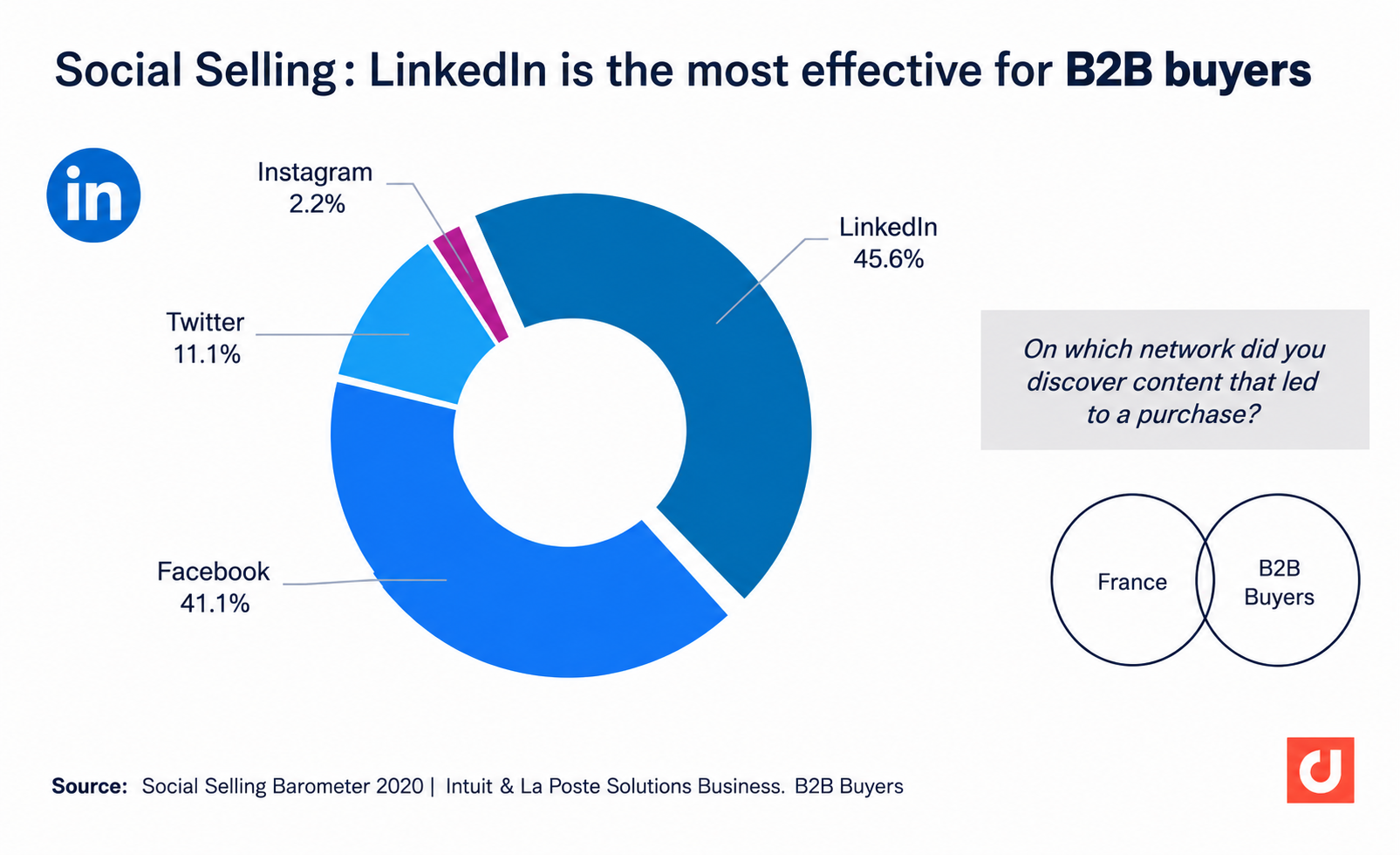
LinkedIn strategy

Source: https://blog.digimind.com/fr/tendances/linkedin-chiffres-incontournables-france-et-monde

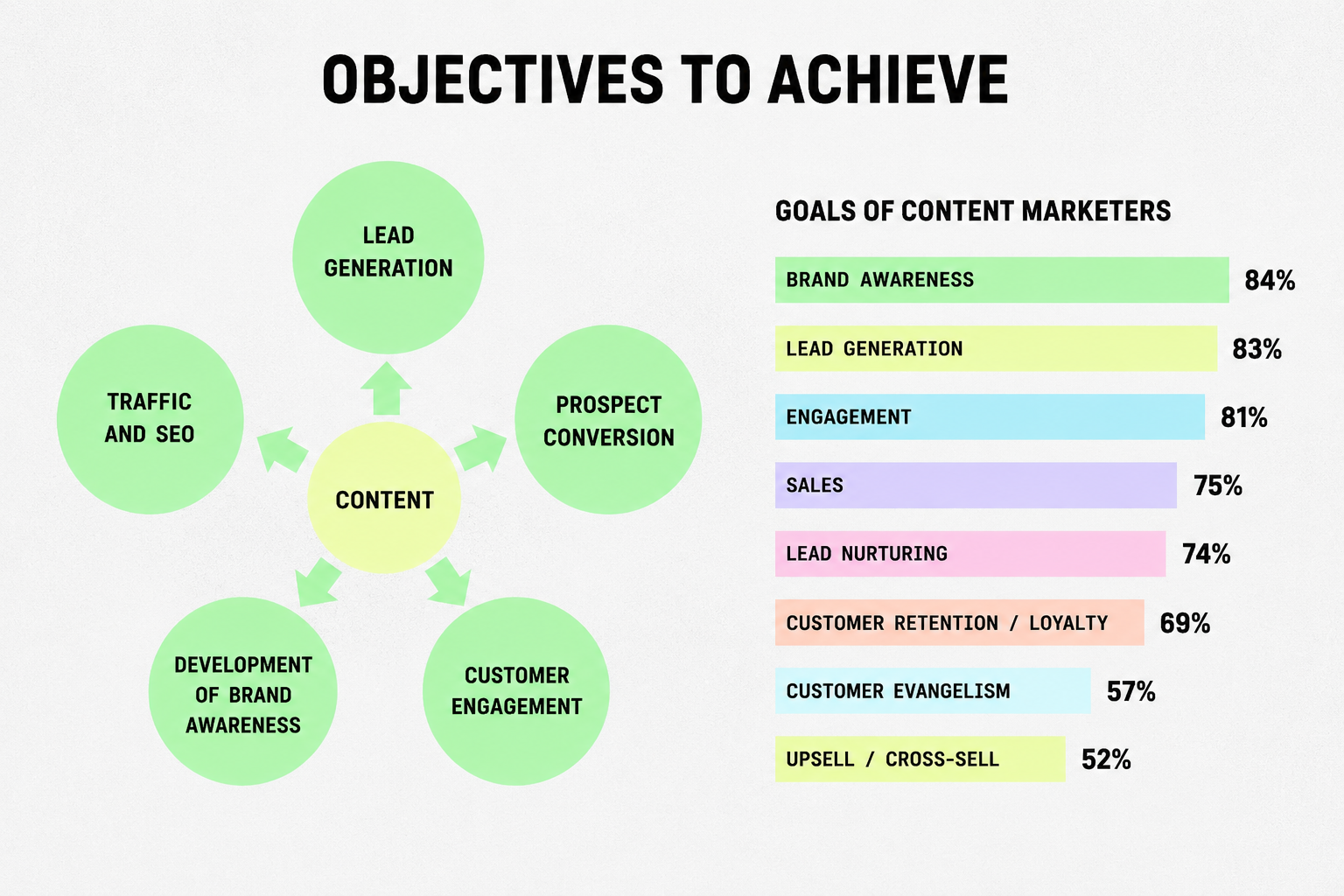
Objectives and Vision of Your LinkedIn Content Strategy

Defining your objective on LinkedIn is simple: ask yourself what you want to achieve on this platform. Are you looking to:

  • Gain visibility? Focus on brand awareness and reach.
  • Generate leads and attract new customers? Prioritize clicks and conversions.
  • Strengthen your expertise and presence on social media? Go for engaging, educational content.

Your objective must be clear, measurable, and aligned with your digital marketing strategy. Once set, it becomes the compass that guides all your posts on the platform.

Define Who Will Speak

On LinkedIn, individual profiles outperform company pages. Why? Because LinkedIn prioritizes human interactions. Posts signed by real people generate:

  1. 4x more engagement than institutional content.
  2. Greater credibility thanks to a personal voice.
  3. Emotional connection through authentic storytelling.

Who should speak up?

  • Founders: their vision inspires and engages.
  • Internal experts: their insights reinforce credibility.
  • Internal ambassadors: motivated employees can become effective amplifiers.

How to choose your spokespeople?

  1. Identify those already active on the platform (or ready to start).
  2. Support them: show them how to publish effectively, tell compelling stories, and engage with their audience.
  3. Make sure their posts stay aligned with your goals while still letting their personality shine.

By betting on well-chosen individual profiles, you maximize your chances of reaching the right people, gaining visibility, and authentically strengthening your brand image.

Identify Your Audience and Sectors

To succeed on LinkedIn, you first need to know who you're talking to and how to reach the right prospects. The better you understand your target, the better you'll create campaigns and content that engage them.

Create personas

  1. Demographic data: role, sector, seniority level. Ex.: marketing managers or HR decision-makers.
  2. Professional needs: their challenges or goals. Ex.: a marketer looking to optimize their ROI.
  3. Behavior on LinkedIn: articles read, polls followed, resources downloaded.

Analyze sectors and niches

  1. Key sectors: focus your efforts on relevant industries (technology, finance, healthcare).
  2. Undersaturated niches: target specific segments, like tech startups with fewer than 50 employees.

Tools to better understand your audience:
  • LinkedIn Insights: analyze the demographic and behavioral data of your network.
  • Tools like Semrush or HubSpot to identify your target audience's interests.
  • LinkedIn polls: ask your community directly to better understand their expectations.

Define, Measure, and Optimize Your LinkedIn Strategy

To make your LinkedIn strategy hit its mark, start with precise objectives and rigorous tracking of your key performance indicators (KPIs). With the right tools and an active social media presence, you can turn your posts into genuine marketing assets.

Set Your Objectives and Track the Right KPIs

Before publishing, determine what you want to achieve. Your objectives guide your strategy, and your KPIs measure your progress.

Awareness objectives

The goal is to get noticed: make your brand, services, or expertise indispensable to your target audience.

  • Number of views: track the organic reach of your posts.
  • Followers: measure the growth of your community.
  • Mentions: assess how often your brand is referenced.

Example: a tech company wants to reach 50,000 organic views per month to boost brand awareness in its sector.

Conversion objectives

Once you're visible, it's time to get serious: generating qualified leads or attracting potential customers. Track these KPIs:

  • Leads generated: forms filled via your posts.
  • Website clicks: monitor clicks from your posts to your company page or profile.
  • Sign-ups: event attendance or downloads.

Example: a SaaS startup wants to get 200 qualified prospects per month through well-targeted LinkedIn Ads campaigns.

Tips for choosing the right KPIs:

  • Align them with your priorities (views for awareness, clicks for conversion).
  • Analyze your results regularly via LinkedIn Analytics.
  • Adapt your KPIs as your objectives evolve.

Understand Your Performance by Format

Not all formats perform equally or generate the same level of engagement. Identify those that truly capture your audience's attention.

What to analyze:

  • Long articles: for in-depth analysis or expertise sharing.
  • Videos: for short, dynamic messages.
  • Carousels: highly engaging for tutorials or step-by-step content.
  • Polls: for sparking conversations.

Tip? Dive into LinkedIn stats to compare results by format. Identify which ones generate the most interactions, clicks, or shares.

Test, Adjust, Iterate

The key to success on LinkedIn is to always experiment and refine your approach.

A/B testing:

  • Create two versions of the same post by varying elements like:
    • The visual (image vs. video).
    • The CTA ("Discover our guide" vs. "Sign up now").
  • See which gets the most engagement or clicks.

Adapt your topics:

  • Ask your audience questions via polls or in the comments: "What topics would you like to see?"
  • Focus on content that sparks the most interest and reactions.

Creating and Managing Your LinkedIn Content

To shine on LinkedIn, your content must be relevant, engaging, and well thought-out. Here's how to nail it and manage your posts like a pro.

Choosing the Right Formats

Varying formats is key to holding attention and reaching your entire audience.
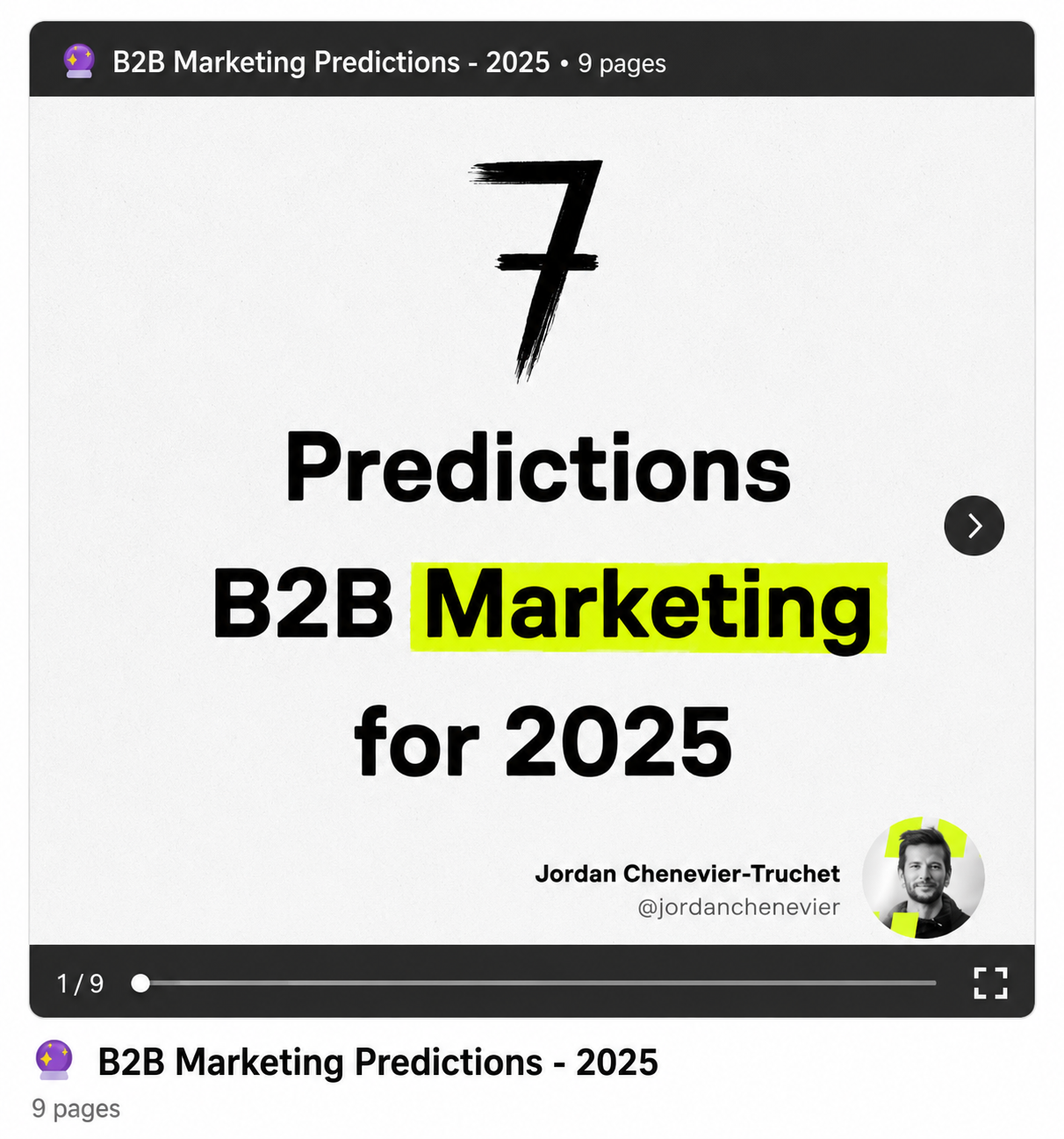
LinkedIn strategy

Source: https://www.linkedin.com/posts/jordanchenevier_prédictions-marketing-b2b-2025-activity-7274696419582574592-Jmtr?utm_source=share&utm_medium=member_desktop

LinkedIn strategy

Source: https://www.linkedin.com/in/jordanchenevier/

Formats that work:

  • Long articles: great for sharing expertise or analyzing a trend.
  • Short videos: between 1 and 3 minutes to quickly capture attention and deliver a clear message.
  • Carousels: perfect for tips or explaining concepts visually: "The 5 steps to optimize your LinkedIn content strategy."
  • Polls: ask engaging questions and let your audience interact.

Ideal length:

  • Posts: 500-600 characters maximum to get straight to the point.
  • Videos: 3 minutes maximum — beyond that, everyone drops off. The more clearly and concisely you deliver your message, the more people you'll hook.

Impactful Visuals

A picture is worth a thousand words.

Why invest in visuals?

  • Posts with images or infographics get 50% more views.
  • Polished design makes your messages memorable.

Tips for flawless visuals:

  • Follow LinkedIn formats: 1200 x 628 px for horizontal images or 1080 x 1080 px for carousels.
  • Good resolution, eye-catching colors, readable text.

Hashtags and CTAs to Boost Your Posts

When used well, hashtags and CTAs turn your posts into interaction magnets.

Relevant hashtags: 3 to 5 maximum. Specific and popular: mix niche hashtags with broad ones to balance reach.

CTAs that drive action:

  • Ask simple questions to encourage comments: "What's your biggest challenge in social media marketing?"
  • Invite action: "Discover our free ebook here!"

Get Inspired by Content That Works

Drawing inspiration from past successes helps reproduce what works.

LinkedIn hit examples:
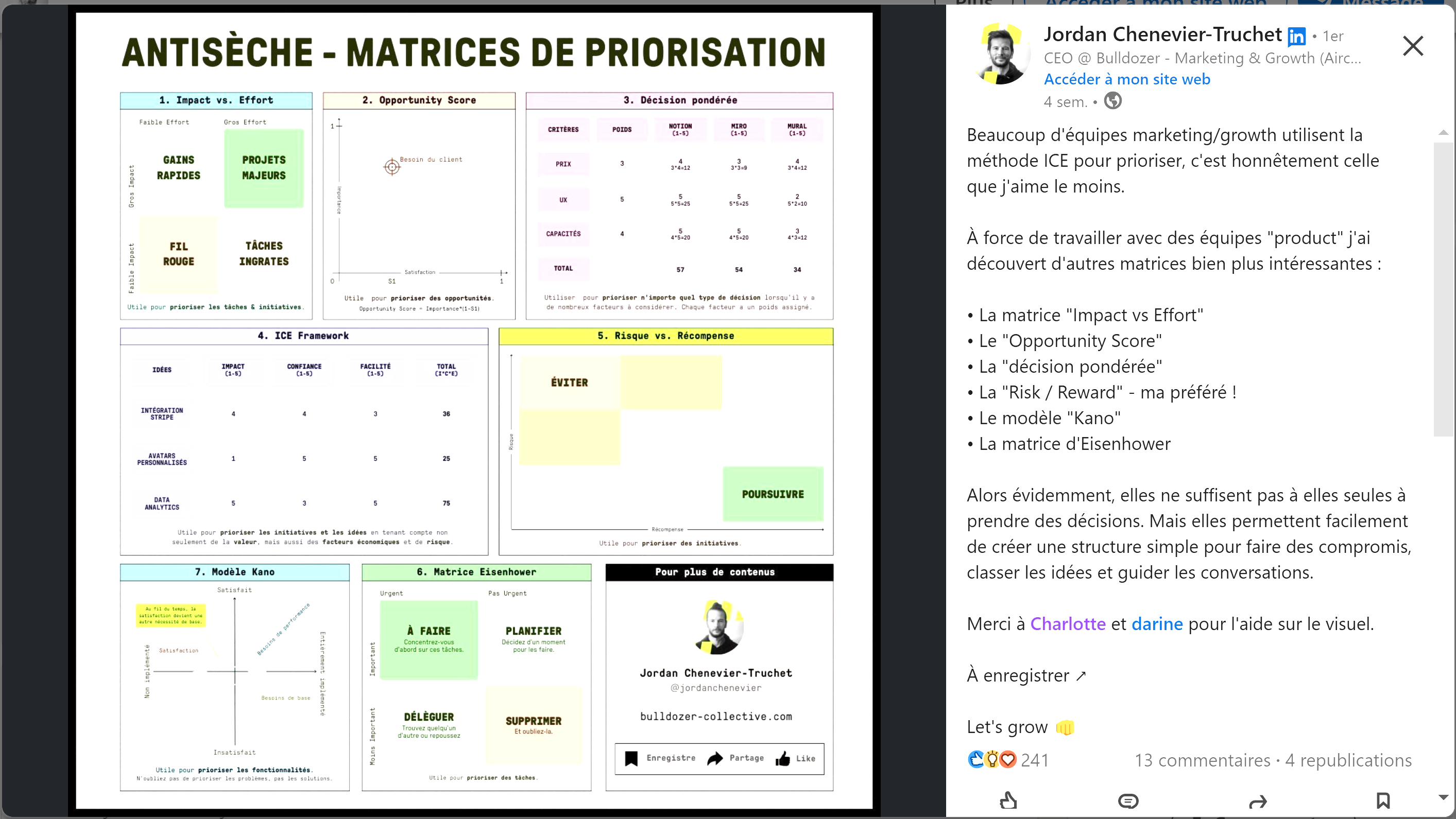
  • Personal anecdote from an entrepreneur: sharing a failure or success resonates strongly with the audience.
  • Testimonial video: "How our company boosted its leads through LinkedIn."
  • Educational carousel: "The 5 steps to nail your pitch" or "How to avoid these 3 common B2B mistakes".

Source: https://www.linkedin.com/posts/jordanchenevier_beaucoup-déquipes-marketinggrowth-utilisent-activity-7272521558542204928-wZqW?utm_source=combined_share_message&utm_medium=member_desktop_web

Want to learn more about your content potential? 

Demander un audit gratuit
Carte ou profil utilisateur central mis en évidence, entouré d’autres profils en arrière-plan, suggérant une sélection ou une mise en avant d’un utilisateur.
bulldozer

Planning and Organizing Your Content

On LinkedIn, being consistent with your posts is essential to maximizing visibility and reinforcing your presence on the platform. No winning strategy exists without a good editorial calendar. Here's how to structure yours for maximum impact.

Create an Editorial Calendar

A calendar is your compass for knowing what to publish, when, and why. Here's how to do it:

  • Set your frequency: find a rhythm that fits your capacity (weekly, monthly, quarterly). The goal is to stay consistent without burning out.
  • Organize your ideas: tools like Trello, Notion, or even a simple spreadsheet are enough to plan your content, formats, and publication dates.

Example:

  • Monday: blog article on a key digital marketing topic.
  • Wednesday: engaging post with a customer testimonial.
  • Friday: a video or fun poll to engage your audience.

Tips for better planning:

  • Use tools like Buffer or Hootsuite to schedule your social media posts.
  • Test different time slots to see when your target audience is most active.

Posting Frequency and Timing

On LinkedIn, consistency is key to staying on your audience's radar. But timing matters too!

How many posts? Ideally 3 to 5 per week to keep the rhythm without overwhelming your followers.

When to post?

  • Draw on your stats: look at when your past posts performed best.
  • Some often effective B2B slots: Monday at 10am and Thursday at 2pm.

Engagement and Interaction with Your Audience

On LinkedIn, engagement is what turns a simple post into a real conversation. By interacting with your audience, you strengthen your credibility and build lasting relationships.

Responding to Comments: Leave No One on Read

Comments under your posts are a goldmine for starting a direct dialogue with your audience.

Why responding quickly matters:

  • Reacting in the first few hours shows you're active and motivates even more people to engage.
  • Bonus: LinkedIn's algorithm loves this and boosts the reach of your post.

Tips for encouraging discussion:

  • Ask open-ended questions: "Thanks for your feedback! What's been your experience with this tool?"
  • Mention influential profiles to expand your network and boost engagement.

Joining Discussions: Step Outside Your Bubble

On LinkedIn, publishing isn't enough. You need to see what's happening elsewhere and actively participate:

  • Comment on other creators' posts with constructive ideas or additional information. "Great point! And I think it would also be worth looking at…"
  • Join LinkedIn groups in your sector and engage in their discussions.

Ask Open-Ended Questions

There's nothing like a good open-ended question to spark discussions under your posts. Why it works: people love sharing their opinions or experiences. Result: more comments and better reach for your content.

"And you, what's your strategy with [a tool of your choice] to boost your results?"

Managing Private Messages: Personalized Conversations

LinkedIn messaging is the perfect place for personalized exchanges and deeper conversations.

How to respond with impact:

  • Personalize every reply to show you're genuinely listening.
  • Suggest a clear next step: "Great chatting! Here's a link to schedule a call."

Example: A prospect reaches out? Respond enthusiastically: "Thanks for your message! Here's a time slot to chat in more detail."

By actively engaging your audience — in comments, discussions, and private messages — you build an authentic, professional presence on LinkedIn. This lets you turn interactions into collaboration or conversion opportunities.

Common Mistakes to Avoid in a LinkedIn Strategy

An effective LinkedIn marketing strategy relies on relevant content and good network management. Here are the mistakes that hold you back and how to avoid them.

1. A Poorly Optimized Profile and Company Page

An incomplete profile or page reduces your impact on the platform.

Optimize:

  • Fill in all sections with strategic keywords.
  • Add a professional photo, banner, and clear summary.

2. Publishing Without a Clear Strategy

Inconsistent posts dilute your message and lose your target audience.

Structure your content:

  • Use an editorial calendar to plan your topics.
  • Vary your formats (articles, carousels, social videos).

3. Ignoring Engagement and the Algorithm

Not interacting with your network reduces the reach of your posts.

Stay active:

  • Respond to comments and messages.
  • Ask open-ended questions to capture your audience.

4. Too Much Selling, Not Enough Value

A campaign too focused on conversion drives away your prospects.

Lead with expertise:

  • Share case studies, customer testimonials, and practical tips.
  • Offer content that meets your target audience's expectations.

5. Underestimating the Power of Visuals and Storytelling

A post without visuals or narrative has less impact on your web activity.

Boost engagement:

  • Add infographics, videos, and carousels.
  • Tell a story to captivate your audience.

6. Not Leveraging LinkedIn's Tools

Ignoring advanced features limits your results.

Optimize your presence:

  • Experiment with LinkedIn Ads to reach your prospects.
  • Analyze your performance with built-in social tools.

A Great Success Story: Jordan Chenevier, CEO of Bulldozer

https://scalehack.co/blog/conseils-expertise/jordan-chenevier-truchet/

Jordan Chenevier, co-founder of Bulldozer, has built a solid LinkedIn presence by banking on authenticity and a human approach. His posts captivate through unifying storytelling and an accessible tone that resonates with entrepreneurs and scale-ups.

What he did:

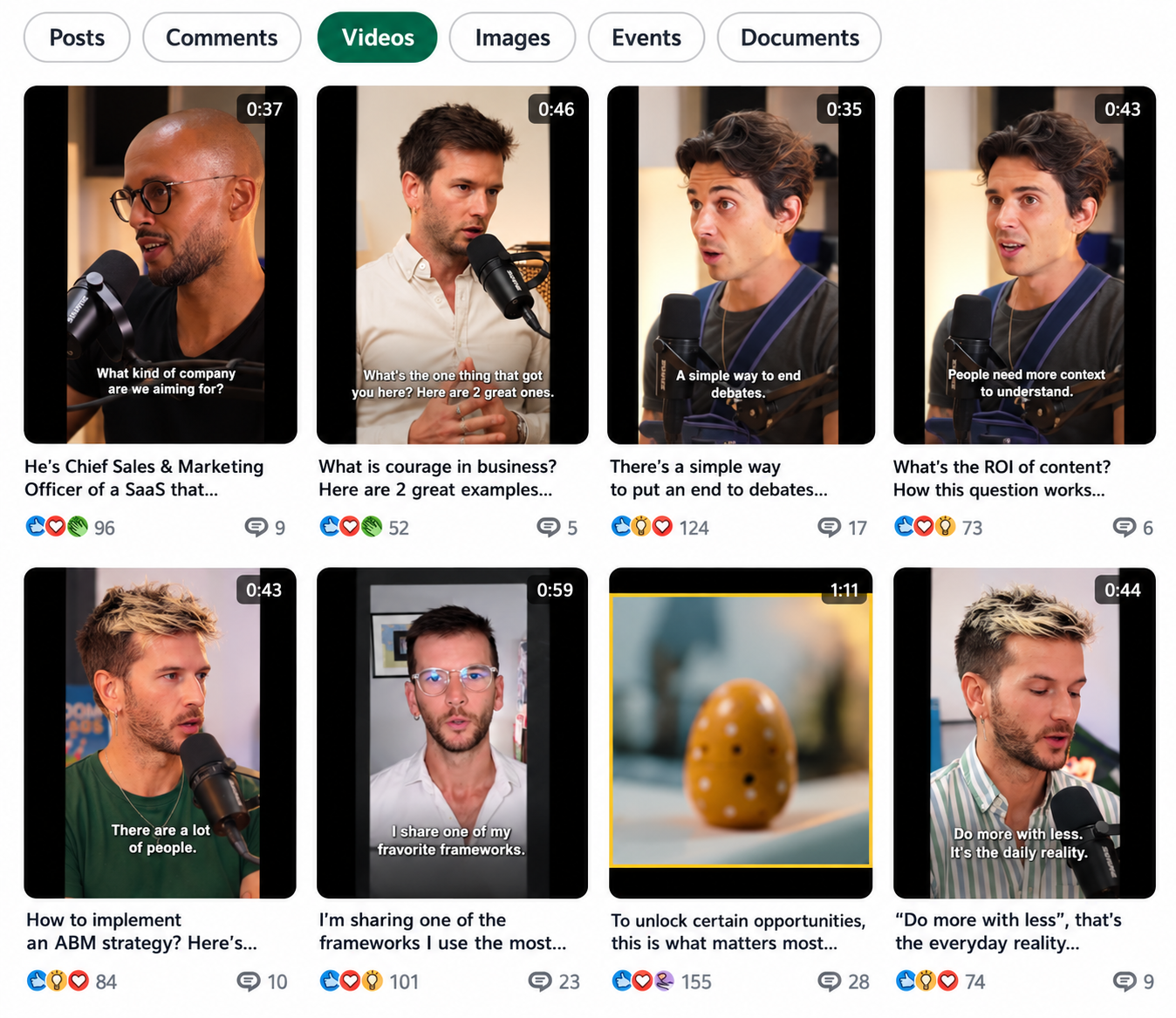
  • Humanizing the Bulldozer brand: Jordan shares lessons from his entrepreneurial life, inspiring anecdotes, and the challenges he's faced.
  • Building an engaged community: by combining storytelling and practical advice, he's attracted and unified an active professional audience.

Results:

Building a high-performing LinkedIn strategy rests on three essential pillars: clear objectives aligned with your priorities, quality content that resonates with your audience, and regular interaction to strengthen your connections. With these foundations, you can turn your LinkedIn presence into a powerful lever to grow brand awareness, generate qualified leads, and engage your community.

FAQ

Une stratégie LinkedIn efficace ne se limite plus à être simplement présent sur la plateforme, elle repose sur la création de contenu à forte valeur ajoutée, l’identification claire de l’audience cible et la transformation des interactions en résultats mesurables, comme des leads qualifiés ou des opportunités commerciales concrètes.

Il est essentiel de comprendre précisément qui sont vos prospects afin d’adapter votre message, vos formats et vos actions. Une audience bien définie vous permet d’adresser des publications plus engageantes et mieux ciblées, ce qui augmente l’impact de vos publications et vos chances de conversion.

Les contenus qui apportent une vraie valeur à l’audience, comme des analyses sectorielles, des conseils pratiques, des témoignages clients ou des formats interactifs (sondages, vidéos courtes), tendent à générer plus d’engagement et à renforcer la crédibilité de votre profil ou de votre page entreprise.

Pour mesurer efficacement vos résultats, il faut définir des indicateurs clés (KPIs) alignés à vos objectifs, comme le nombre de leads générés, le taux d’engagement, les clics vers votre site ou les conversions issues de vos publications, puis suivre ces métriques régulièrement avec les outils d’analyse intégrés.

Non. LinkedIn peut aussi être un levier de génération de leads qualifiés et de conversion commerciale à condition d’aller au-delà de la simple notoriété, en structurant vos efforts autour d’objectifs clairs, d’un contenu optimisé et de tactiques d’engagement qui favorisent l’action de vos prospects.

Pour aller plus loin

Defining Your ICP When You Don't Know Where to Start: The Bulldozer GTM Framework

Brand Strategy
Bulldozer
Growth
Charlotte Nowak

The Complete Guide to B2B Programmatic Paid (5 Stages of Awareness)

B2B
Brand Strategy
Bulldozer
Charlotte Nowak
Comment utiliser le snack content pour engager votre audience B2B

How to Use Snack Content to Engage Your B2B Audience?

Content Marketing
B2B
Killian Drecq

Let's talk.

Full-funnel
500+ clients
300+ membres
Prendre un rdv stratégique