Imagine a growth strategy so powerful it helped Dropbox increase its user base by 3,900% in just 15 months. This feat is the result of growth loops — self-sustaining mechanisms that transform every user into a catalyst for growth.
Discover how this method can revolutionize your business development.
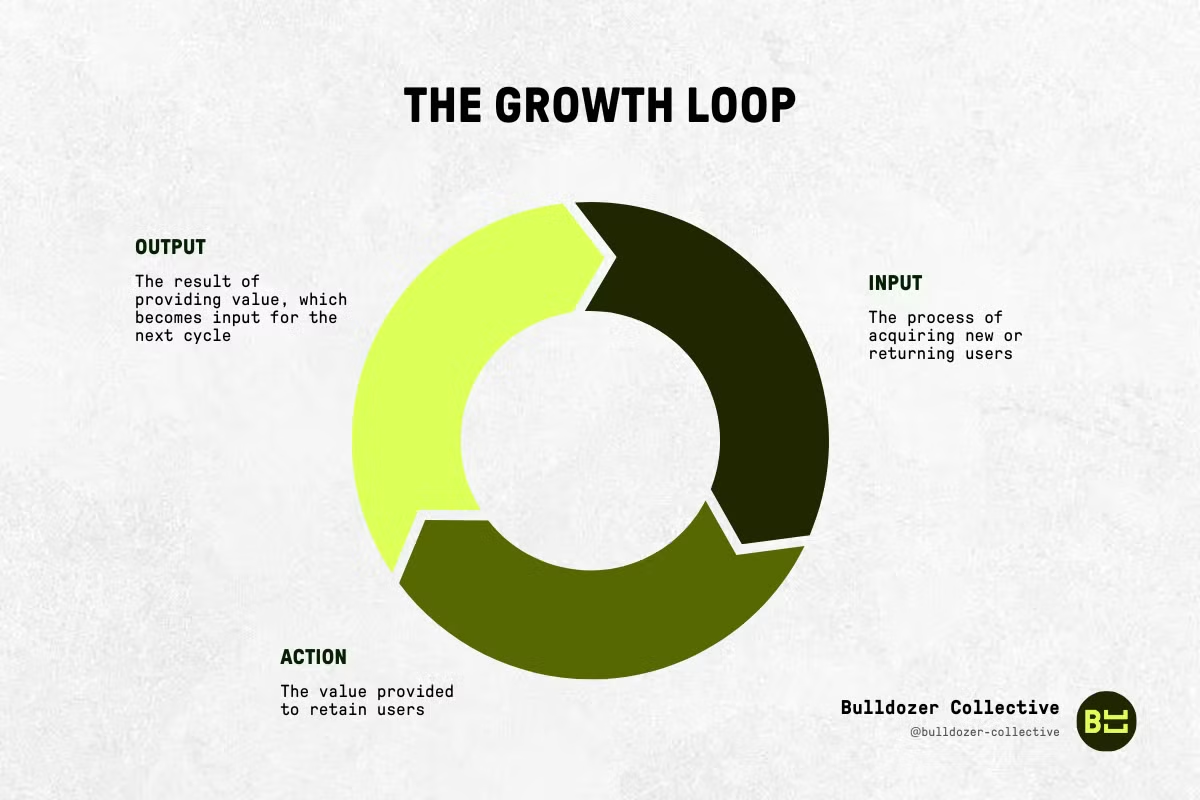
A growth loop is a cyclical process where each step feeds the next, creating a compounding growth engine. Unlike traditional linear growth models, this model capitalizes on every user interaction to generate new opportunities.
According to Romain Saillant, a growth marketing expert, a growth loop is a self-fueling process in which results are reinvested to generate new growth opportunities. This approach enables companies to:
maximize the impact of every marketing action;
optimize resource utilization;
reduce dependence on external acquisition channels;
foster organic and sustainable growth.
The Difference Between Growth Loops and Conversion Funnels
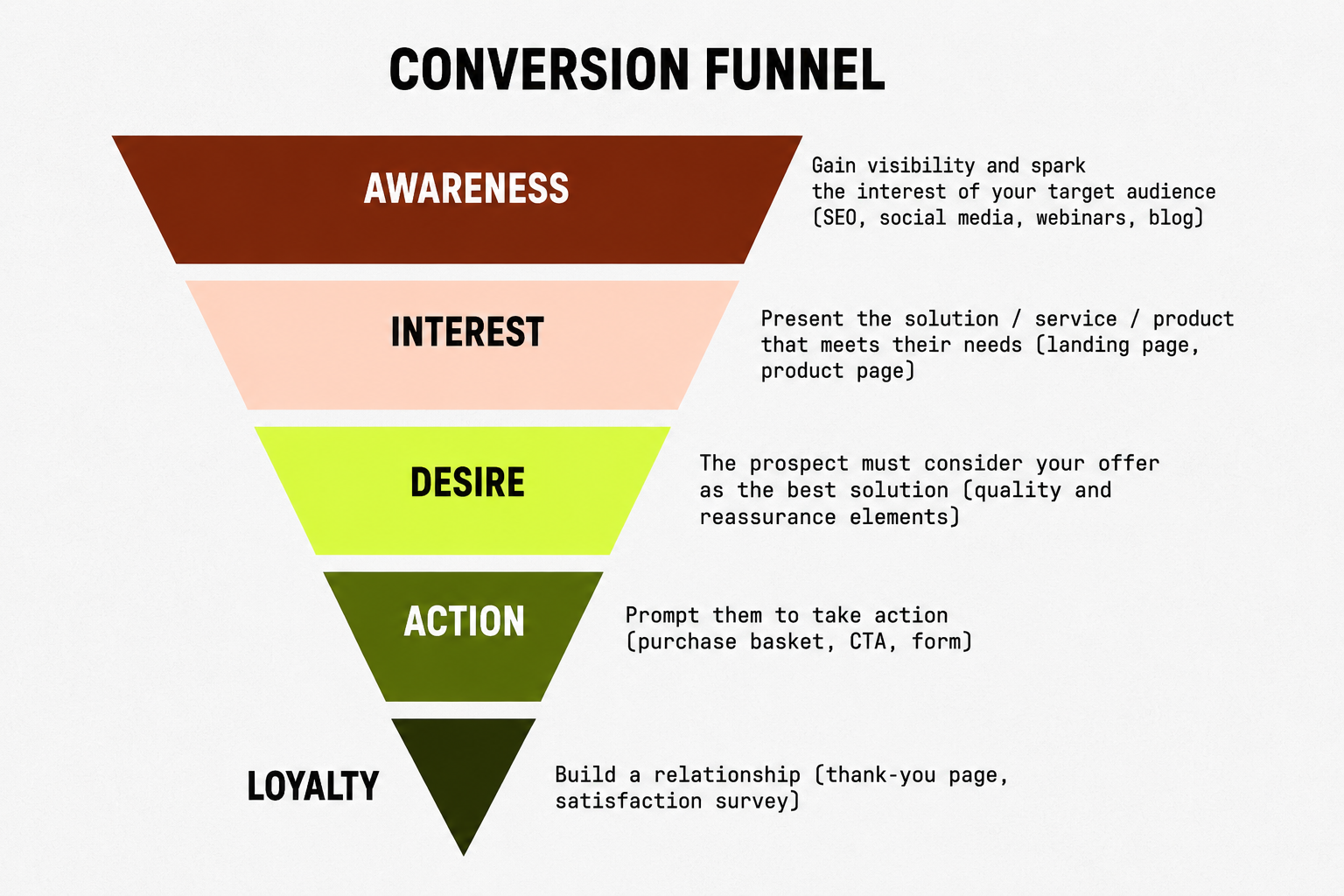
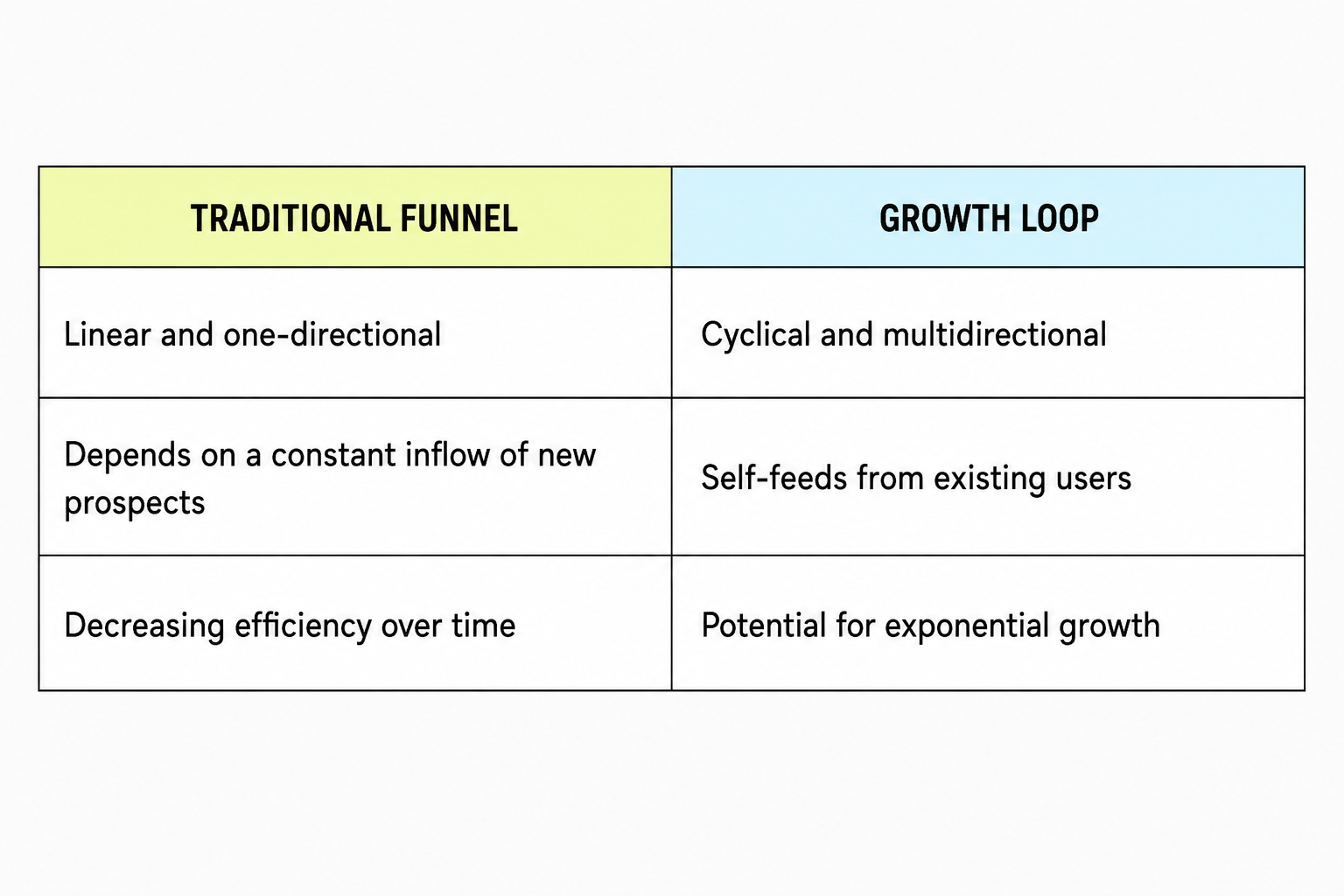
The circular approach of growth loops enables self-sustaining growth, unlike the linear funnel approach which requires a constant supply of new prospects.
Here is a comparison table between a funnel and a growth loop:
What Are the Different Types of Growth Loops?
Acquisition Loops
These loops aim to systematically attract new users. There are several types:
Paid advertising loops. For example, Uber reinvests a portion of its revenue into paid acquisition. For every new ride, a percentage is allocated to the marketing budget, attracting new customers through targeted campaigns.
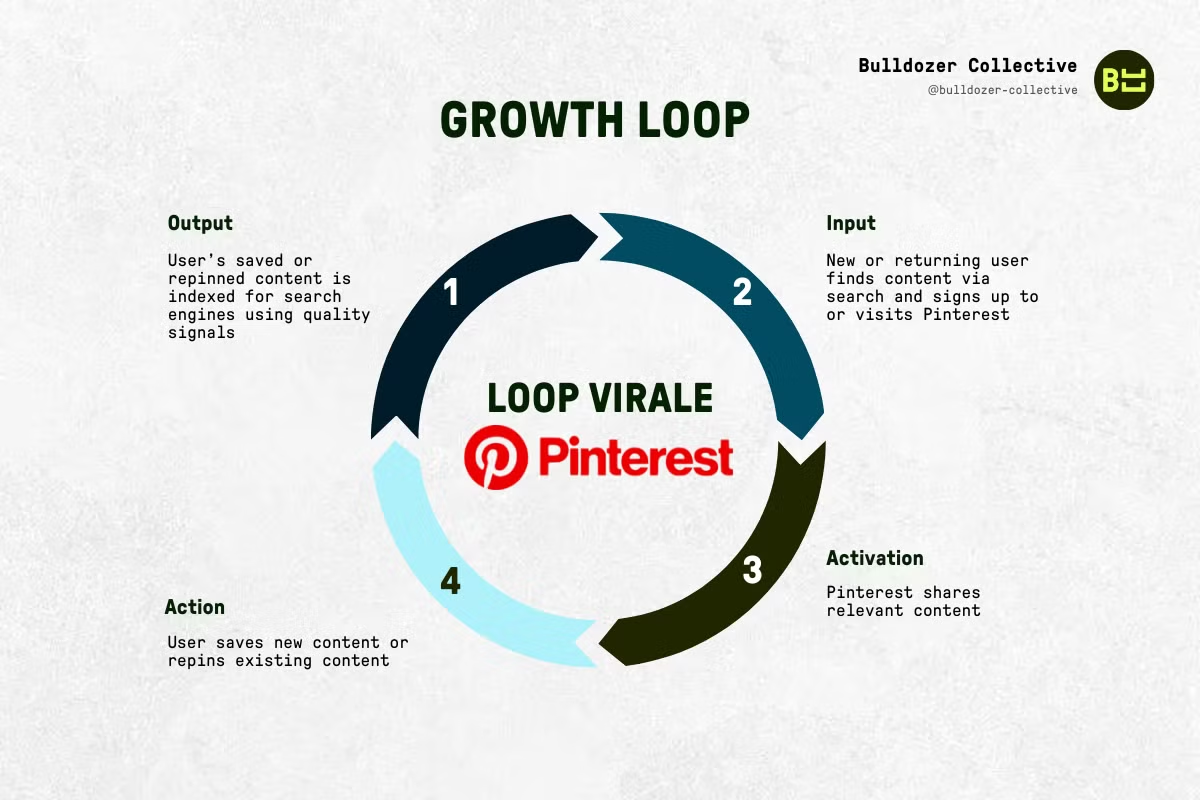
Organic user loops. Pinterest is a great example — users create content that naturally attracts new users via SEO. Each image is indexed by search engines, attracting new users who in turn create more content.
Content loops. HubSpot illustrates this by creating free educational content that attracts prospects. They generate data that informs new content creation, which attracts even more prospects.
https://landbot.io/blog/growth-loops-guide
Retention Loops
These loops aim to maintain existing user engagement. The different types include:
Internal trigger loops. Spotify improves its music recommendations based on listening habits. The more a user listens, the more relevant the recommendations become, encouraging more frequent use.
Artificial trigger loops. Duolingo, for example, sends daily notifications to encourage regular language practice. Each session reinforces the habit and improves skills, motivating the user to maintain their learning streak.
Product improvement loops. Tesla uses driving data to continuously improve its vehicles via software updates, strengthening user satisfaction and encouraging more frequent use.
Referral Loops
These loops transform users into brand ambassadors:
Virality loops. For example, Airbnb incentivizes hosts and travelers to invite friends with travel credits. Each new booking from a referral generates credits, encouraging the growth of the user network.
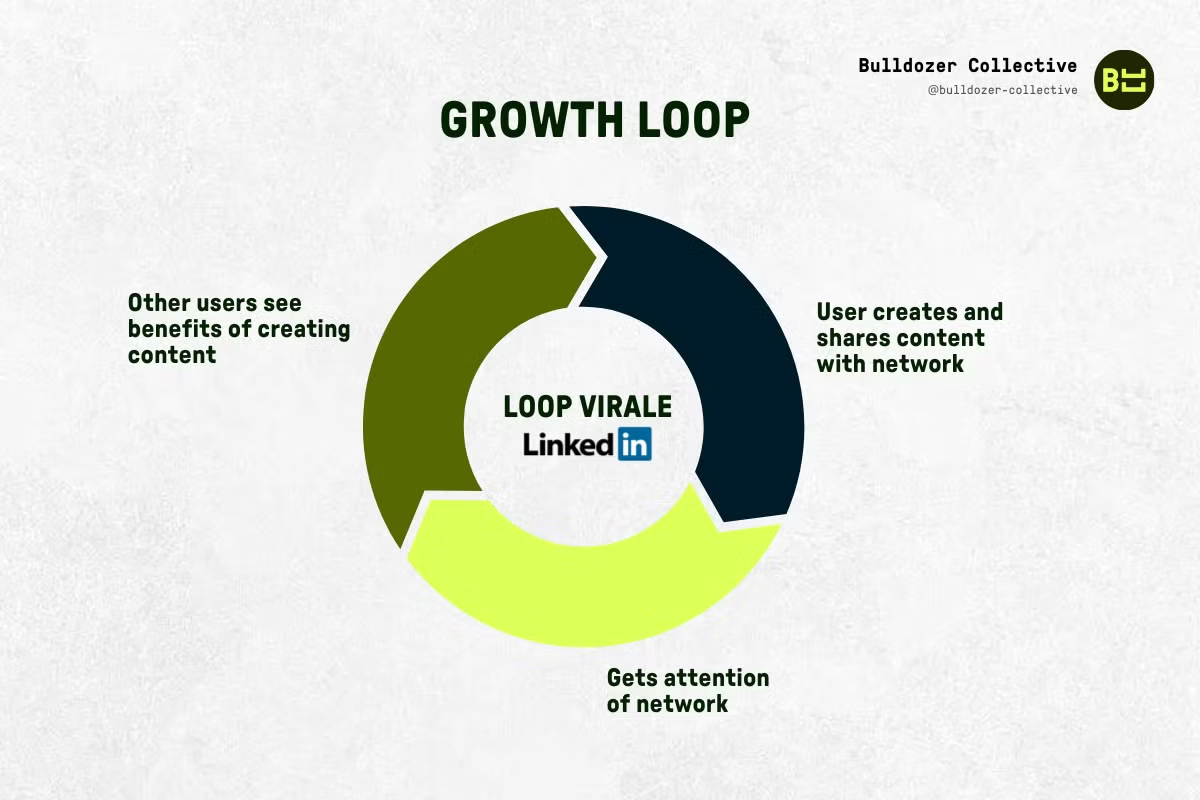
Social engagement loop. LinkedIn encourages the sharing of professional content. Each interaction increases content visibility, potentially attracting new members and reinforcing engagement among existing users.
Gamification loop. Strava allows users to compare themselves with friends and other local athletes, encouraging regular use and incentivizing users to invite their friends.
[rta-block=folder-cta][rta-title=h3]Want to learn more about your growth potential?[rta-title=h3][rta-btn=regular href="/prendre-rendez-vous-typeform" target=_blank]Get a free audit[rta-btn=regular][rta-block=folder-cta]
How to Implement a Growth Loop?
Identify Key Touchpoints in the Customer Journey
To build effective growth loops, follow these steps:
Map the customer journey from A to Z: Identify every interaction between your customer and your product/service.
Identify moments of high satisfaction: Analyze customer feedback and usage data to pinpoint engagement peaks.
Spot opportunities to encourage action: Identify the right moments for sharing, inviting, or content creation.
Develop Content and Incentives to Drive the Growth Loop
Develop incentives that integrate naturally into the user experience. These can be:
Reward systems, like Dropbox offering extra storage space for each referral.
Integrated sharing features, like a "Share on LinkedIn" button after earning a certificate.
Exclusive content, like early access to new features for the most active users.
Use Continuous Analysis and Optimization to Refine the Process
Set up robust analytics tools using tools like Google Analytics or Mixpanel to track user behavior.
Define KPIs for each loop and measure conversion, virality, engagement, and retention rates.
Regularly test different variations.
Adjust your loops based on results.
Growth Loop Success Case Studies
Companies with Effective Growth Loops
Many companies have successfully grown their user or customer base by implementing effective growth loops. For example, Hotmail (now Outlook) used the signature "PS: I love you. Get your free email at Hotmail" in every email sent by its users, turning each communication into an advertisement for its service. This strategy allowed it to reach 12 million users in just 18 months.
Dropbox implemented a referral system that rewarded users with extra storage space for each new member they invited. This approach led to a 3,900% increase in users in 15 months.
Finally, Doctolib developed an acquisition loop where each new doctor registered on the platform brings their patients to use it. This method facilitated a rapid expansion in the healthcare sector.
Lessons Learned from These Successes
The success of these companies reveals best practices worth implementing:
Integrate the growth loop into the core of the product: The loop should feel natural and enhance the user experience.
Offer genuine added value: Incentives must be relevant and desirable to the user.
Design effective incentives: Rewards should be directly tied to product usage.
Build trust and reputation: Particularly important in two-sided markets.
To get there, identify which aspects of your products can be transformed into a growth loop. Test different incentives, optimize your loops, and cultivate the trust of your users.
By creating growth loops that reinvest the value created by each user, companies can achieve exponential and sustainable growth.
While growth loops don’t entirely replace traditional approaches like conversion funnels, they offer a complementary perspective that can amplify the effectiveness of growth strategies.
A growth loop is an iterative process in which each interaction is reinvested to generate new growth opportunities, thereby creating a cycle of expansion.
How do growth loops differ from traditional conversion funnels?
Unlike linear conversion funnels, growth loops are circular systems that enable exponential, self-sustaining growth, maximizing the impact of every marketing action.
What are the main types of growth loops?
The main types of growth loops are acquisition, retention, and referral loops, each targeting a specific aspect of a company's growth.
How do I set up growth loops in my company?
To set up growth loops, you need to identify the key touchpoints in the customer journey, develop content and incentives that encourage participation, and use data analysis to continuously optimize the processes.
What are the potential challenges when setting up growth loops and how can they be overcome?
The main challenges include designing relevant loops, accurately measuring their impact, and maintaining their effectiveness over time. To overcome them, adopt an approach of continuous experimentation, invest in analytics tools, and stay attuned to users' needs.
Newsletter
Join those who are redefining AI-driven growth.
Get access to playbooks and feedback from those who are shaping the next wave of marketing and AI.
Thank you! Your submission has been received!
Oops! Something went wrong while submitting the form.