
Is your current marketing strategy actually reaching your most valuable accounts? Or is it generating volume while missing the deals that matter most?
Account-Based Marketing (ABM) is a focused approach that aligns marketing and sales around a defined set of high-value accounts, delivering personalized campaigns at every stage of the buying journey. In this guide, we cover the full ABM framework: account selection, tactics, execution, and measurement.
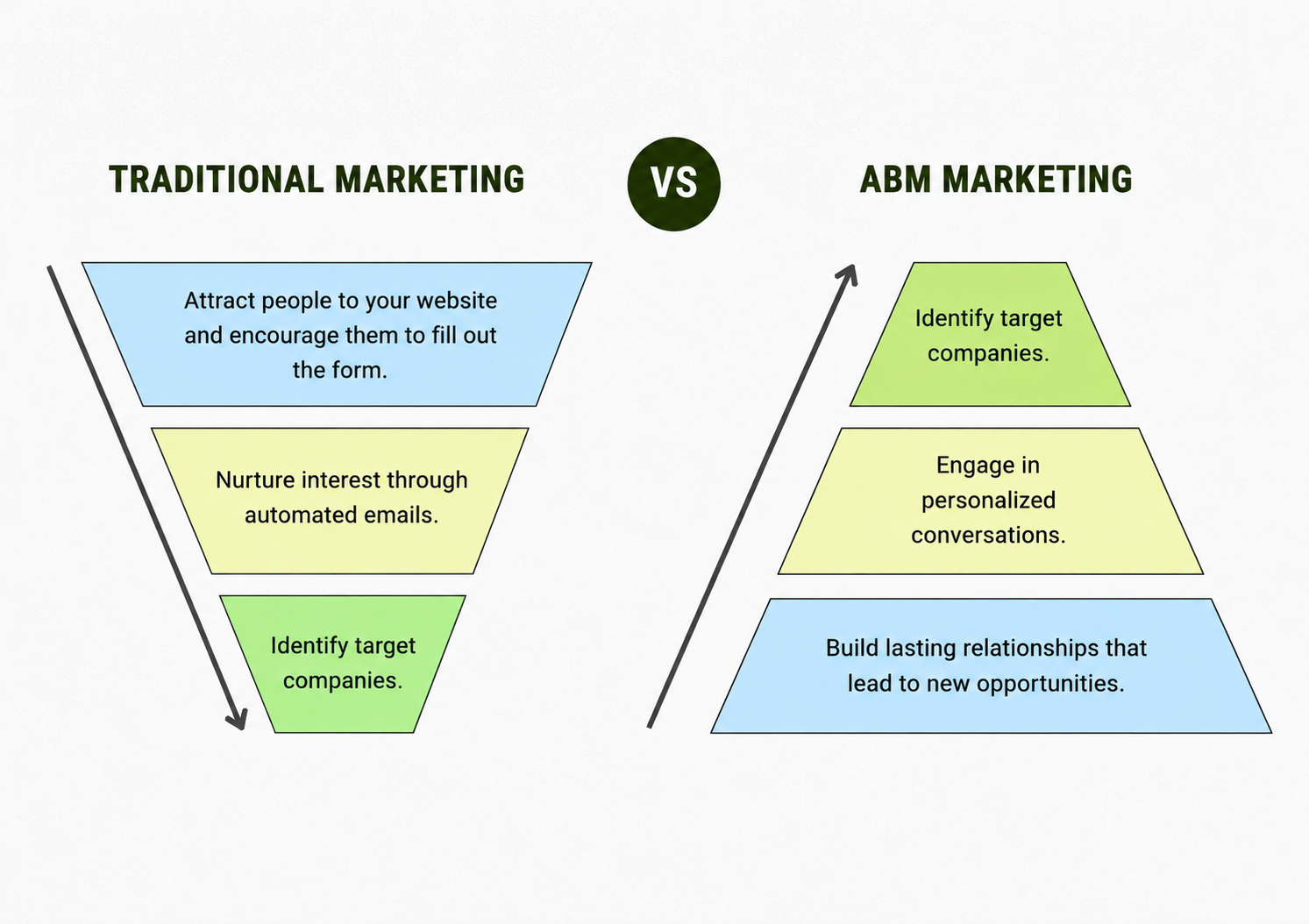
Account-Based Marketing, or ABM, is a B2B marketing approach that changes how companies target and engage their accounts. Instead of the traditional methods aimed at a broad audience, ABM focuses on specific high-potential accounts, building personalized, targeted campaigns for each one.
It means treating each individual account as its own market. This requires close collaboration between marketing and sales teams to:
ABM has quickly become a core piece of any effective B2B marketing strategy.
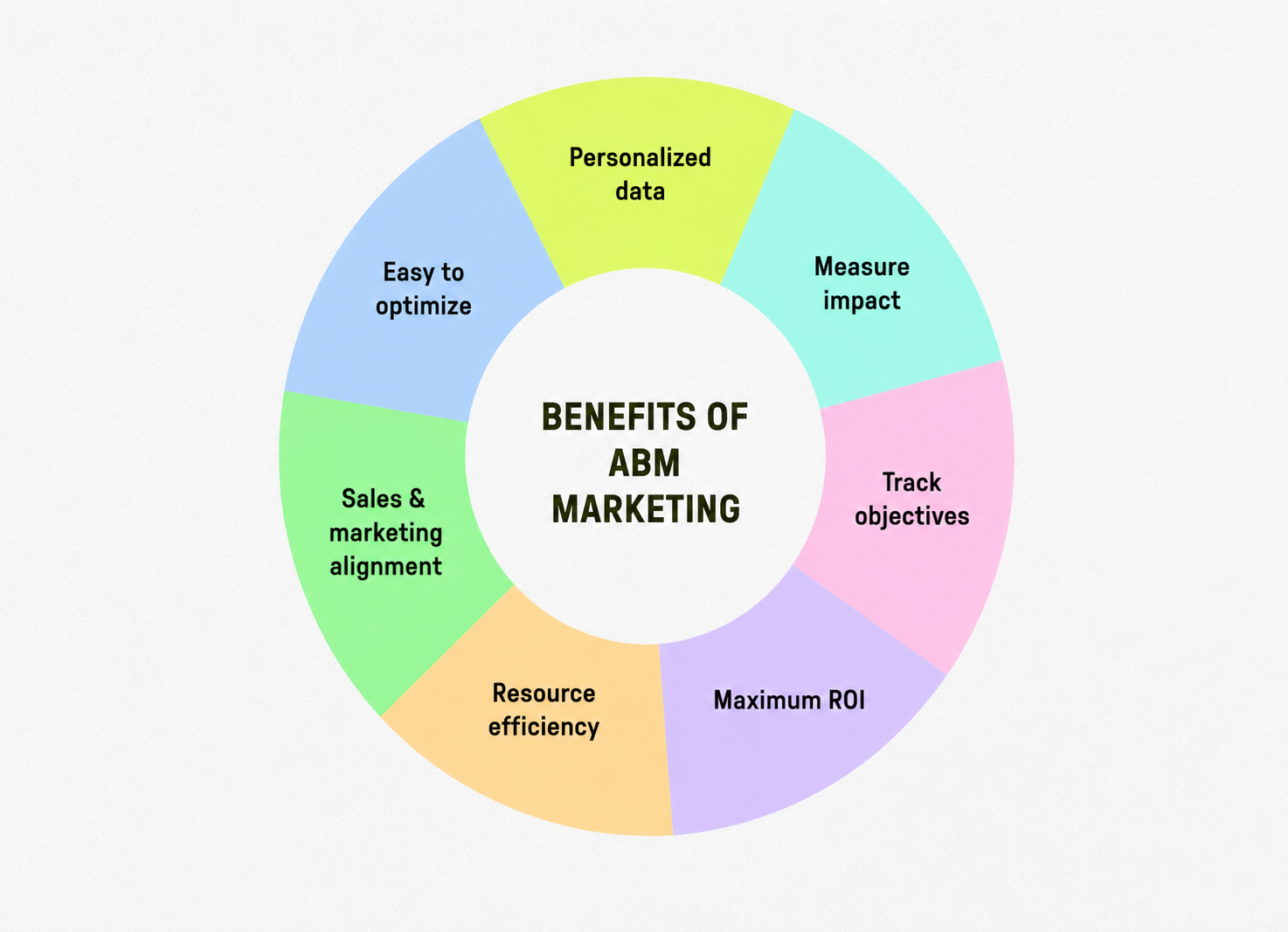
One benefit is a high return on investment, since resources go toward the accounts most likely to generate real revenue. Aircall's case shows how an ABM approach can sharpen marketing resource allocation and put budget to better use.
ABM also drives sales and marketing alignment, through closer collaboration between the two teams, and better campaign personalization.
Kahler Communications proved the approach works by entering the US market with tightly targeted campaigns built around each account's specific needs. Using the Process Communication Model® (PCM), they mapped the personality structures and communication preferences of their target accounts and responded to them directly.
ABM makes it easier to fine-tune campaigns, thanks to precise feedback loops. Adopting it saves resources: budget goes to the most promising accounts instead of leaking out to unlikely targets.
Finally, this method gives you a precise read on campaign effectiveness and the impact of your marketing efforts. Rigorous tracking of objectives keeps every action aligned with the company's strategic goals.
Building an effective ABM strategy takes a methodical, structured approach. Here are the key steps.
The first step is identifying the accounts with the highest potential value for your business. This means:
Once your target accounts are identified, you need to understand them in depth to tailor your approach. This means:
Build custom content that speaks directly to each account's specific challenges. Adjust your value proposition and sales pitch to highlight the unique benefits for each account, drawing on the insights gathered during research.
Personalization at scale is possible with automation tools that keep your communications individualized. Platforms like Marketo or HubSpot can help.
Finally, identify each account's preferred communication channels and adjust your strategy to match. That can include email marketing, social media, content marketing, or even in-person events.
[rta-block=folder-cta][rta-title=h3]Want to explore your outbound potential?[rta-title=h3][rta-btn=regular href="/prendre-rendez-vous-typeform" target=_blank]Get a free audit[rta-btn=regular][rta-block=folder-cta]
ABM's success depends in part on close collaboration between sales and marketing:
An ABM funnel guides your target accounts through their buying journey. It has 4 stages:
Fine-tuning content at each phase of the ABM funnel gets you more engagement from target accounts.
Awareness starts with first contact: infographics showing market trends, and targeted display ads that put your expertise and industry knowledge in front of the right people.
Engagement means deepening the relationship with case studies, webinars built around specific problems, and interactive content such as ROI calculators and quizzes.
Conversion turns prospects into customers. Offer product demos built around each account's specific needs and prepare custom sales proposals.
Retention strengthens the customer relationship, with exclusive newsletters, invitations to VIP events, and personalized training programs.
Keeping engagement high throughout the ABM funnel takes coordinated strategy. Start by coordinating your actions across channels, such as email, social media, and advertising, to create an immersive experience for your prospects.
Then adjust your content in real time based on each account's interactions. AI tools can help predict what your targets will need and want next.
Bring your sales reps into every stage of the funnel too. Their involvement adds a human touch that strengthens the relationship with prospects and improves conversion odds.
Finally, use analytics tools to track interactions at every stage of the funnel. A/B testing different channels and messages gives you the insight to sharpen your results.
Getting more out of your marketing strategy means using tools that make it easier to identify target accounts. That gives you more personalized approaches and more precise measurement of your results. Here are a few examples:
Using data well and automating the right steps sharpens account-based marketing. These processes deliver more precise targeting and personalization at scale. They also make real-time tracking easier and put resources to better use, which improves campaign performance. To do this:
Sharpening your ABM strategy starts with measuring performance. Track engagement per account, progression through the funnel, and revenue generated by each account.
Dashboards let you see the impact of ABM on your company's key KPIs. Data visualization tools like Tableau or Looker can help you build reports.
Finally, put attribution models in place that account for every interaction with an account, not just the last one.
Aircall, a French startup specializing in cloud-based business phone systems, turned to ABM to sharpen its marketing strategy.
Strategy:
This ABM approach got Aircall the following results:
Teamstarter, a crowdfunding platform for company projects, used ABM to generate qualified leads efficiently.
Strategy:
This approach delivered new results for Teamstarter:
Account-Based Marketing (ABM) is a strategy B2B companies can't afford to skip if they want to maximize their commercial impact. It lets companies focus on their highest-potential accounts, with a marketing experience personalized to each account's specific needs.
Lorem ipsum

Content Marketing Manager at Bulldozer, she writes about content strategy, editorial systems and distribution.
Can't find what you're looking for ? Contact us here
jordan@bulldozer-collective.comGet access to playbooks and feedback from those who are shaping the next wave of marketing and AI.