

The Product Led Growth (PLG) is a go-to-market strategy where the product itself is the primary driver of acquisition, conversion, and customer retention. Adopted by Slack, Notion, and Dropbox, PLG replaces the traditional sales force with the product experience. Documented result: a CAC divided by 3 to 5 and user-driven self-sustaining growth.
In the dynamic, competitive SaaS landscape, a new approach is revolutionizing how companies acquire, engage, and retain customers.
This strategy, known as Product Led Growth (PLG) or product-driven growth, puts the product at the heart of the customer experience and the growth process.
Let's explore how this innovative approach can transform your SaaS business and accelerate your growth.
Product Led Growth is a business strategy that uses the product as the primary driver of customer acquisition, activation, and retention.
Unlike traditional sales- or marketing-centric approaches, PLG emphasizes creating an exceptional product experience that encourages users to adopt the product organically.
According to ProductLed.com, the core principles of PLG are:
The rise of PLG is closely tied to the evolution of the SaaS market and shifts in buyer behavior. Pendo.io highlights that a growing number of buyers, including in B2B, prefer to self-educate and try a product themselves rather than going through a traditional sales process.
This trend has led many SaaS companies to adopt freemium or free trial models, allowing users to discover the product's value before committing.
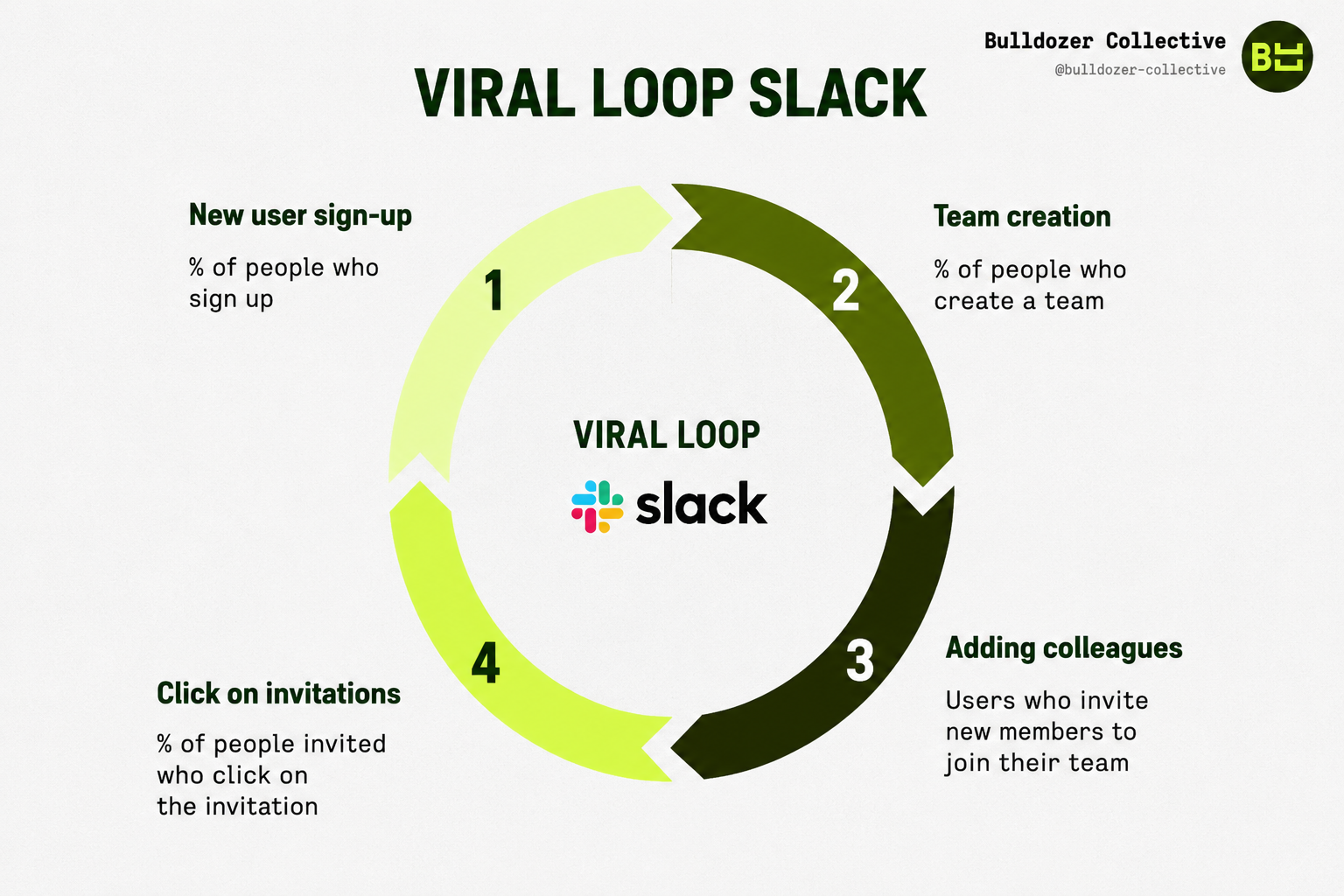
Success stories like Slack, Dropbox and Zoom have demonstrated the effectiveness of this approach, inspiring many other companies to follow suit.
According to a study by OpenView Partners, companies adopting a PLG strategy saw a median growth of 55% in 2021, versus 29% for non-PLG companies.
[rta-block=folder-cta][rta-title=h3]Want to learn more about your growth potential?[rta-title=h3][rta-btn=regular href="/prendre-rendez-vous-typeform" target=_blank]Get a free audit[rta-btn=regular][rta-block=folder-cta]
An effective PLG framework rests on several key elements:
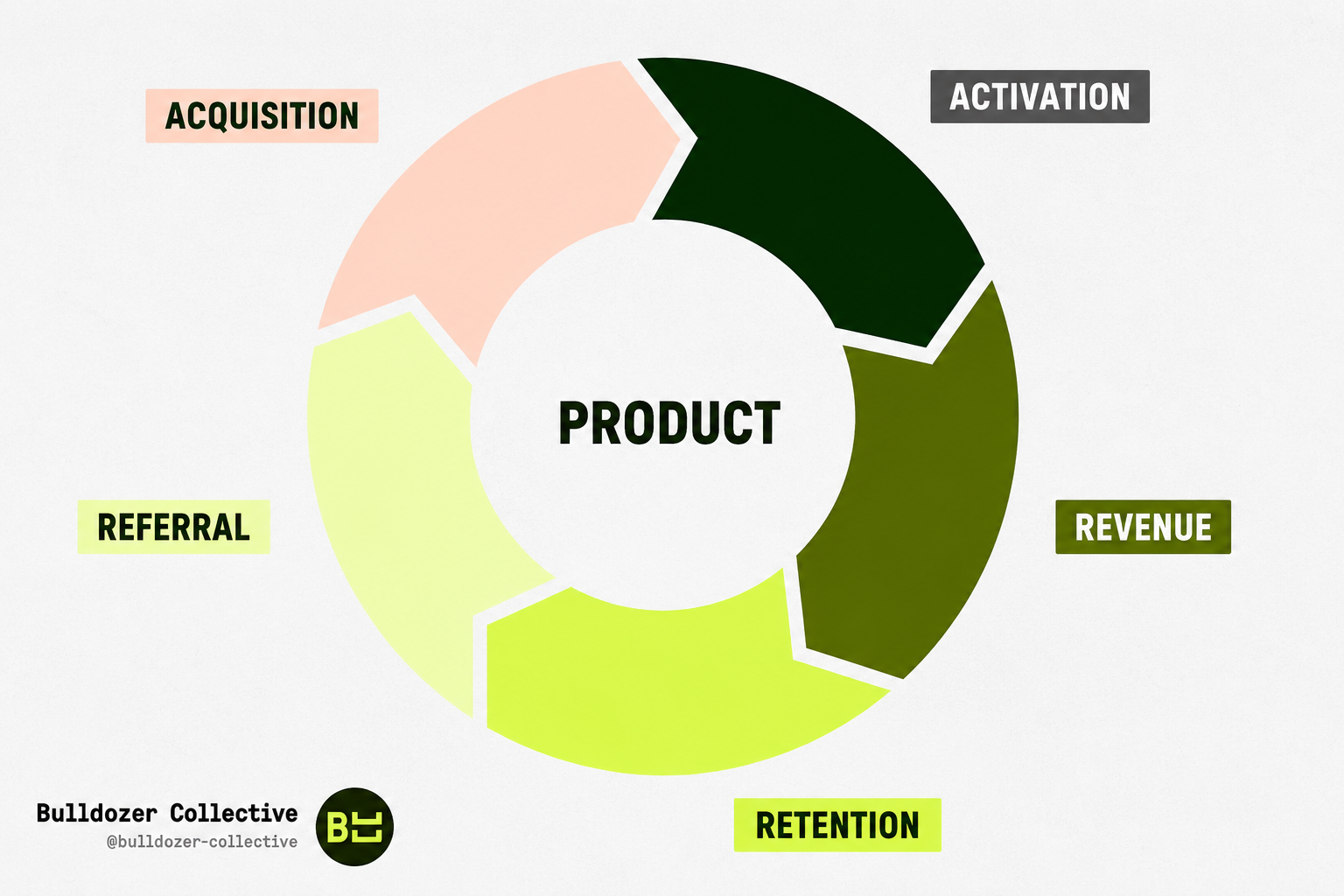
ProductLed.org offers the concept of the "Product-Led Growth Flywheel" — a framework illustrating how these elements interconnect to create a virtuous growth loop.
Dropbox excels at this framework. The file hosting platform leverages multiple PLG levers:
In a PLG strategy, user experience is paramount. A well-designed UX should:
By investing in high-performance UX, companies can reduce friction and drive customer loyalty.
PLG success relies on close collaboration between product and marketing teams. The product team must design features that facilitate user acquisition and engagement. The marketing team must use product usage data to target and personalize communications.
Together, these teams create a cohesive user journey, from product discovery to advanced usage.
Acquisition and activation metrics are essential for measuring the effectiveness of your PLG strategy:
For example, Calendly, a scheduling tool, measures its activation rate by the number of users who create and share their first scheduling link within 24 hours of signing up.
These metrics measure your product's ability to retain and grow your user base:
These metrics assess the financial performance and virality of your product:
To effectively track these metrics, it's crucial to use appropriate analytics tools. Platforms like Pendo, Amplitude, or Mixpanel can help you collect, analyze, and visualize this important data.
These tools not only measure performance, but also identify improvement opportunities and support data-driven decisions.
To integrate PLG into your strategy, start by:
Transitioning to a PLG approach can present certain challenges:
For companies accustomed to a traditional sales model, the transition to PLG can be particularly challenging. The solution is to adopt a hybrid approach initially — use PLG to generate qualified leads that the sales team can then convert.
PLG is not a static strategy. To succeed, it's crucial to:
Product Led Growth represents a paradigm shift in how SaaS companies approach growth. By placing the product at the heart of customer acquisition, activation, and retention, PLG offers exponential growth potential while reducing acquisition costs.
Succeeding with a PLG strategy requires more than just a change of business model. It demands a complete rethinking of how the company designs, develops, and commercializes its product.
Product Led Growth is becoming an essential strategy for companies looking to thrive in an increasingly competitive environment. By adopting the principles of PLG, you can transform your product into a true growth engine, capable of acquiring and retaining customers at scale.
Ready to explore how Product Led Growth could transform your company? The Bulldozer Collective team supports SaaS publishers in their growth strategy. Contact us for free to learn more.
Lorem ipsum

Content Marketing Manager at Bulldozer, she writes about content strategy, editorial systems and distribution.
Can't find what you're looking for ? Contact us here
jordan@bulldozer-collective.comGet access to playbooks and feedback from those who are shaping the next wave of marketing and AI.