
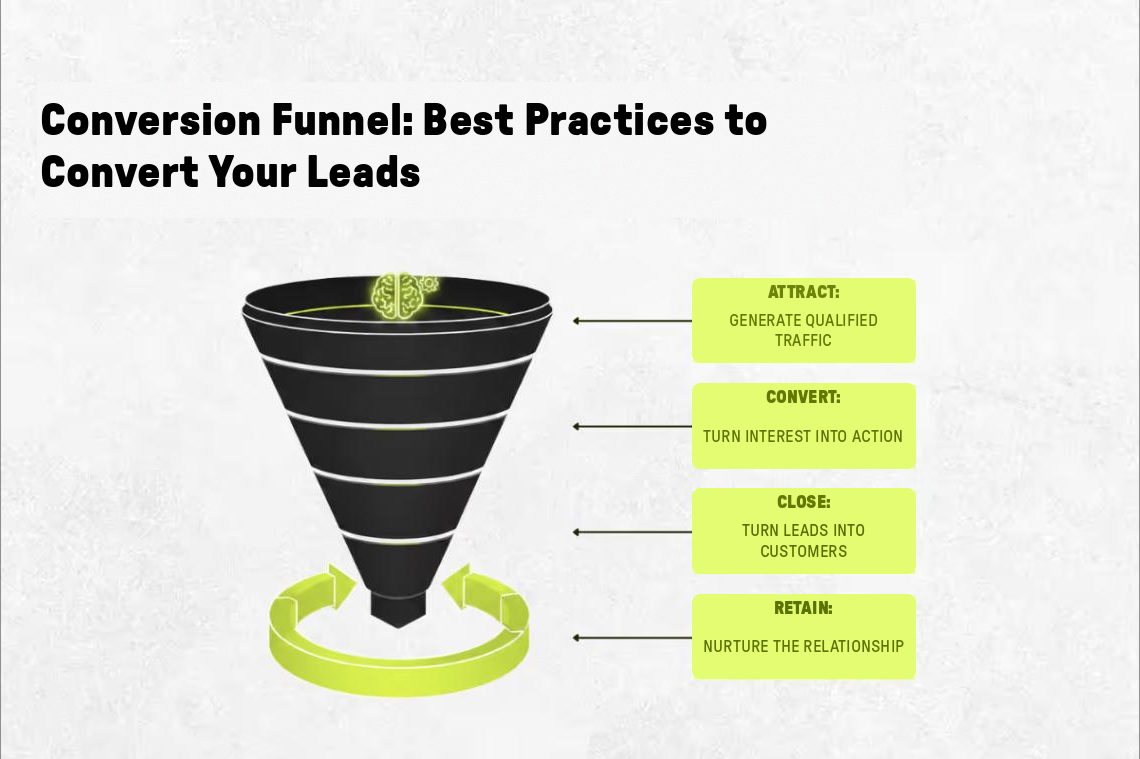
The conversion funnel is more than a marketing metaphor — it's a strategic compass that connects traffic, engagement, and revenue. In a B2B SaaS context, a well-built funnel lets you reduce CAC without sacrificing CLV, improve retention, and drive growth from reliable data — from the first visit all the way to NRR. That reliability depends on a proper attribution model for long sales cycles (ideally data-driven), a CDP like Segment to unify touchpoints, and GDPR consent mode to preserve measurement quality. Understanding and optimizing every stage of this journey is what turns a click into a loyal customer.
In this article, we break down how to build, audit, and improve your conversion funnel — with a practical focus on B2B challenges and 2025 best practices.
The conversion funnel — also called a sales funnel, marketing funnel, or conversion pipeline — represents the journey a visitor takes before becoming a customer.
It's the strategic map of the customer journey, from discovering your brand all the way to purchase — and beyond. In complex environments, this map relies on marketing attribution tools (last-click, data-driven) and customer data platforms (CDPs) like Segment to unify touchpoints. In B2B, it's often embedded in an ABM (Account-Based Marketing) approach, where the funnel adapts to target accounts rather than individual users.
Goal: turn a first-time visitor into a loyal customer, then into a brand advocate.
A conversion funnel isn't just a sales tool — it's a framework for building lasting relationships founded on trust and value.
In an e-commerce funnel, the average journey is relatively short — from a few minutes to a few days between a first visit and a purchase. Decisions are typically individual and emotionally driven, with immediate purchase as the primary conversion goal. The key optimization lever is reducing friction at checkout, payment, or trust-building moments, since the end consumer is the sole decision-maker.
In a B2B SaaS funnel, the dynamics are very different. The average journey spans several weeks, sometimes several months. Decisions are collective and more rational, with demo requests, free trials, or contract signatures as conversion goals. Optimization centers on nurturing, lead scoring, and educational content — because multiple stakeholders are involved: the end user, their manager, leadership, and sometimes finance or procurement.
In B2B, we're dealing with a multi-stage decision cycle where every interaction must deepen the relationship and reinforce trust.
A high-performing conversion funnel rests on four key stages, inspired by the AIDA model (Attention, Interest, Desire, Action) — but reimagined through the lens of the modern customer lifecycle.
The goal isn't to attract more visitors — it's to attract the right visitors.
Key levers:
Combine SEO, paid search, and smart retargeting to stay visible to warm prospects.
For SaaS, also consider a PLG (Product-Led Growth) strategy: let the product speak for itself through free trials, demos, or freemium tiers.
👉 Goal: maximize traffic quality, not volume.
The visitor has shown their first sign of interest — now is the moment to get them to act.
Use a landing page CRO checklist to test message clarity, visual hierarchy, and consistency between ad and landing page.
🎯 Goal: capture a micro-conversion (sign-up, download, contact request).
Once the contact is made, it's time to nurture the lead.
Build in lead scoring logic (MQL / SQL / PQL) to know when a prospect is ready to be contacted, and prioritize leads with the highest likelihood of closing.
These practices improve your demo-to-close rate — often the most critical metric in B2B SaaS funnels.
💡 This is where the line between marketing and sales disappears — the funnel becomes a shared engine.
The customer journey doesn't end at the sale — it continues.
Goal: create a Flywheel effect, where each customer becomes a growth engine in their own right.
Optimize your Core Web Vitals (LCP, INP, CLS): a slow or unstable site destroys the experience and kills conversions — especially on mobile.
Even a well-designed funnel often fails in the field of user experience (UX).
A single friction point in navigation, a poorly placed CTA, or content misaligned with visitor intent — and conversion drops.
Optimizing UX means making the journey smooth, intuitive, and reassuring — without forcing the action.
Your funnel should guide the user's eye, not lose it in detours.
A few simple principles make a real difference:
💡 Example: placing a "Request a demo" button above the fold typically increases click-through rate by 20–30%.

Before converting or submitting their contact details, visitors need reassurance.
These trust signals are both rational and emotional:
🎯 Goal: create an immediate sense of security before the rational mind takes over.
By analyzing user cohorts (active, recurring, churned customers), you can identify early disengagement signals and adjust your UX before the loss occurs.
Relevant content only delivers value when it speaks to the prospect's level of maturity.
The TOFU / MOFU / BOFU model (Top / Middle / Bottom of Funnel) is a useful guide:
💡 Content should speak the prospect's language: curiosity at the top, proof in the middle, trust at the bottom.
Even well-designed funnels can collapse for simple reasons. Here are the traps to avoid 👇
Poorly timed pop-ups interrupt reading and break the user's cognitive flow.
Instead, opt for:
This is the most common mistake: an ad promises one thing, but the landing page delivers something else.
Result: instant loss of trust.
👉 Maintain strict consistency between:
A funnel without follow-up is a leaky pipe.
💡 Example: a follow-up at D+2 after a download increases qualified meeting conversion by 40%.
What isn't measured can't improve.
🎯 The golden rule: a funnel is never finished — it's always being optimized.
[rta-block=folder-cta][rta-title=h3]Want to know more about your growth potential?[rta-title=h3][rta-btn=regular href="/prendre-rendez-vous-typeform" target=_blank]Get a free audit[rta-btn=regular][rta-block=folder-cta]
A high-performing conversion funnel depends as much on the right strategy as on the tools that let you run, automate, and measure it.
The goal: understand behaviors, test, adjust, and nurture the relationship at every stage of the journey.
Your CRM is the operational core of a B2B funnel. It centralizes prospect data, tracks interactions, and triggers automated actions at precisely the right moment.
Effective tools to consider:
What to do:
Also track NRR (Net Revenue Retention) and GRR (Gross Revenue Retention) directly from your CRM to measure the effectiveness of your post-conversion actions and spot churn signals early.
💡 Automation doesn't replace human relationships — it strengthens them by enabling interactions at exactly the right moment.
Raw numbers only tell part of the story — you need to understand the gestures behind them.
Heatmaps and analytics tools reveal how visitors actually interact with your pages.
Key tools:
What to monitor:
🎯 Goal: turn raw data into actionable insights.
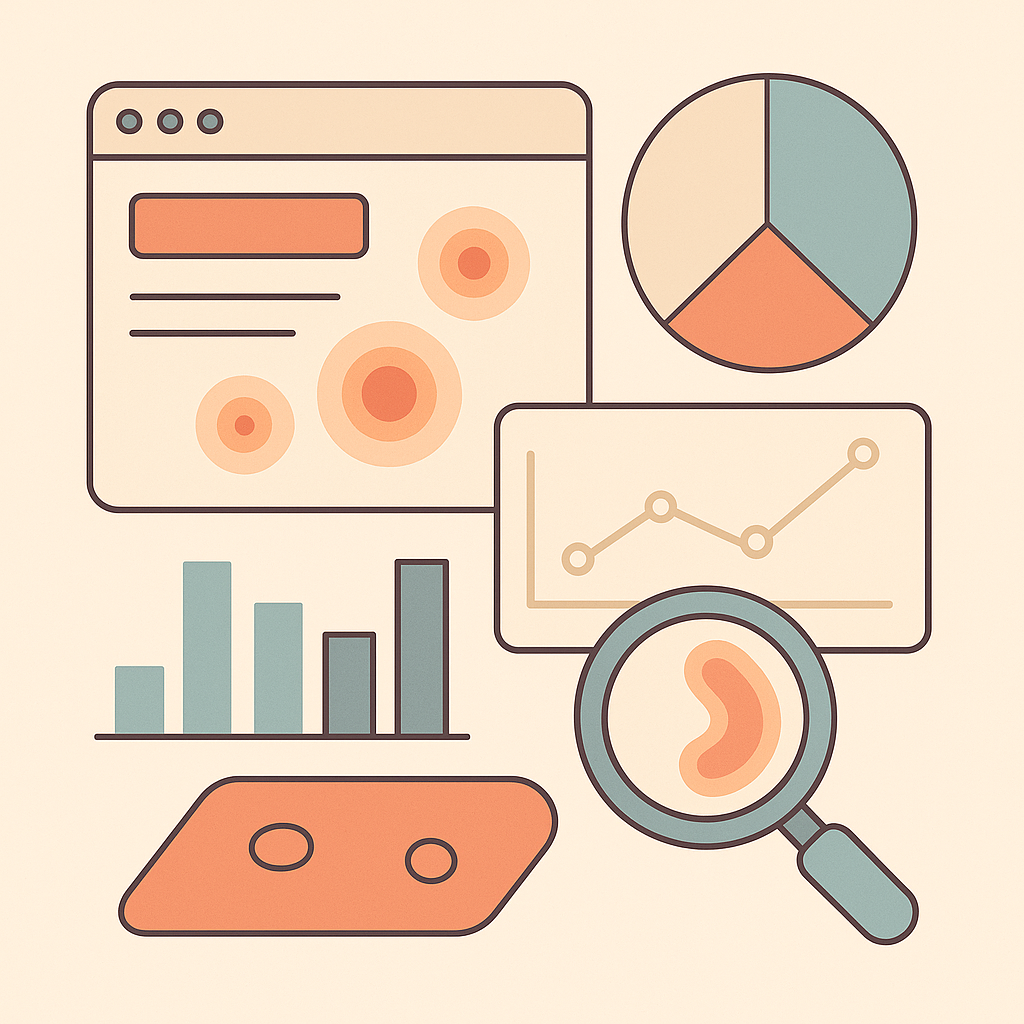
Funnel optimization is never fixed — it's a permanent learning loop.
3 levers to combine:
Best practice: test only one variable at a time and set a minimum experiment duration to get statistically significant results.
💬 Example: a simple wording change on a button ("Explore" → "See how it works") can increase click-through rate by +25%.
Combine A/B tests with cohort analysis to understand how improvements influence retention over time — not just immediate conversion.
The B2B conversion funnel operates under a very different logic than B2C. Here, conversion isn't an impulse — it's the outcome of a deliberate, often collective process.
The B2B SaaS funnel often blends multiple approaches: ABM for strategic accounts, PLG for curious users, and automated nurturing to keep the relationship warm in between.
In B2B, decisions can involve several profiles (end user, manager, leadership, procurement) and play out over weeks or months.
Each stakeholder has their own priorities: technical fit, budget, ROI, experience, support, and so on.
The direct implication: you need multiple touchpoints and consistent engagement through sequenced, relevant content over time.
A single message won't win over multiple decision-makers.
👉 Effectiveness comes from segmentation and personalization.
💡 The challenge isn't just convincing each stakeholder individually — it's aligning all of them around a shared conclusion: your solution is the safest, most profitable choice.
Nurturing means feeding the prospect's thinking process until they're ready to act.
This calls for a content progression calibrated to lead maturity:
Every interaction reinforces the trust relationship and qualifies the lead in your CRM.
Examples of effective nurturing emails:
These nurturing email examples help maintain attention throughout a B2B SaaS conversion funnel.
🎯 The ultimate goal: deliver the right prospect, to the right offer, at the right moment.
A conversion funnel is never static — it gets analyzed, tested, and improved continuously.
Measuring performance means understanding where leads move forward, where they drop off, and why.
Without reliable indicators, strategic conversion management is impossible.
💡 A healthy CAC/CLV ratio is the foundation of a sustainable funnel: a customer should generate at least 3x what they cost to acquire.
SaaS conversion rate benchmarks:
Choosing the right attribution model for long sales cycles (position-based or data-driven) is essential to correctly attribute conversions across SEO, paid campaigns, retargeting, and organic content.
Behavioral data reveals the reality behind the numbers:
👉 The goal isn't just to accumulate metrics — it's to extract actionable hypotheses: why does one CTA outperform another? Why do leads drop off after the demo? Which pages drive the most indirect conversions?
A conversion funnel should be treated like a living organism — it learns, adapts, and optimizes.
🎯 In practice: funnel improvement isn't a one-time project — it's a continuous growth loop.
When a customer churns or shares feedback, that's not a failure — it's a goldmine. Insights from churn, reviews, and support tickets can sharpen your FAQ, onboarding emails, or demo pages. That feedback loop becomes your best tool for preventing the same issues from recurring.
A high-performing B2B SaaS conversion funnel is as much a learning machine as a sales machine. Every data point, click, or bounce should become a lever for improvement. It relies on data (CRO, attribution, scoring), technical performance (Core Web Vitals, GDPR consent mode), and long-term vision (CLV, payback, NRR). It's a living machine — analytical and human at the same time.
👉 Measure, test, adjust.
👉 Simplify the journey and build trust at every step.
👉 Deliver the right content at the right moment.
And above all: never let your funnel become static.
At Bulldozer, we build living funnels — data-driven, ROI-focused, and user-centric.
Take action: audit, iterate, and turn your funnel into a growth engine.
Lorem ipsum
.jpeg)
Writer at Bulldozer, he covers web scraping, UGC and no-code, mixing data, storytelling and SEO.
Can't find what you're looking for ? Contact us here
jordan@bulldozer-collective.comGet access to playbooks and feedback from those who are shaping the next wave of marketing and AI.