
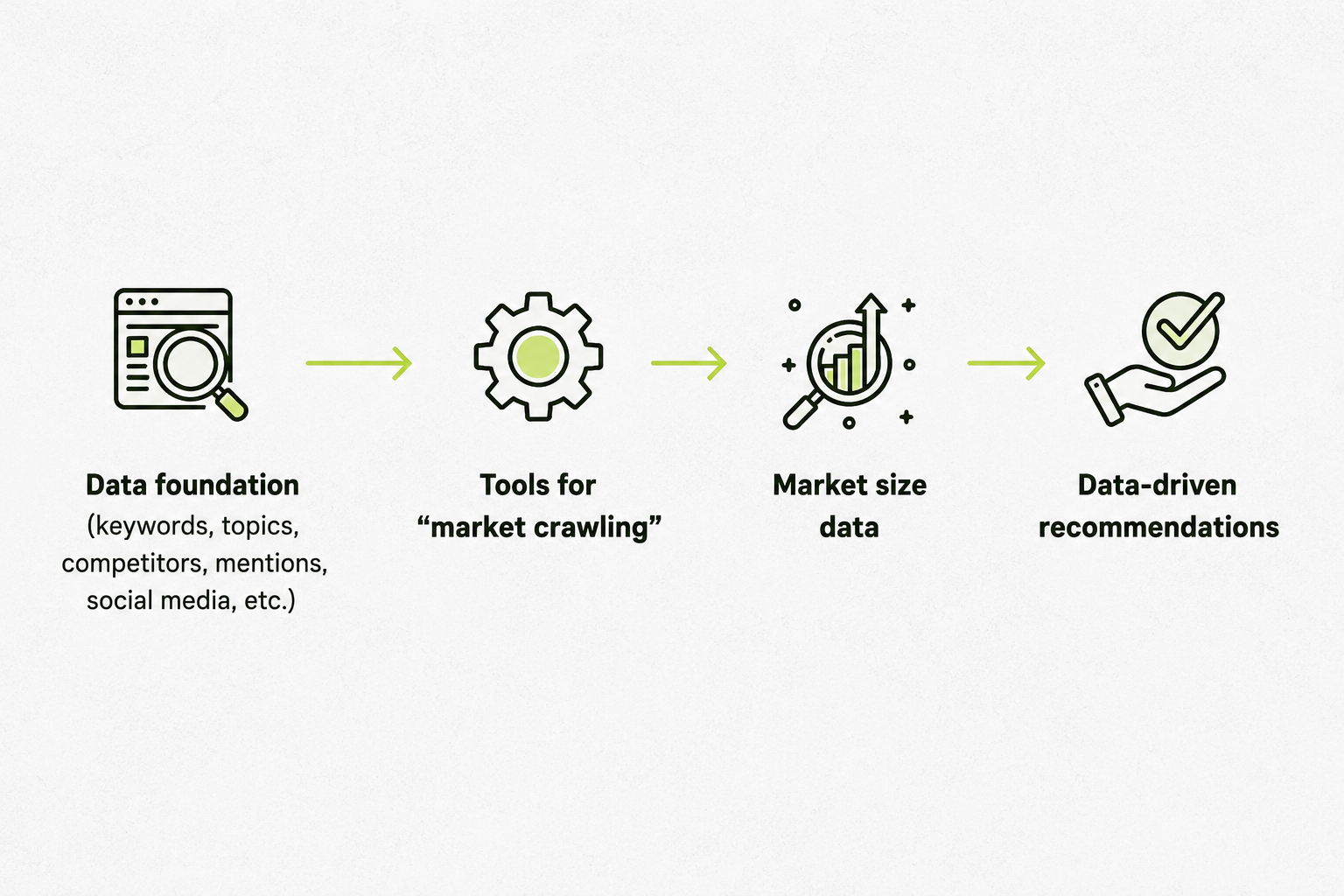
Gone are the days when market research meant a hefty PDF report you'd open once, then file away. In 2026, everything moves too fast for that. Consumers shift, channels explode, competition is everywhere — and you don't have three months to validate an idea. Today's market research needs to be fast, alive, connected to the field, and directly useful to your strategy.
In this article, we share 8 new rules to turn your research into a genuine business steering tool. No unnecessary jargon: whether you're launching a new product, a startup, or a marketing campaign, you'll walk away with concrete, actionable ideas.
Ready to dust off your methods?
For years, market research served as a reassuring formality — a report commissioned before launch, then shelved. In 2026, that model is obsolete.
Usage shifts fast, competition is fierce, and innovation demands rapid decisions. Research can no longer be static. It must become a living, iterative tool, connected to the field, capable of informing strategy in real time.
Every market research project rests on two complementary approaches:
💡 Effective research often starts with exploratory qualitative work, then uses quantitative data to confirm findings at scale.
Today, research shouldn't just diagnose a market or present numbers. It should help you decide: which positioning to adopt, which audience to prioritise, which feature to build first. The deliverable isn't a report — it's a strategy in motion.
That means moving away from the linear "research → analysis → decision" model toward an iterative approach that adjusts in real time. Research is no longer a box to tick — it's a way to reduce uncertainty, fuel innovation, and direct your next sprints.
Your customers move fast. So do your competitors. And your teams don't have six months to wait for a consultancy's findings. In 2026, effective market research must generate ROI quickly, be immediately actionable, and integrate directly into a launch or repositioning strategy.
It should inform a go-to-market, feed a product roadmap, validate positioning, or help prioritise MVP features. The key word: operational utility. That's what distinguishes high-performing market research from a theoretical benchmark.
In 2026, market research is no longer a simple "analysis" at the start of a project. It's a continuous strategic lever at the intersection of data, customer insights, and business decisions. To stay relevant, fast, and impactful, here are the 8 key rules to adopt.
Data is useful. But insights are what turn a number into a decision. In 2026, proximity to users becomes a strategic resource.
Digital tools don't replace field intelligence. That's where the real product intuitions, sharp positioning, and high-performing campaigns are born.
Markets evolve, competitors adapt, customers change their minds. Building a static, one-shot study no longer makes sense. What you need is a continuous improvement mindset.
Each loop brings you closer to a sharper strategic adjustment. Each cycle lets you pivot fast, without waiting for a final report that's already obsolete.
🎯 Better to run 10 agile mini-studies than produce one heavy report no one reads.
Manual data collection is time-consuming — and you often miss weak signals in the process. Automation is key for monitoring your markets continuously.
The goal: a proactive intelligence ecosystem that doesn't require rebuilding from scratch every time.
📈 You save time and capture trends in real time.
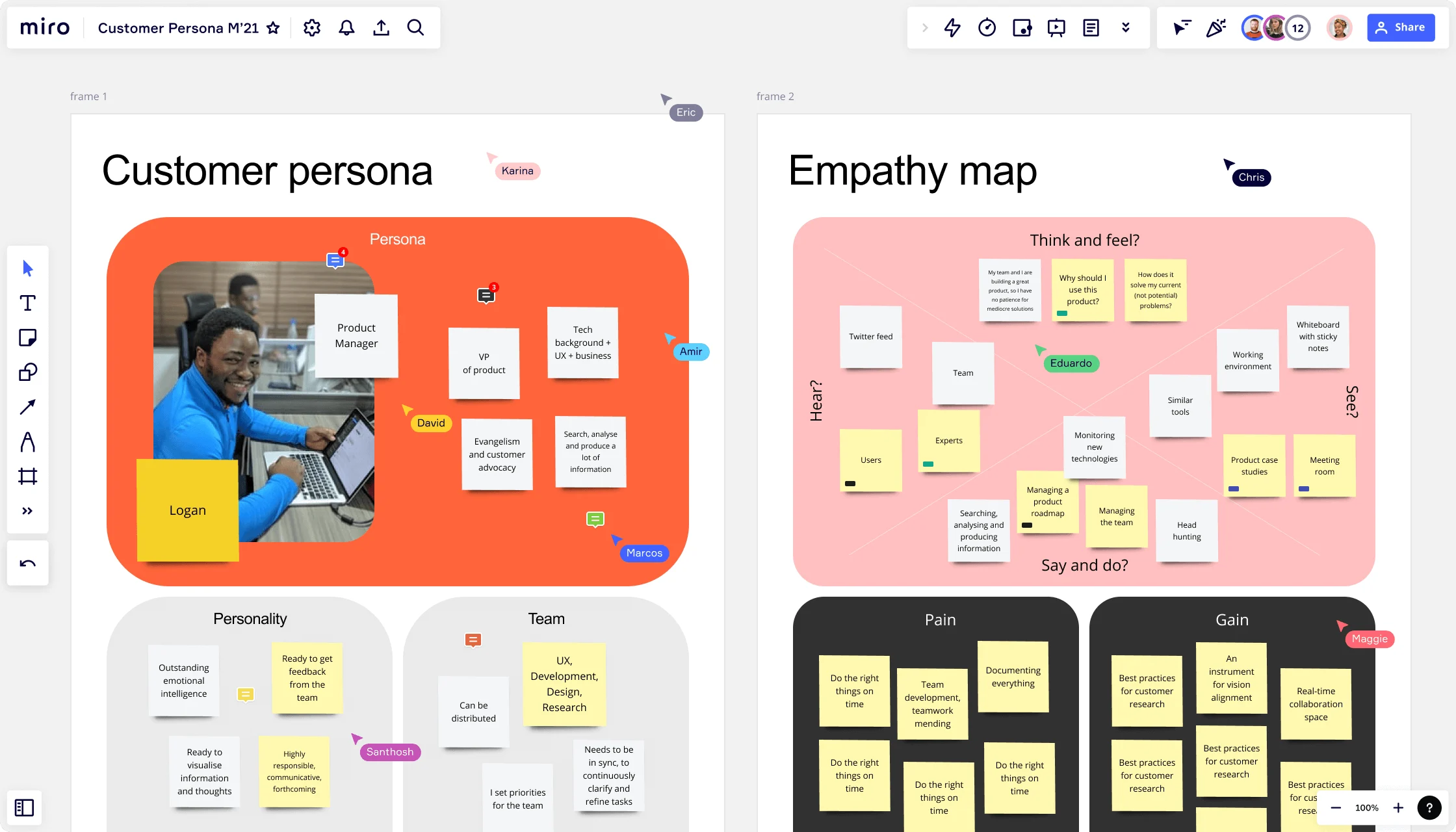
A persona isn't a static profile built in a workshop. It's a living, evolving, field-connected representation.
A solid persona enables precise targeting, the right message, and more coherent user journeys.
🧩 Result: marketing that's more precise, more human, and genuinely useful across all teams.
Broad targeting is too imprecise for today's standards. Real marketing potential lies in identifying micro-niches and specific use cases.
That granularity is where you find the hyper-targeting levers that turn an average message into a high-impact campaign.
💡 Identify your micro-niches, early adopters, and communities. That's where the real value hides.
Market research shouldn't remain a reflection exercise. It should trigger concrete, structured, and measurable actions.
Every insight should become an operational anchor, not just a line in a meeting summary.
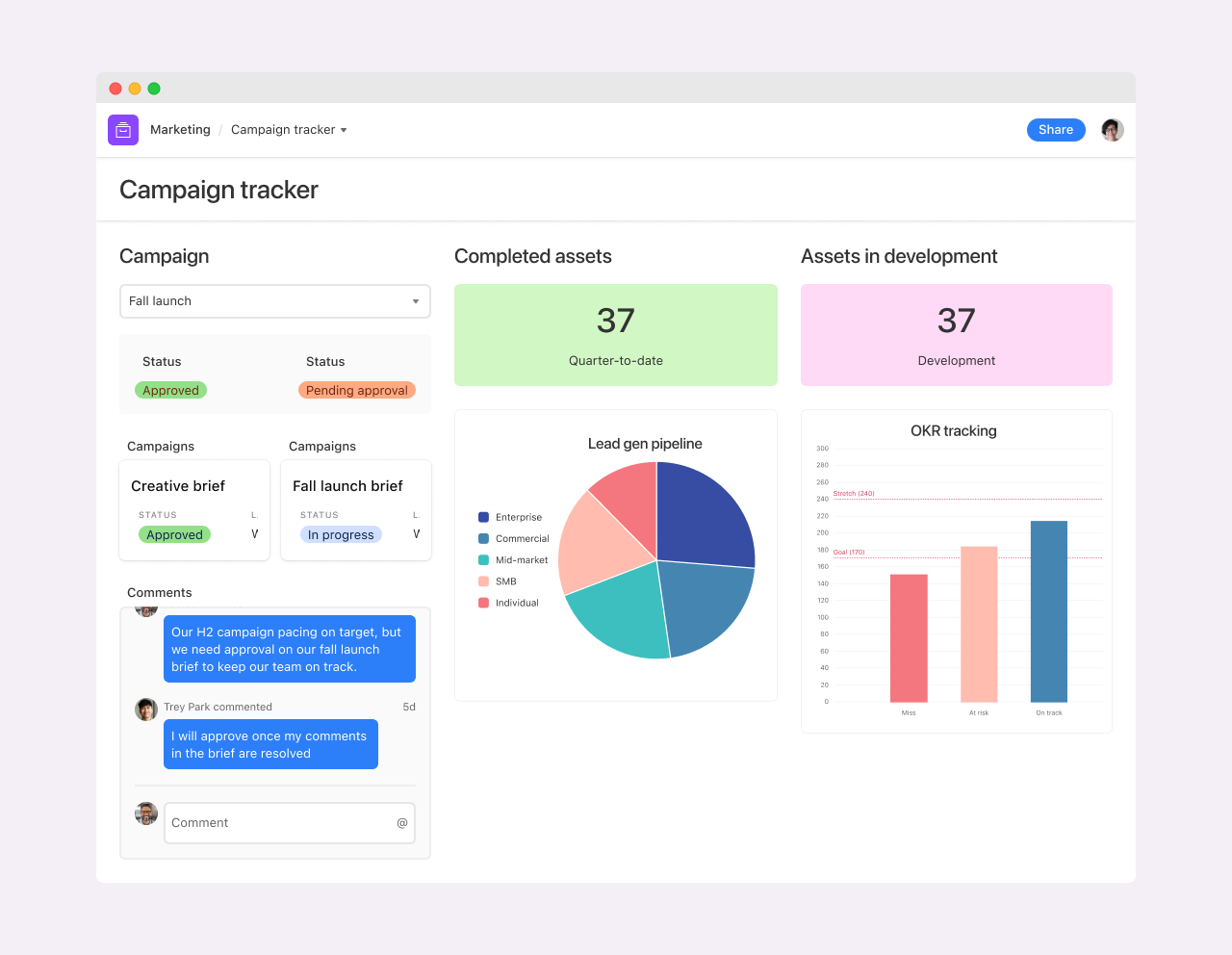
Digitising market research improves fluidity, traceability, and knowledge sharing. It also enables better cross-team collaboration.
🔌 In 2026, an effective study is one that's alive, visible, and accessible to every stakeholder. Digitisation makes that happen.
Market research doesn't end at publication. It must evolve at the pace of the market and incoming feedback.
📆 In 2026, market research becomes a continuous navigation system — helping you correct course, capture opportunities, and avoid blind spots. Think of it as a co-pilot, not a one-off exercise.
[rta-block=folder-cta][rta-title=h3]Want to learn more about your growth potential?[rta-title=h3][rta-btn=regular href="/prendre-rendez-vous-typeform" target=_blank]Get a free audit[rta-btn=regular][rta-block=folder-cta]
Understanding the new rules is one thing. Weaving them into how you actually work is what makes the difference. To turn your market research into an agile strategic tool, you need to rethink your methods, your tools, and above all how you think about collecting and using customer insights. This section gives you a concrete, progressive path to action.
Today, a wide range of tools lets you modernise your market research without blowing the budget or mobilising a full team. The goal is simple: automate repetitive tasks, centralise data, and collaborate effectively with product, marketing, and sales.
Here's a selection of tools for continuous, automated market research:
The right tool stack depends on your team, sector, and priorities. The essential principle: keep it simple, modular, and scalable.
Building a next-generation market research practice is primarily a methodology question. The challenge is to move away from the linear "research → analysis → action" logic toward a continuous loop approach — far better suited to innovation and fast go-to-market cycles.
Here's a simple, effective methodology to deploy:
This approach, inspired by Lean Startup and strategic design methodologies, transforms every market research exercise into a fast, iterative decision-making lever.
If you're looking for concrete formats to structure your first study or revisit the fundamentals, two free and well-crafted resources can help:
These foundations will serve as your baseline before moving to a more modern, automated, and strategic approach — the kind we advocate for in 2026.
Market research is dead. Long live continuous strategic intelligence.
In 2026, market research is no longer a deliverable — it's a core competency of modern marketing. It integrates into daily team workflows, guides product decisions, informs go-to-market execution, and continuously feeds strategy.
To stay competitive, internalise this dynamic: train your teams, tool up your processes, and think of research not as a starting point, but as a permanent decision engine.
Lorem ipsum
.jpeg)
Writer at Bulldozer, he covers web scraping, UGC and no-code, mixing data, storytelling and SEO.
Can't find what you're looking for ? Contact us here
jordan@bulldozer-collective.comGet access to playbooks and feedback from those who are shaping the next wave of marketing and AI.